Read

In Conversation with Jonathan Martin (Nouveau Programme 2026)
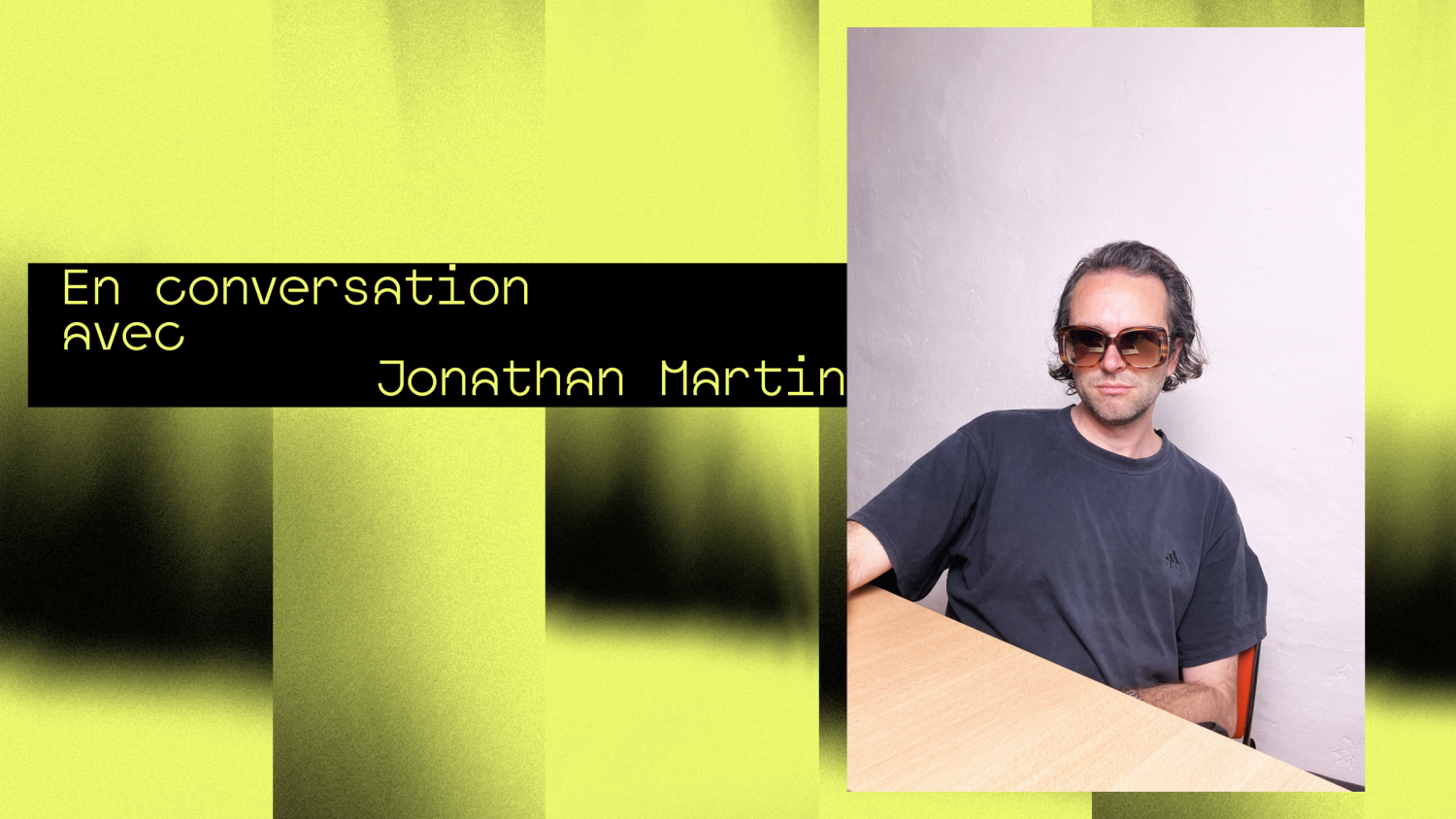
© C. Lerouxel
© C. Lerouxel

Jonathan Martin (born in 1986, lives and works in Florac and Paris) is one of the artists selected for the second edition of the Nouveau Programme. He will present his work in the exhibition over the top, undercover, curated by guest curator Salomé Burstein, alongside R. Moreno and Clémence de La Tour du Pin. Ahead of the exhibition opening on Monday, September 9 at 6 p.m., the artist discusses how diversion, distortion, and infiltration run through his practice, and shares a first glimpse of what he will show at the Foundation.
Your film work is characterized by the frenetic repetition of sequences. Why this choice of nonlinear editing? 

I trained in animation, which comes with a quite structural point of view on what is a film is: a succession of frames, following each other at a certain speed. Most of my films have very austere compositions: some have only a single shot, others a succession of shots from the same series, etc. They have fiction, but no narration. It also has to do with time: all these mechanisms of cinema narration are also a way of managing time and cutting it up, a kind of clock. If you don’t do that, you can have another experience of time.

Your works always seem to be situated just before or just after the climax, in a suspended tension. What interests you in this inbetween? 

I imagine it has to do with containing dynamics, concentrating attention inside the sound or the image. It’s a question of scale. The idea is that at a certain level, it’s like in Charlie and the Chocolate Factory: every small thing can become quite delirious and explosive. It’s like that character who listens to a nurse’s voice in the novel Mrs Dalloway (Virginia Woolf, 1925), described as sounding both like the voice of an organ and that of a grasshopper. 

New technologies profoundly change how we look, filter, and hierarchize images. How does your work attempt to make this transformation of perception visible? 

Since I try to work in a synesthetic way, I prefer to think of sensation as a unified field. But maybe this kind of reasoning has to do with the mass circulation of images, and a sort of devaluation that comes with it.

You borrow aesthetic codes from media, the music industry, and entertainment. How do the images you produce relate to the exhibition over the top, undercover, where every form of staging reveals as much as it conceals? What are you trying to divert? 

I often return to certain strategies developed in the entertainment industries, in advertising—very efficient, very compressed, very poetic. I like starting from those kinds of gestures. I’m less interested in the critical reading of representational codes than in the production process—recording, photochemistry, mixing, shooting, sound synthesis, compositing, etc.—through their histories, their effects, and what can be done with them. 

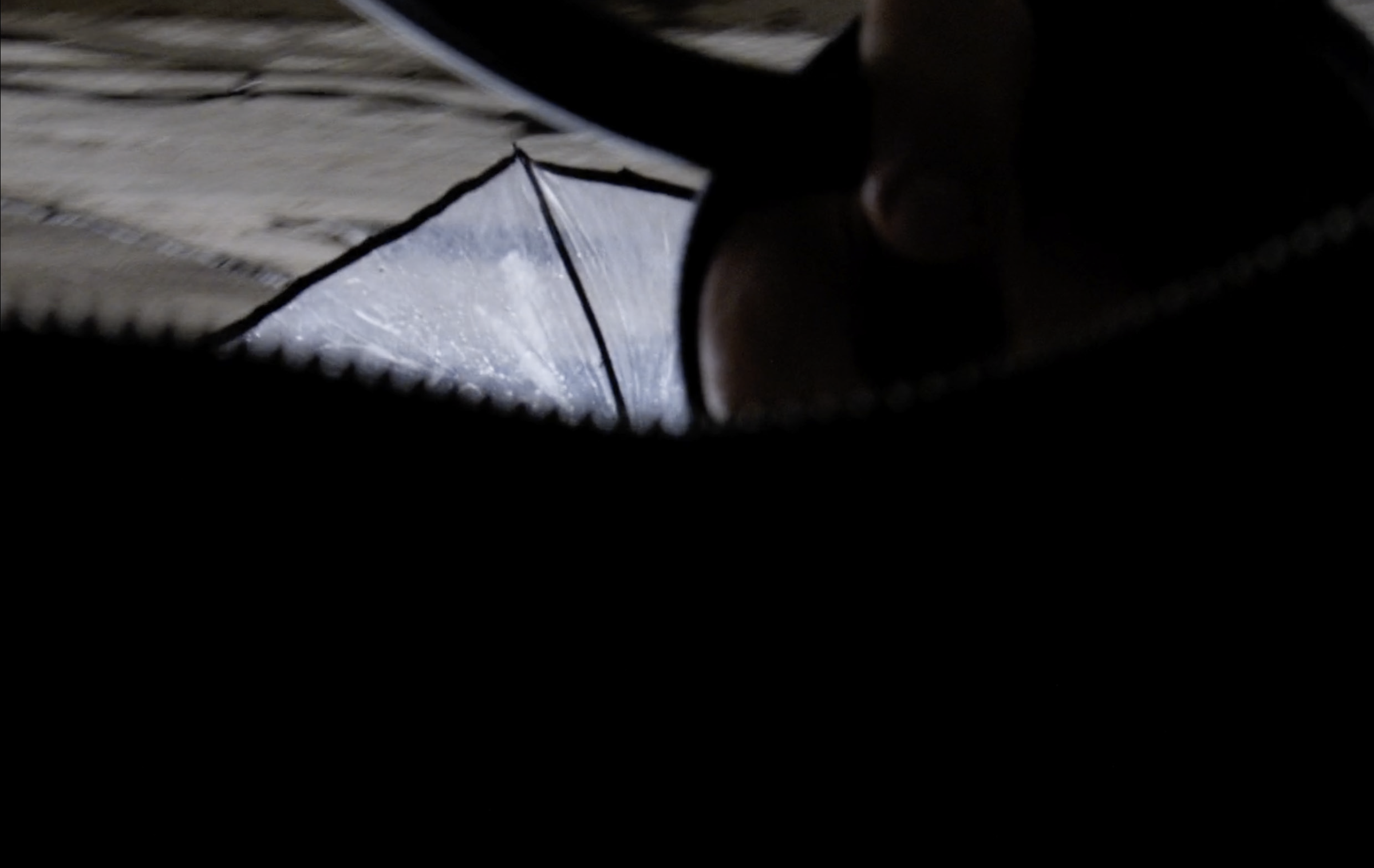
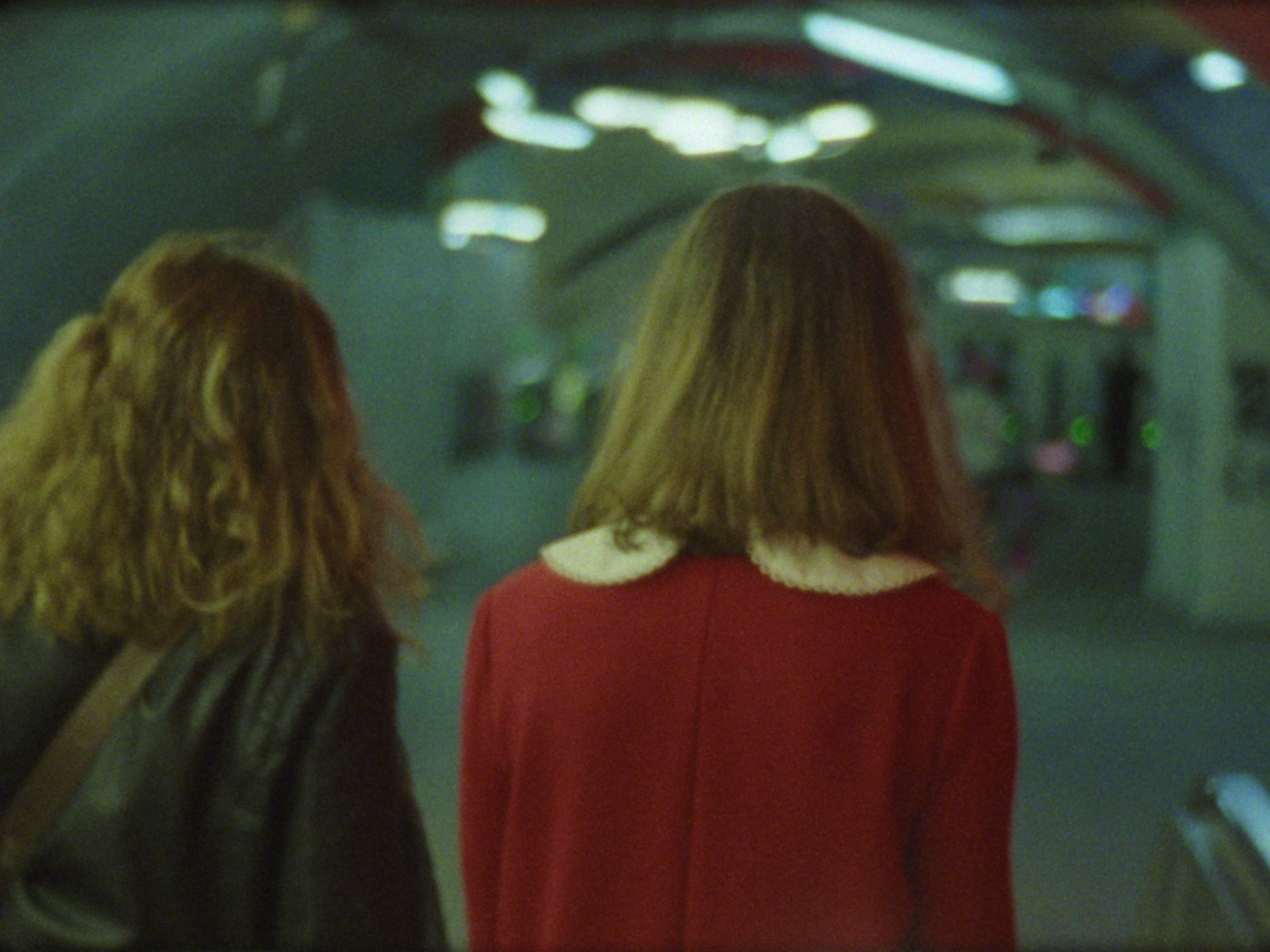
In your film In my bag (2026), a camera captures images from inside a handbag, as if its owner had forgotten to turn it off. The viewer finds themselves both in the position of an intruder and adopting the object’s point of view, as if it were conscious. The exhibition over the top, undercover precisely explores notions of parasitism and contamination. What motivates your interest in these forms of infiltration? 

I think a lot about espionage while working, and about the central role of military surveillance and intelligence issues in the development and uses of information and media technologies, and the cultural forms they have generated. You can write the entire history of cultural industries this way (from American army radios in Germany to Pokémon Go¹), and not only that: also the histories of medicine, psychology, computing, etc. I like espionage stories because they speak to the way every form of knowledge is tied to paranoia. 

Since 2013, you have coedited the fanzine Turpentine with JeanLuc Blanc and Mimosa Echard. Can you tell us about its origins and what makes this publication unique? How does this collective work feed your personal artistic practice? 

Mimosa, Jean‑Luc, and I assembled the first issue of Turpentine while installing an exhibition in Los Angeles. Our first guest was Michel Blazy, who had drawn his shaving foam dog. We printed it across from the SAG‑AFTRA building (the actors’ union in the United States), in an office supply store where all the employees had parallel careers in the entertainment industry.

Turpentine is the English name for essence of turpentine, which Jean‑Luc uses for his drawings, and which is a solvent. We imagined it as a small character. The promise of Turpentine was the dissolution of the usual contours of each person’s practice, and the freedom that comes with not having to be entirely oneself.

More about the exhibition over the top, undercover

More about the Nouveau Programme