Read

In Conversation with Clémence de La Tour du Pin (Nouveau Programme 2026)
© Douglas Ross
© Douglas Ross

Clémence de La Tour du Pin (born in France in 1986, lives and works in New York) is one of the artists selected for the second edition of the Nouveau Programme.. She will present her work in the exhibition over the top, undercover, curated by guest curator Salomé Burstein, alongside Jonathan Martin and R. Moreno. Ahead of the exhibition’s opening on Monday, September 9, at 6 p.m., the artist explains how her practice navigates between chance and meticulousness, the visible and the concealed, and shares a first glimpse of what she will show at the Foundation. 
Your work often seems to unfold through a tension between chance and intention, particularly in the way you assemble everyday objects. How do you navigate the relationship between chance and composition?

It depends on the medium I'm working with. Chance is, for me, a way of letting go of control during the making process. I sometimes work with everyday objects, but they are not defining my practice. The spectrum is deliberately loose, and the choice of medium follows the needs of each work. Chance can enter the process at different moments, whether during the making or earlier on, in certain decisions. There's usually an underlying structure, but never a fixed method. I also allow certain aspects to drift or deviate from intention. It's not a linear process but rather a series of adjustments, small shifts shaped by contingency, observation, and a certain openness to it. There is also an act of material subtraction. Perhaps what interests me is less analysing the process itself, and more so than finding conditions that allow the work to become what it wants to be.  

Repetition and transformation run throughout your work, as forms, materials and gestures continually reappear in new ways. How do you think about this circulation, and what does it mean for you to revisit your own gestures?

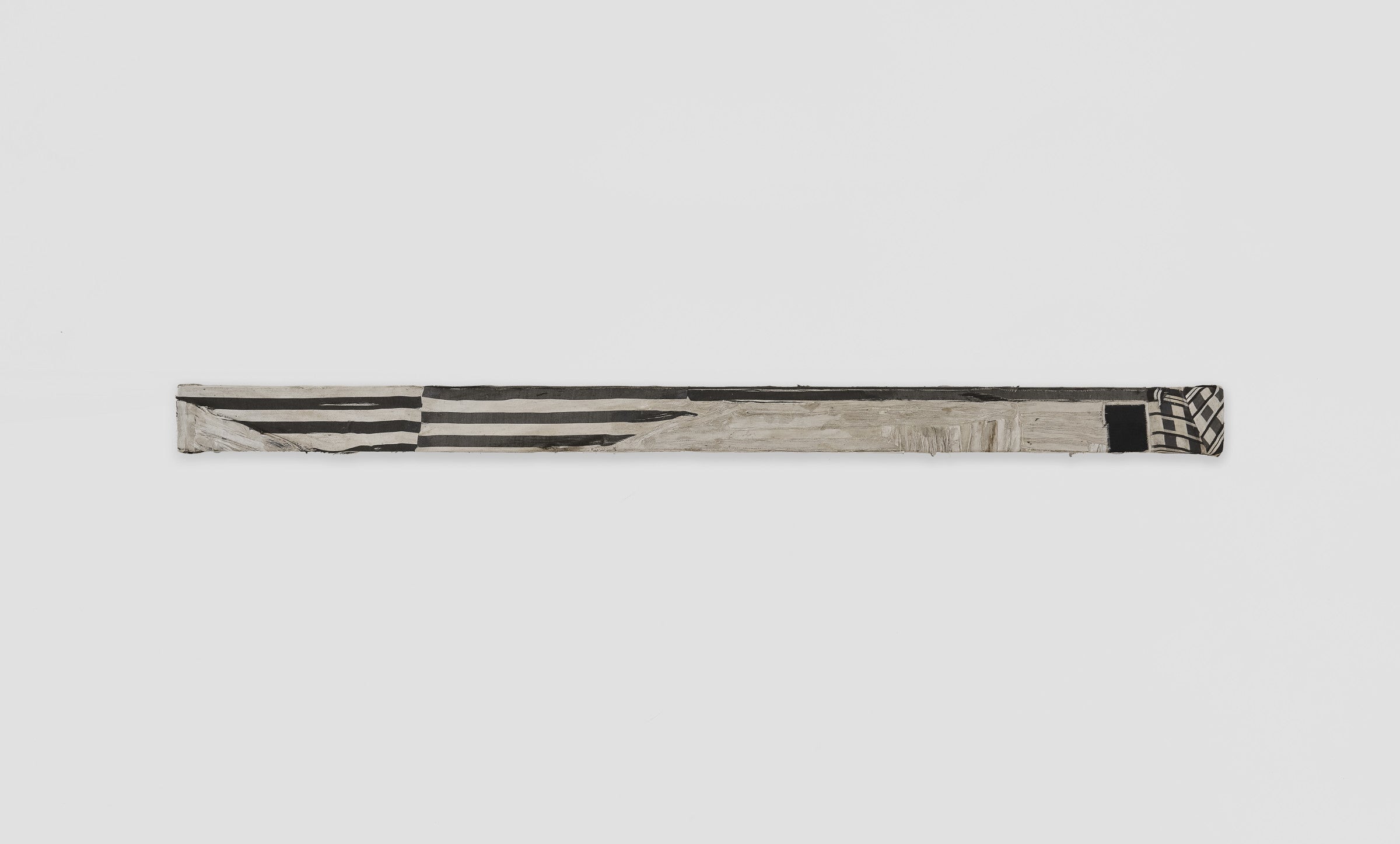
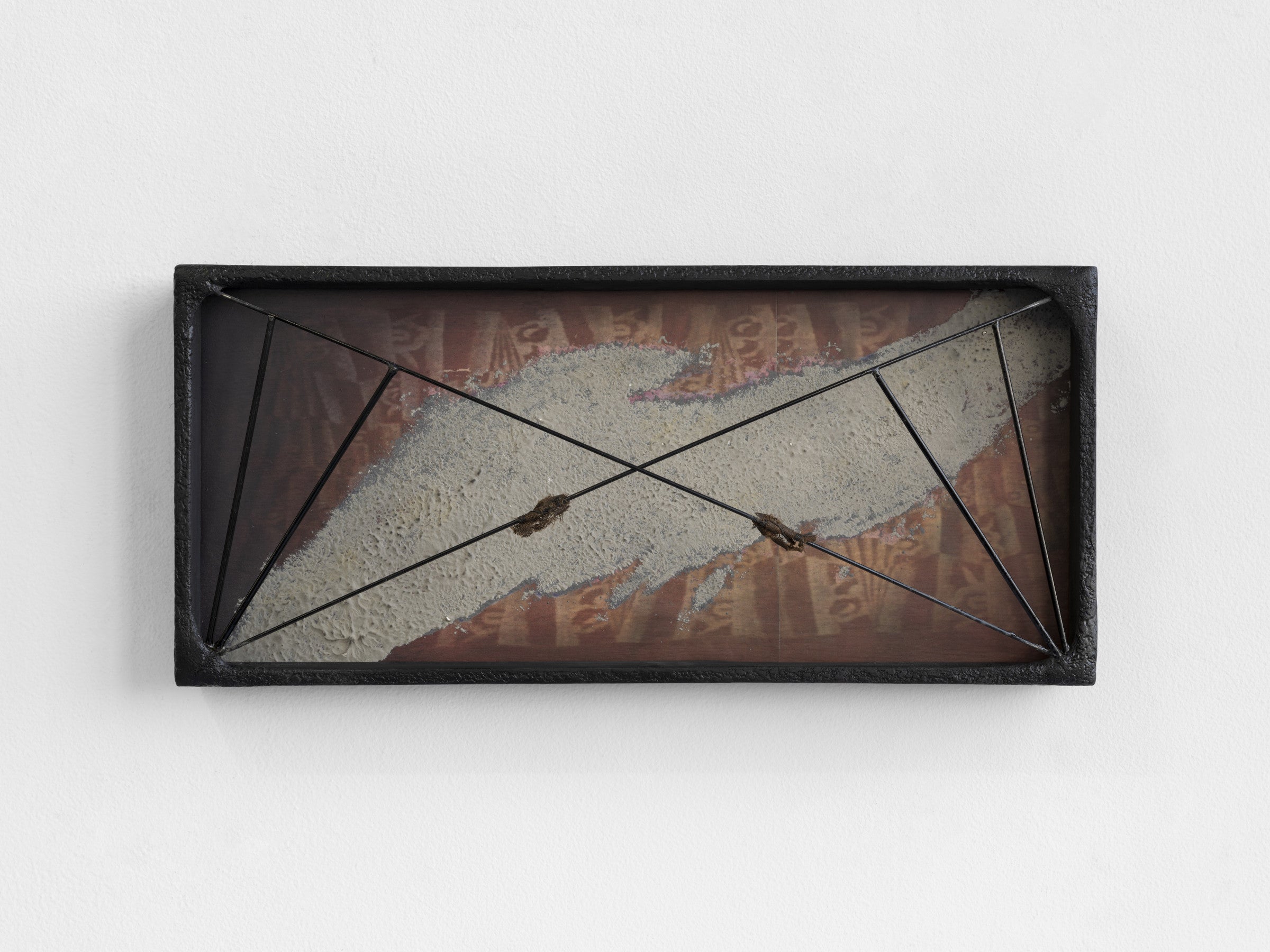
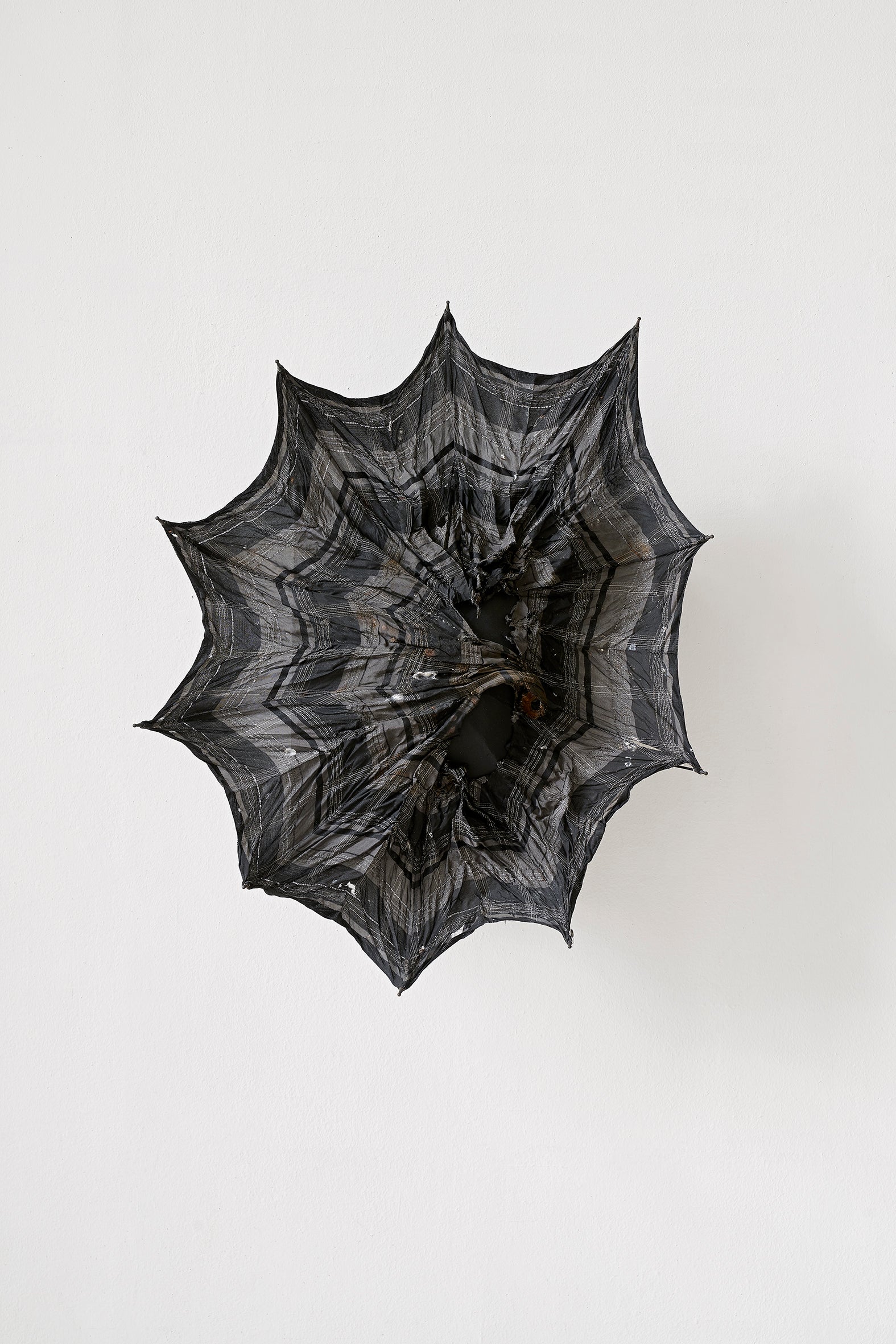
I'm drawn to the idea of recursivity. There is a logic of repetition in which certain gestures, forms, or materials keep returning and are reconsidered. It's also connected to an economy of means. Some of the works that will be in the exhibition, such as the three Untitled (2025), are made from umbrella ribs of earlier pieces, recomposed on layered surfaces using traditional grounds, chalk and marble dust, shellac, oil paint, pigments, and silks. It's a way of exhausting the possibilities of a form: returning to it, testing it, pushing it until it changes. I also like that there is a gradual detachment from the object's narrative. 

over the top, undercover unfolds through “horizons, hidden doors, and suspicious visions.” Your works, often horizontal and quietly elusive, already seem to play with ideas of presence and concealment. How do you see them fitting into this interplay between the visible and the invisible?

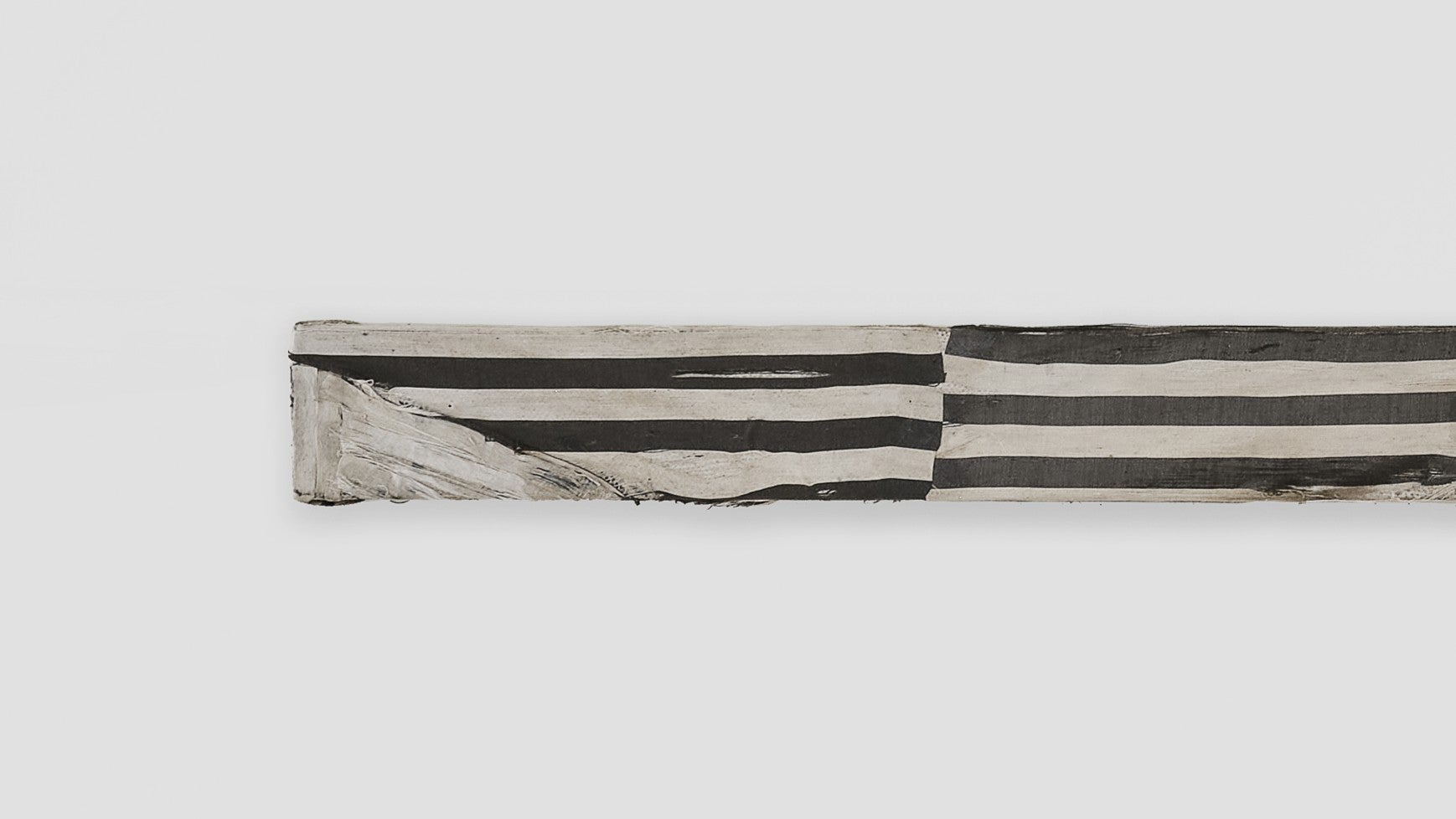
The work was conceived as a kind of landscape. In retrospect, I was seeking something both very light and very condensed, or compacted. The series emerged from problems of integration into a specific even hostile context and reflecting on questions of inclusion into a new environment, and thoughts about possible futures. In this sense, they were also influenced by a set of personal constraints and, in particular, the change of finding my place in a city like New York, a city that is both fascinating and demanding. As well as the experience of a tense political climate marked by a growing fragility of and threats to human rights and women’s rights. These circumstances inevitably became part of the conditions through which the work developed, not as a direct representation, but rather as a sensorial quality and imposition. 

In your video Voices (2025), scientific language becomes a space for sensory ambiguity and poetic slippages. The exhibition at the Foundation also explores codes, subtexts and encrypted messages. What draws you to these specialised vocabularies, and what interests you about their ability to evoke images and atmospheres rather than a single, fixed meaning?

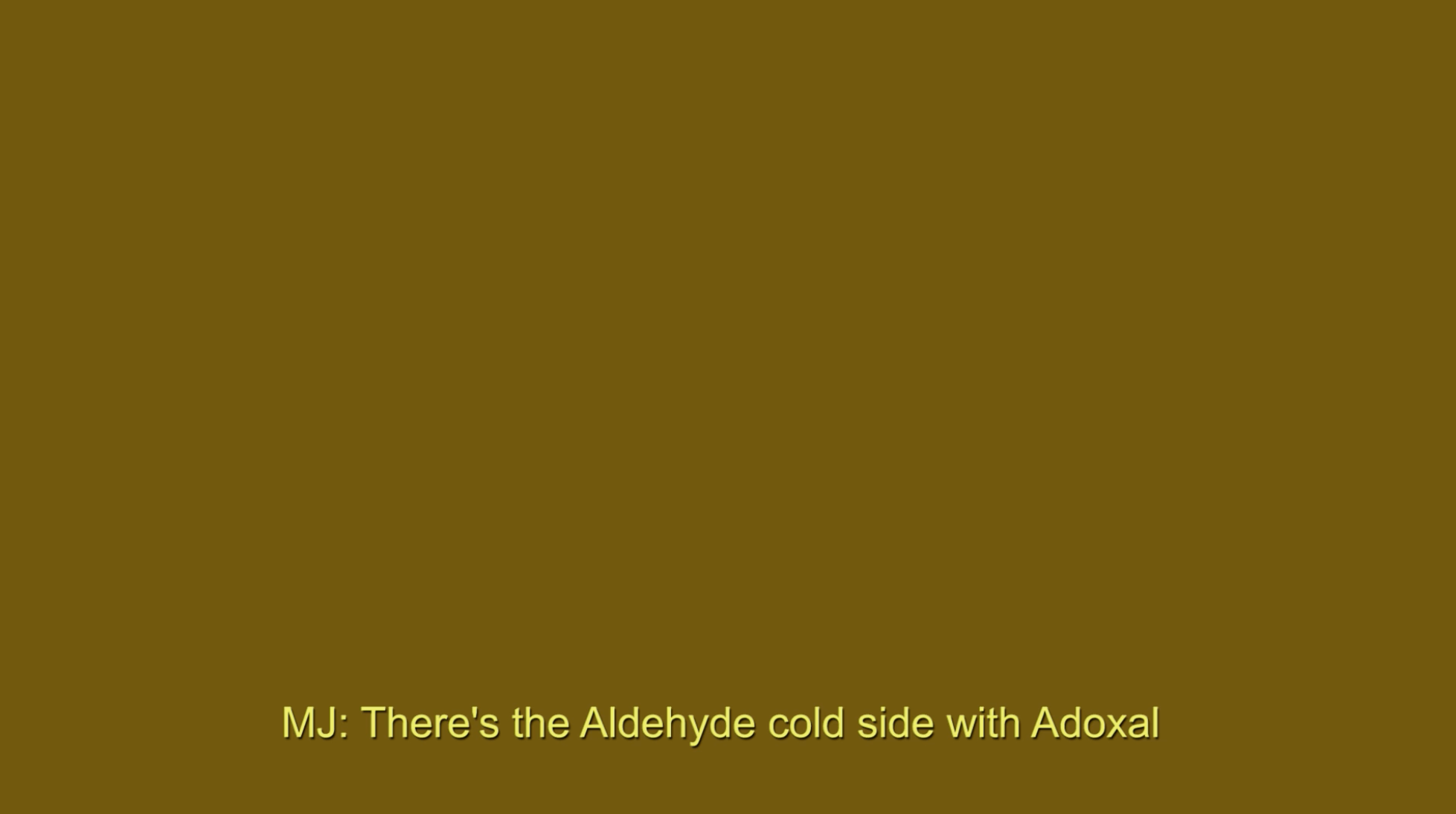
I've made two works (Voices, 2021 and 2025) featuring short conversational audio pieces, each presenting subtitles set against brown-toned backgrounds. They are intentionally brief, as I wanted the viewer to be placed in the middle of a moment to catch only a glimpse of a conversation, with the sense that there is both a before and an after that remain inaccessible. I like the character of conversation itself, in its capacity for abstraction,  its potential for meanings and the failures of language to transcribe. I've focused in particular on exchanges between chemists, perfumers, and people working in the oil industry. These are fields I've been researching for a long time. Much of what they deal with is invisible - fluids, gases, molecules - and the way this world becomes graspable through its highly constructed language and specialised vocabulary has continued to hold my attention over the years.

More about the exhibition over the top, undercover

More about the Nouveau Programme