Read

In Conversation with R. Moreno (Nouveau Programme 2026)
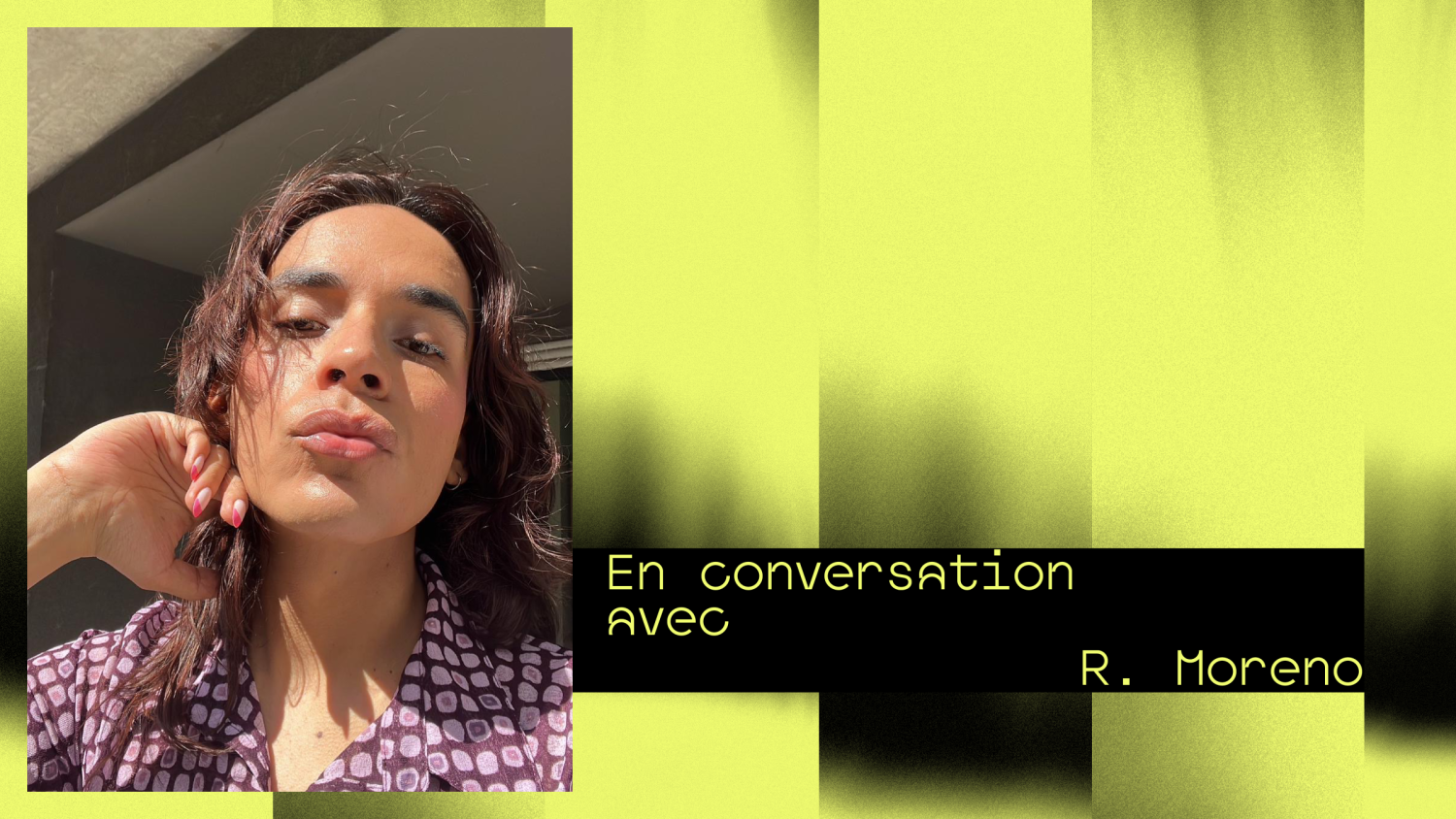
R. Moreno (born in Colombia in 1993, lives and works in Paris) is one of the artists selected for the second edition of the Nouveau Programme. She will present her work in the exhibition over the top, undercover, curated by guest curator Salomé Burstein, alongside Jonathan Martin and Clémence de La Tour du Pin. Ahead of the exhibition opening on Monday, September 9 at 6 p.m., the artist reflects her relationship to language, visibility, and technology, and shares a first glimpse of what she will show at the Foundation.
You seem to explore the distinction or porosity between human and machine. How does this tension shape your approach to sculpture, and what does it say about our world? 

I don’t really think in terms of “human versus machine.” What interests me is the way the West constructed the idea of technological and political progress starting in the 18th century. This ideological construction hides the colonial and slave‑based context in which resource extraction became increasingly frantic. The machine appears during this period, and the history of automation is inseparable from narratives that dehumanize certain social groups in order to justify their exploitation. Mythologies are fabricated in which some humans are considered “less human,” and therefore manipulable and exploitable. 

One example I often return to is the “Mechanical Turk,” presented as an automaton capable of playing chess on its own. In reality, a human player was hidden inside the box and operated the puppet. The automaton was racialized, built to fascinate and deceive, producing a fiction of technological power. 

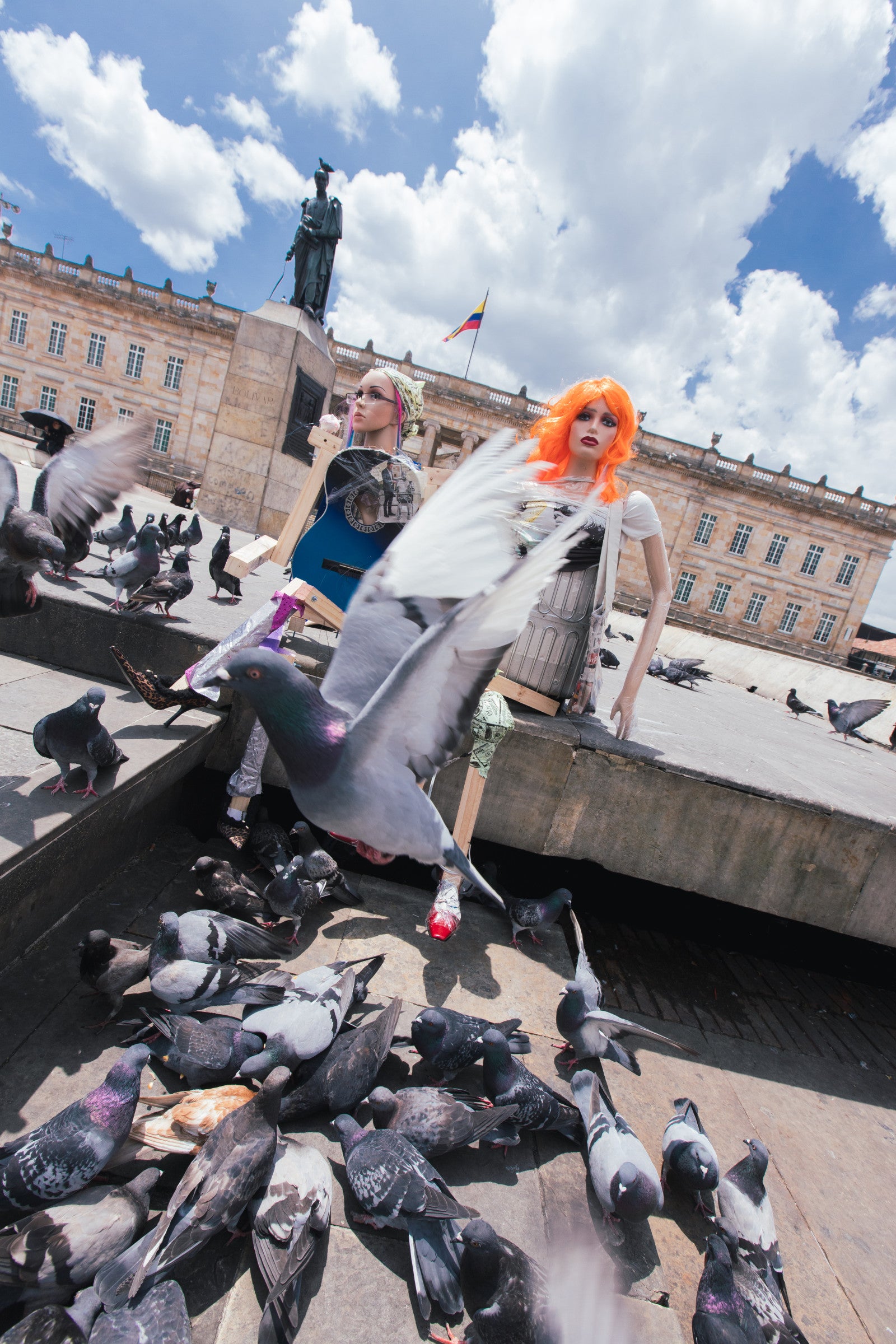
These lines of research permeate my work in diffuse ways. What interests me is how these narratives inform our contemporary imaginaries. For instance, in the sculpture series Pinnochia Tales (2024–), I create figures somewhere between feminine and machine that carry themselves, refusing to be defined by an external gaze. Robotics and the history of computing are also tied to the exclusion of women, which feeds these hybrid forms.

In your work, you treat language as an unstable material. How does poetry function as a tool to disrupt dominant narratives? 

I work with language much like I work with objects. Words, for me, are materials that have lost their original use value, like found objects that have become “waste.” In that state, words can be reassembled differently. 

Language is a system: it organizes our perceptions, our identities, our ways of defining ourselves. Poetry allows us to play with this system, to shift it, to reveal what lies behind the stage—within the logics that structure our environments, whether a city, a school, or the art world. 

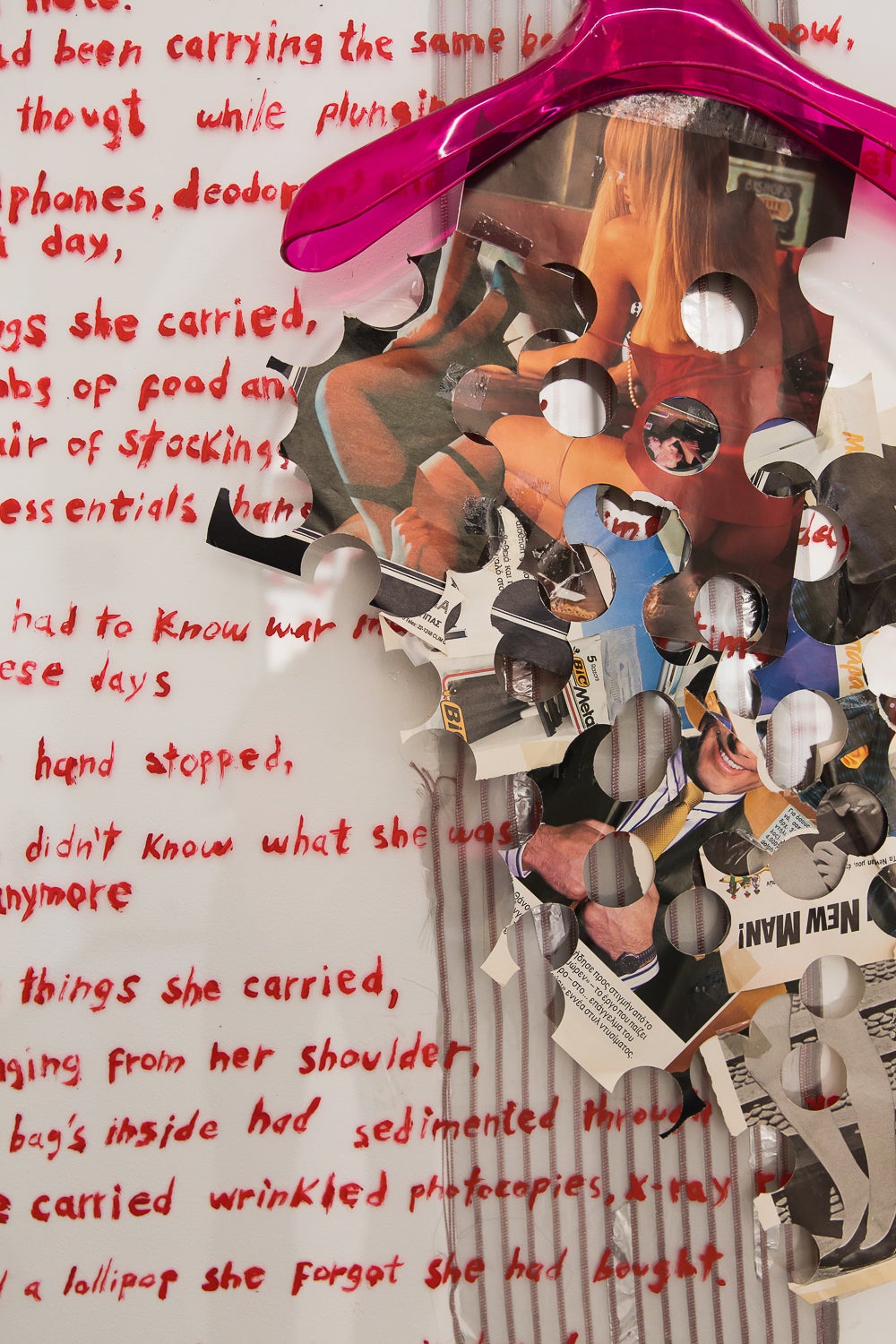
Visually, writing has taken various forms in my practice. At first, I wrote while sculpting, as if the stories directly affected the form. I printed texts on the pieces, in the form of long lines that the viewer discovers while moving around them. I also initiated forms of collective writing inspired by TV series screenwriting methods. For the sculptures I will present at the Foundation, I have used language that was already printed, already in circulation: typographic fragments drawn from magazines, which I use to give form to the poems I write. Text is a backbone, a tool that guides and structures without imposing a single meaning.

You often repurpose found objects to reveal representations of power. In the exhibition over the top, undercover, the idea of “strategies that orient the gaze” is central. How do you choose objects that can disrupt these habits? 

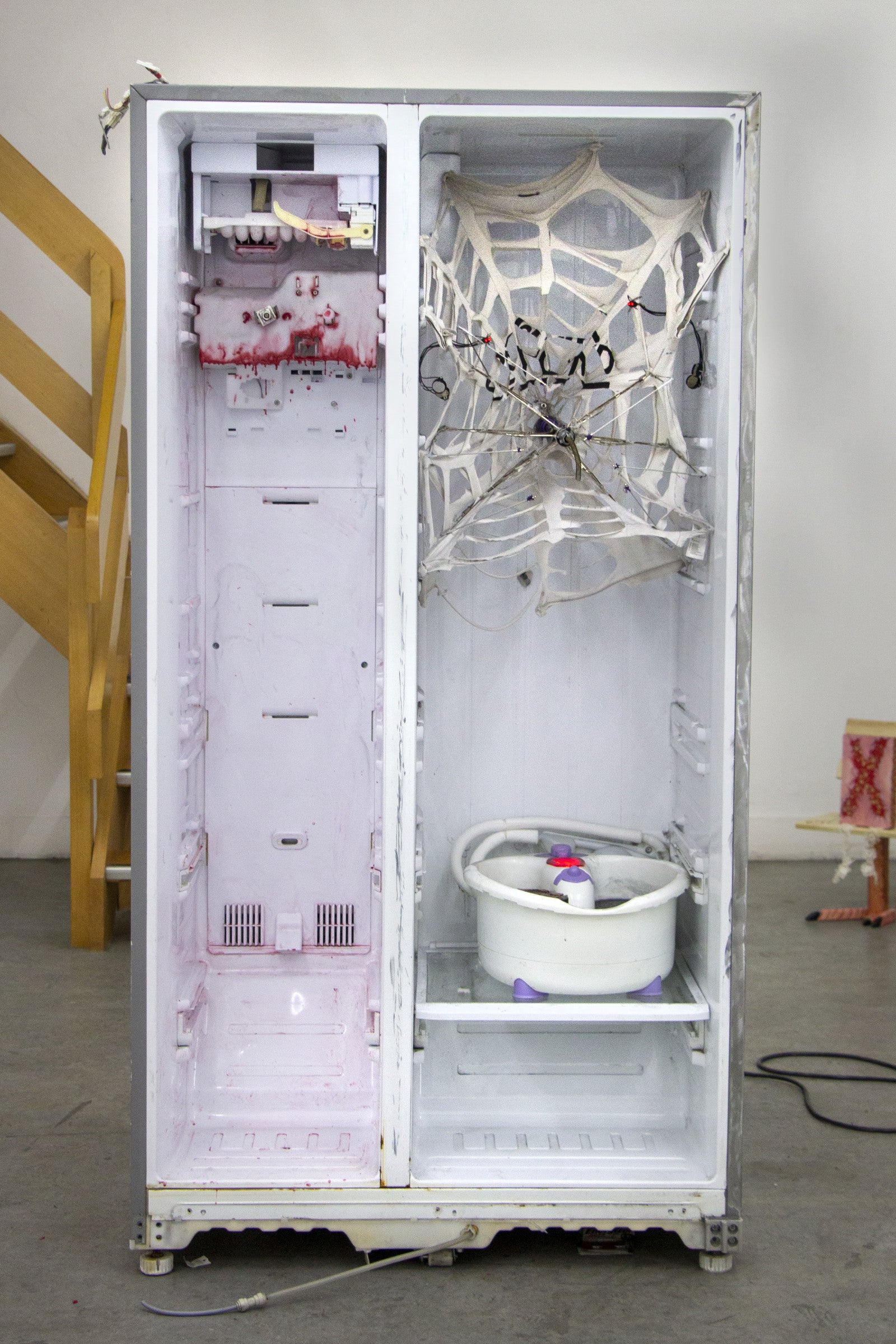
For a long time, I was interested in the historicity of objects—the idea that they inherit traumas, that they carry traces of political or ideological contexts. The refrigerator, for example, is not just a tool for preservation: it was designed to organize domestic space and the role of women. 

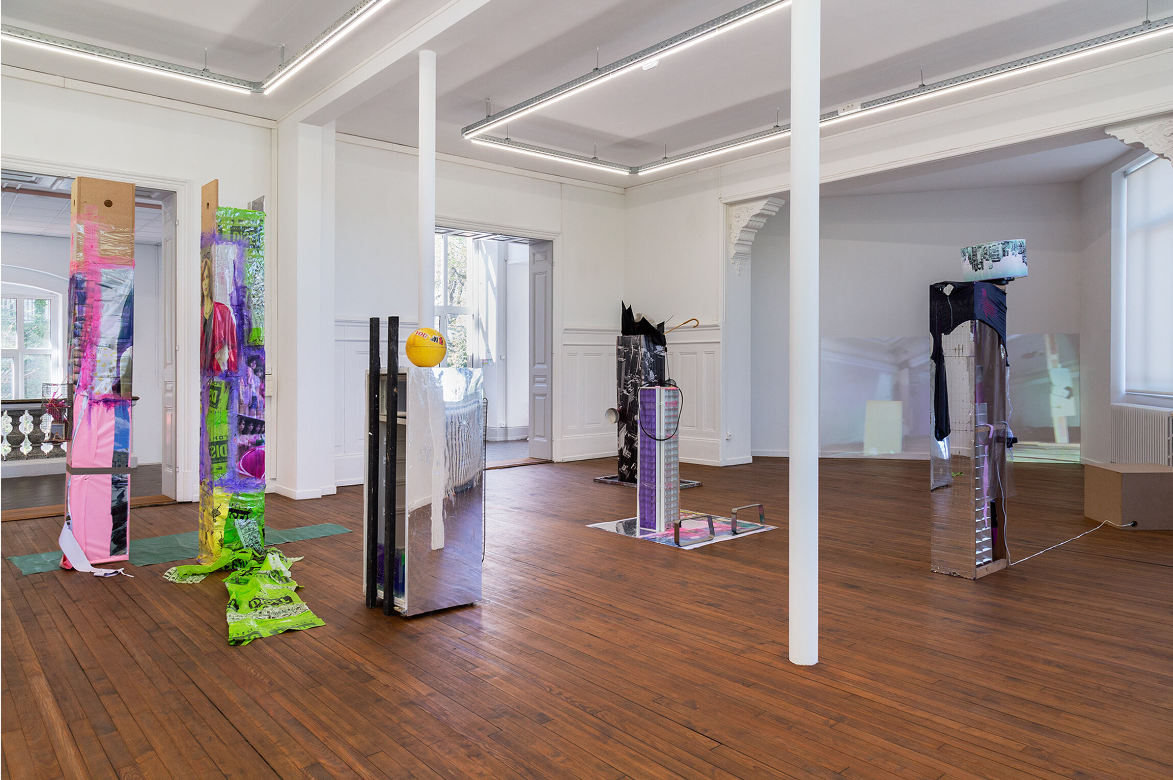
But today, my approach is evolving. I want to move away from essentialization—the idea that an object could be perfectly defined, perfectly readable. The sculptures I will present in the exhibition are crossed by openings and exits, by deformations. They escape the possibility of definition or determination. I imagine this experience as both mental and emotional: one might reconstruct, for example, a head, without ever fully grasping it. The sculptures I produce have a kind of human presence—they are strong, intuitive—but impossible to reduce to a fixed silhouette. I look for open, ambiguous objects capable of generating an infinite number of interpretations.

In the exhibition The World (solo show currently at Crac Alsace until August 30, 2026), you already explore what happens between what is visible and what is not. How does this attention to what is offscreen continue in the upcoming exhibition at the Foundation? 

The pieces that will be shown at the Foundation extend the monolith‑boxes currently in the Crac exhibition. The monolith is a recurring motif in my work. It refers to the cinematic universe of Stanley Kubrick, especially in 2001: A Space Odyssey (1968): a rational, hermetic object that seems to contain an inaccessible truth. I wanted to work against this hermetic quality. The sculptures reveal their interiors, their sutures, their reverse sides. They play on the tension between exterior and interior, conscious and unconscious. One feels as though one is accessing the inside, without ever fully getting there. 

I don’t really believe there is a clear boundary between visible and invisible. What interests me is the negotiation between these two forces, the way they sketch a shifting identity‑silhouette. 

More about the exhibition over the top, undercover

More about the Nouveau Programme