This very humid land that I love so much
1.
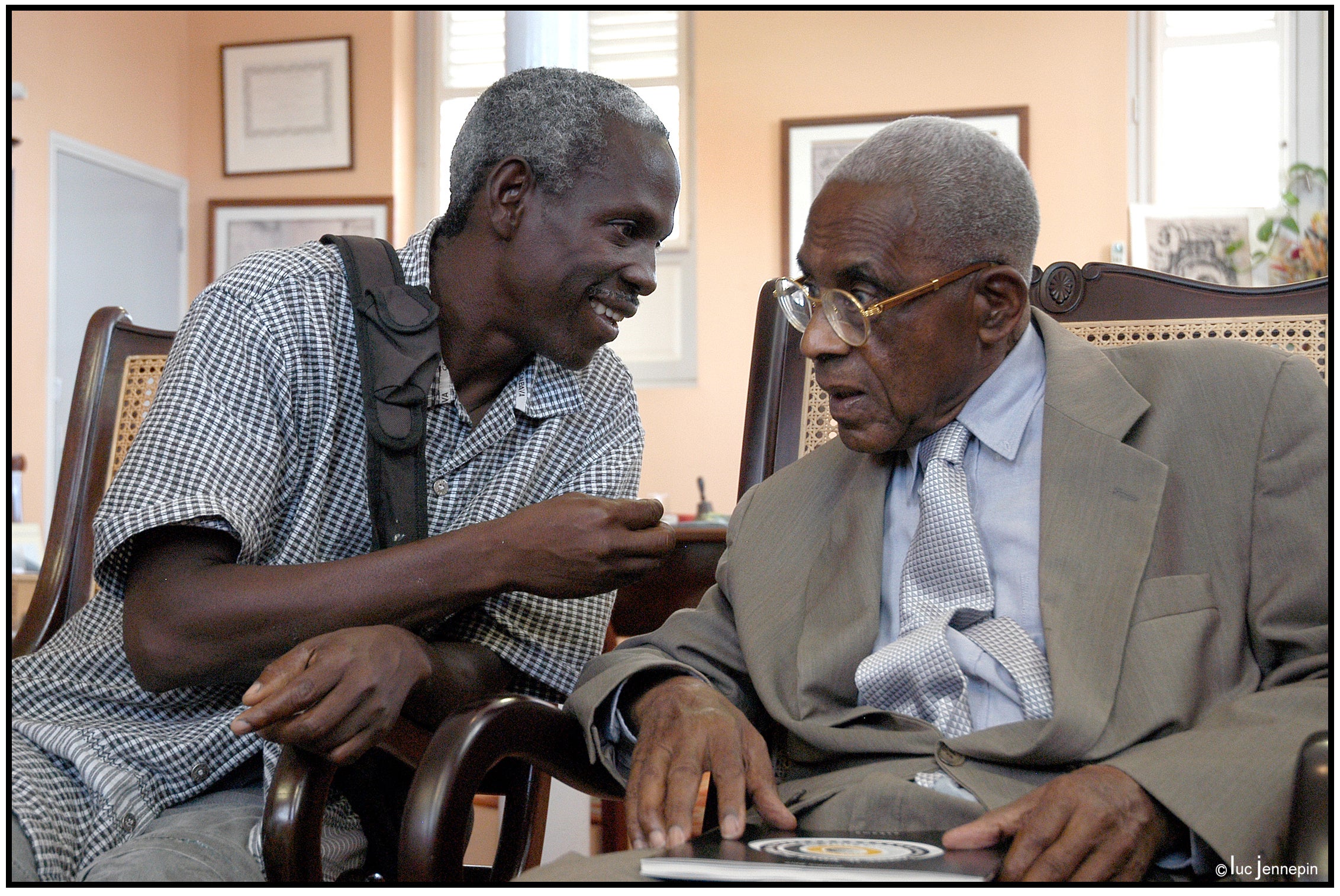
One morning in 1981, the artist Christian Bertin walked into the office of Aimé Césaire, mayor of Fort-de-France, the capital of the Caribbean island of Martinique, in a pair of blue electrician’s overalls. Bertin had dodged the mayor’s secretary to reach his desk. He anticipated Césaire’s thinking. His overalls gave him away; he felt Césaire’s eyes flash in recognition. What could Bertin want from him that he hadn’t already given? This is what Bertin assumed. Whether he correctly guessed the reaction of the négritude movement scholar and decolonial architect is beside the point, because his thinking was informed by the history he carried with him into that room.
In the late 1940s, when the island’s sugarcane economy had all but collapsed, Césaire (who would remain mayor from 1945 to 2001) installed a policy that allowed labourers bereft of work to acquire plots of land on the outskirts of Fort-de-France. Here is where the slums were formed, and where Bertin’s mother made them a home. Bertin grew up in a house of eight women—his mother and her sisters. He recalls a childhood animated by their agency. He watched how they appropriated the system they had inherited and engineered their autonomy through and despite it. He admired the fisherwomen at the weekly markets, elegant and composed, who possessed the same entrepreneurial spirit as the old charbonnières, women who lugged coal back and forth from the dockyards. For Bertin, freedom was what Black women were able to carve for themselves.
Bertin was in the mayor’s office that day because he wanted to attend art school in France. He had so far been taking classes at SERMAC (Service municipal d’action culturelle), the art school on the island founded by Césaire, and now wanted to work with ceramics and spend his days studying in a bigger art school in France. Césaire welcomed his ambition. Bertin was admitted to the regional art school in Mâcon even without the requisite high school certificate, and received a living wage stipend during the five years of his attendance. Bertin thus launched his practice as an artist, which ran in tandem with his career as an electrician. The two mix to this day; it’s visible in his artworks, which are complex systems of interconnected objects—pulled apart and then meticulously, uniquely, put back together.
I first met Bertin in 2024, while on a press delegation that accompanied artist Julien Creuzet to Martinique, where Creuzet announced his national pavilion for France at the Venice Biennale. Creuzet is of a younger generation of artists from the island, and his decision to move the press conference from a customary hotel room in Paris to the tumbling sea-facing garden of Édouard Glissant’s former home was indicative of a pointed sentiment. It was a choice in keeping with Glissant’s philosophy of decentring France to its so-called outre-mer (literally meaning over-sea, an derogatory term, but one that Creuzet revised with an extraordinary tinge, a superhuman inflection); it also carried an unfading respect for the island that raised him: to better show us himself, Creuzet took us to see his elders.
Bertin uses scrap with the same fluidity as an illustrator with ink in their pen.
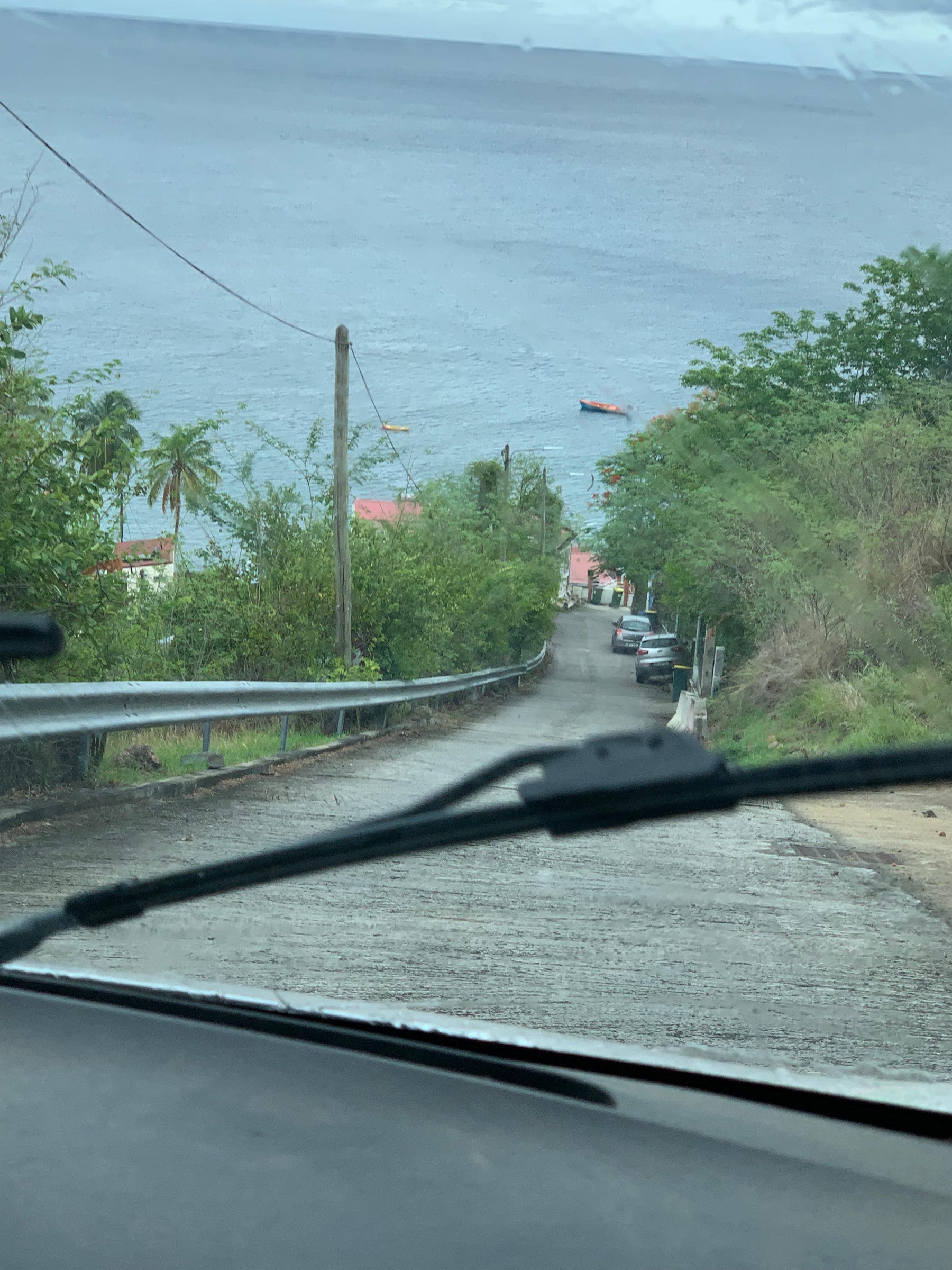
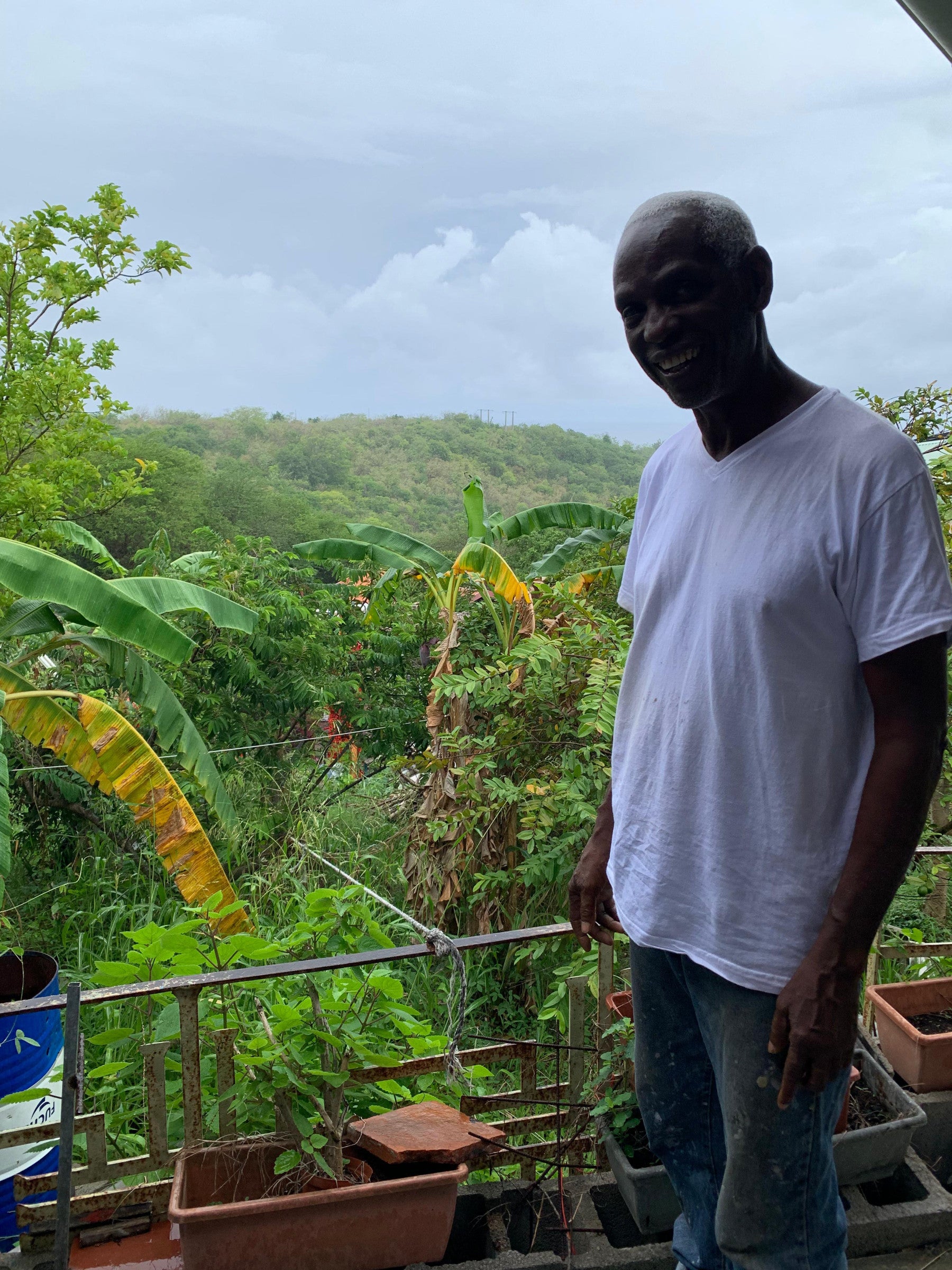
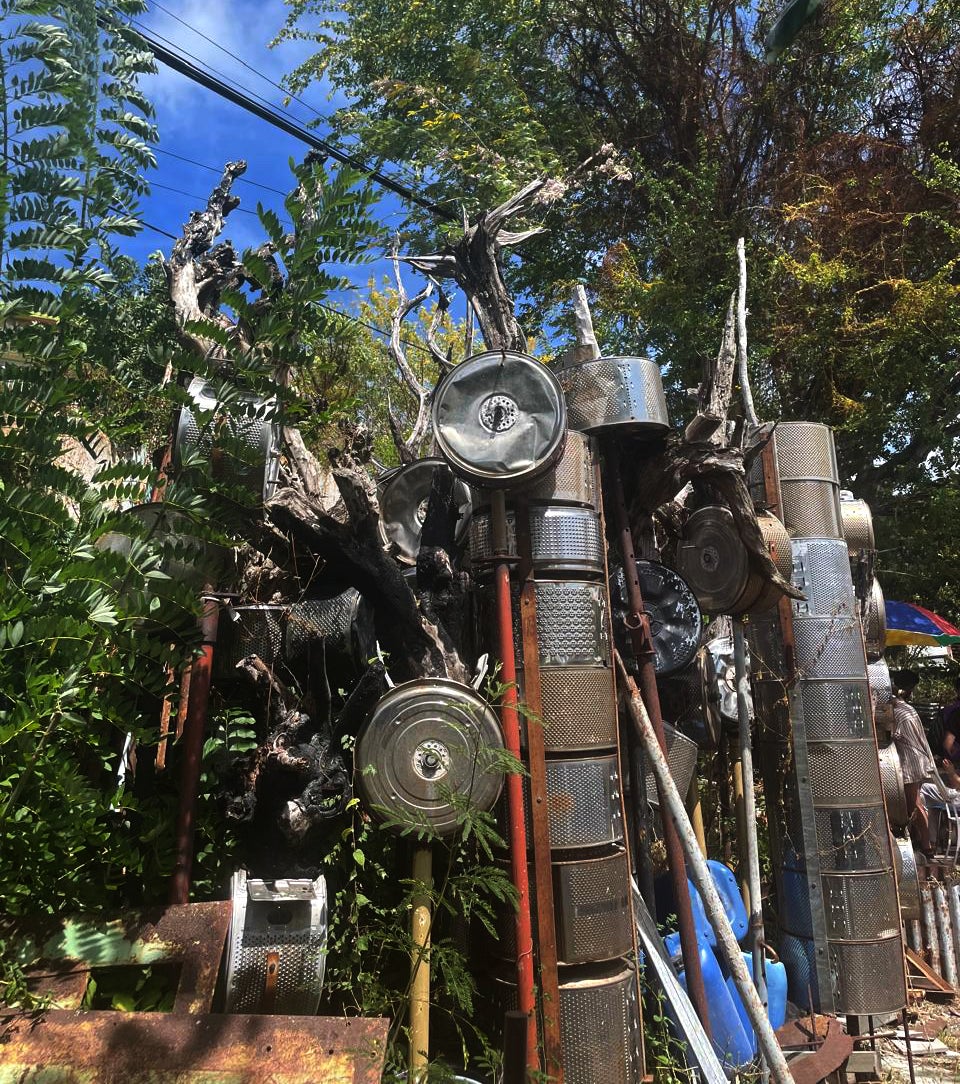
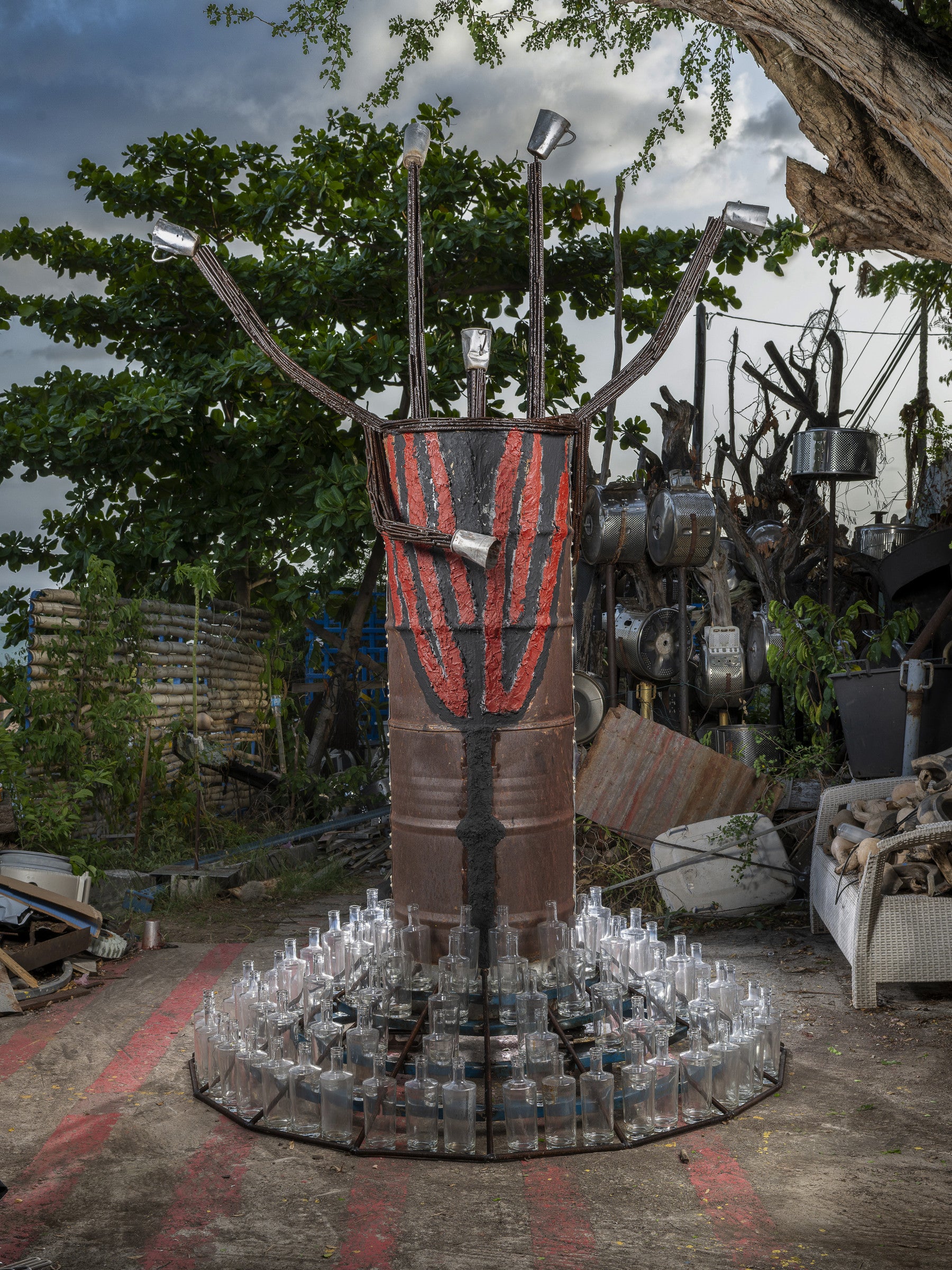
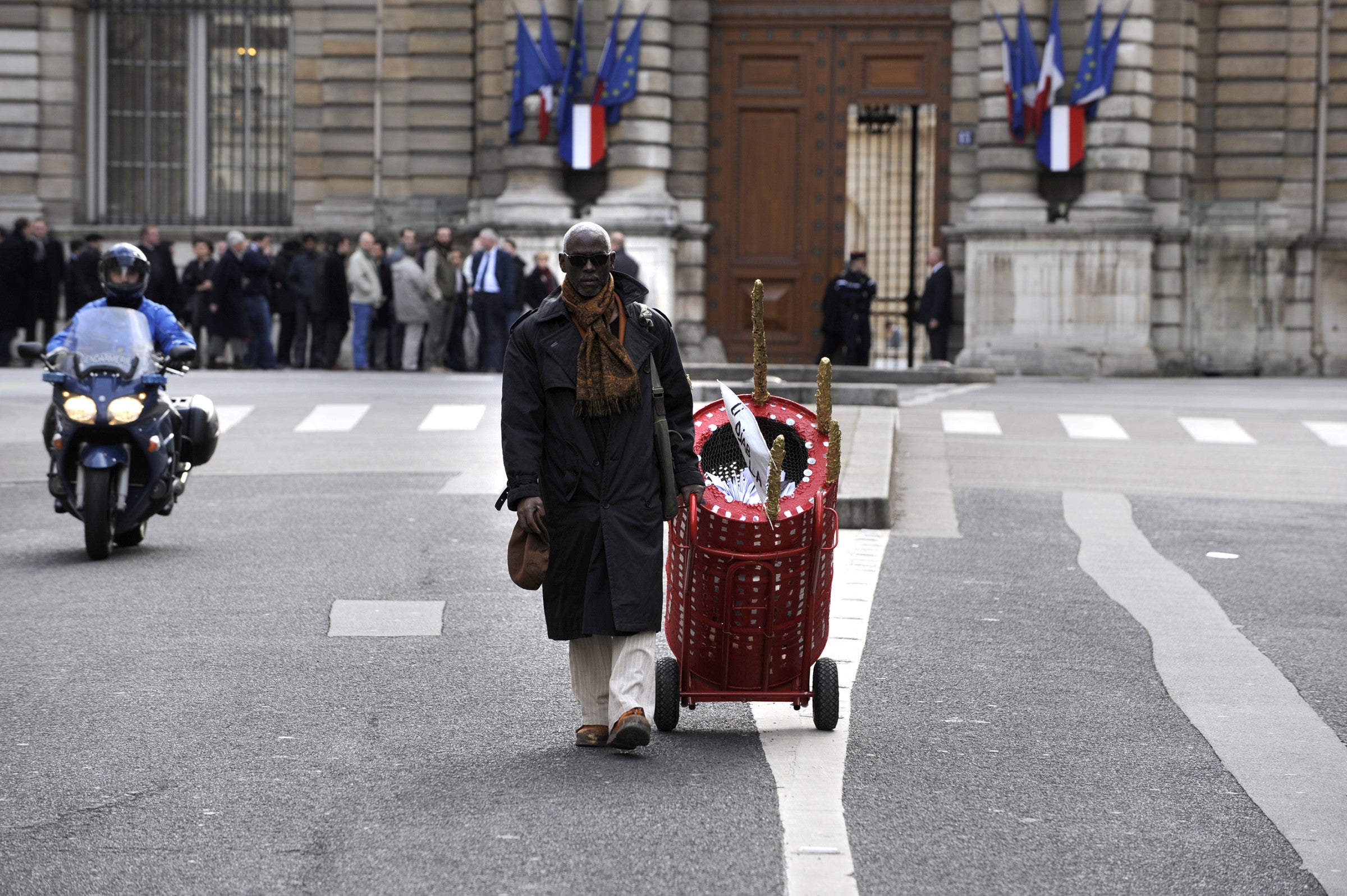
Visiting Bertin was a singular experience. In the mid-90s the artist purchased a plot of sloping land at the foot of volcanic Mount Pelée, upon which he built his studio, perched on a bluff over the sea. It’s marked by a fence and gate made by Bertin: electrical wire braided into grill-work, yellow mailbox doors bolted in a grid, their apertures winking as sunlight seeps in. Conch shells emblazon one façade, like a crest, a coat of arms. Once inside, it’s Bertin’s world, a metal-infused land of his wonder, and of his salvage: everywhere there are sculptures, assemblies, collages; of washing machine tumblers and doors, car fenders, tin roofs, new or with layers of red-golden rust, glass bottles flickering in curving patterns, ornamented pieces of wood. Barrel bottoms flattened and joined with nails—the metal made to look so thin, nearing translucency. Bertin uses scrap with the same fluidity as an illustrator with ink in their pen. Reclaimed metal, glass, and wood—so seemingly inflexible, worn down, already consumed, considered delinquent, unusable—take on new form under Bertin’s care. Scattered around the property are Bertin’s ovens, in which he sometimes bakes his sculptures—serrated tin sheets hitched perpendicular to the sky, panelled in glass, with light pouring in.
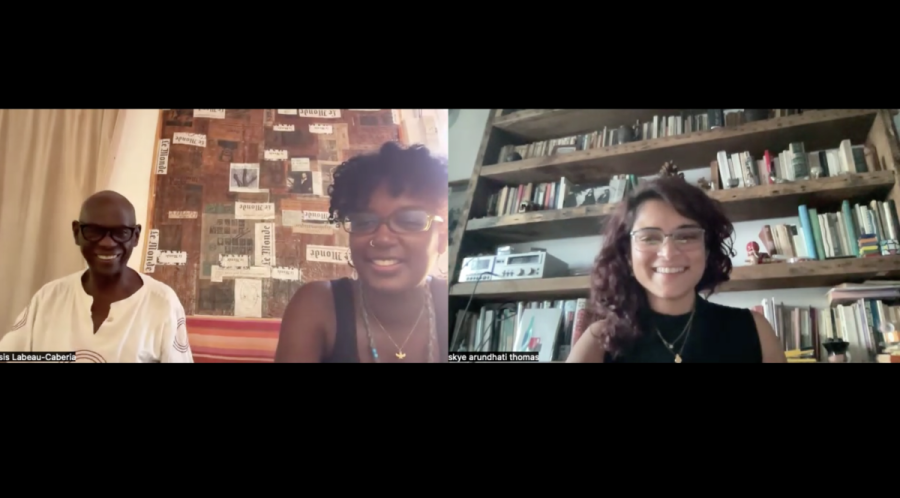
After the visit, I sit next to a younger local artist on the bus ride back. He’s never met Bertin before, even though he’s lived his whole life on the island. He is moved, humbled: “They are out here,” he says, damp-eyed, “whether or not anyone is paying attention, they are here and making the work, and they are our elders.” Bertin is in his early seventies, but he’d never betray that; he’s sprightly, energised. Now we continue our conversation online, via video call and text message. Bertin is affable, his broad smile is encouraging, and when I ask him a question, he frowns slightly and leans in, one ear tilted toward the computer camera. But I do not always speak with Bertin alone, partly because I don’t speak French and he doesn’t speak English, and partly because of the geographical distance between us. Me, currently living in the old empires, trying to eke out a life, and him, in his tropical studio, always affectionate in his correspondence, always first to mention the island before anything else: “Quel plaisir de vous lire dans ce pays très humide que j’aime beaucoup.” (It’s a pleasure to read you from this very humid land that I love so much.) The writer Isis Labeau-Caberia accompanies Bertin and I, whose own work is that of history, myth and speculation. I ask a question, Bertin elaborates, and Labeau-Caberia translates each in turn, her voice and perspective infused in my requests and in Bertin’s responses; her authorship inscribed into both our voices.
We speak about Bertin’s life and work, his studio, the island; each subject a special pathway to grander questions of selfhood, agency, even nationalism; inquiries that appeared to dog not only Bertin’s work but also Isis’s and my own. And as we enter these deep waters, I am especially grateful to witness the precious relationship between Labeau-Caberia and Bertin: two radical, brilliant Martinicans from far-apart generations, each grappling with a history that is being written as they inherit it, and still propelling them steadfastly into an unknown future. They are joined by the figures that continue to frequent the island: Césaire, Glissant, Frantz Fanon, and more—interconnected biographies that leak outward from this island to others in the archipelago, and further beyond. What Empire seeks to isolate, we work to entangle; such is one project of decolonisation. And like this, we proceed.
2.
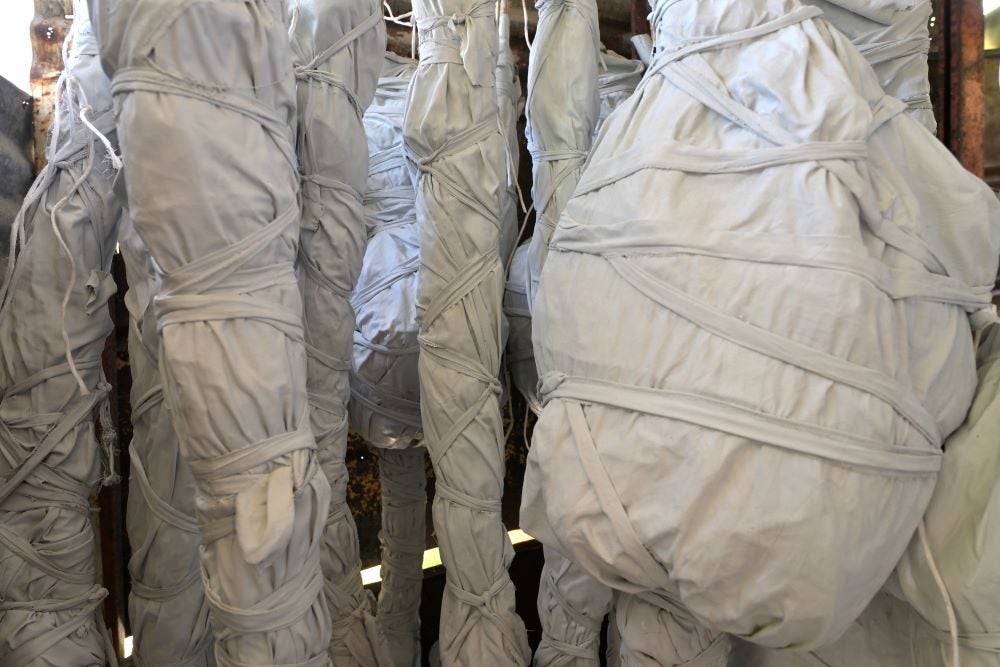
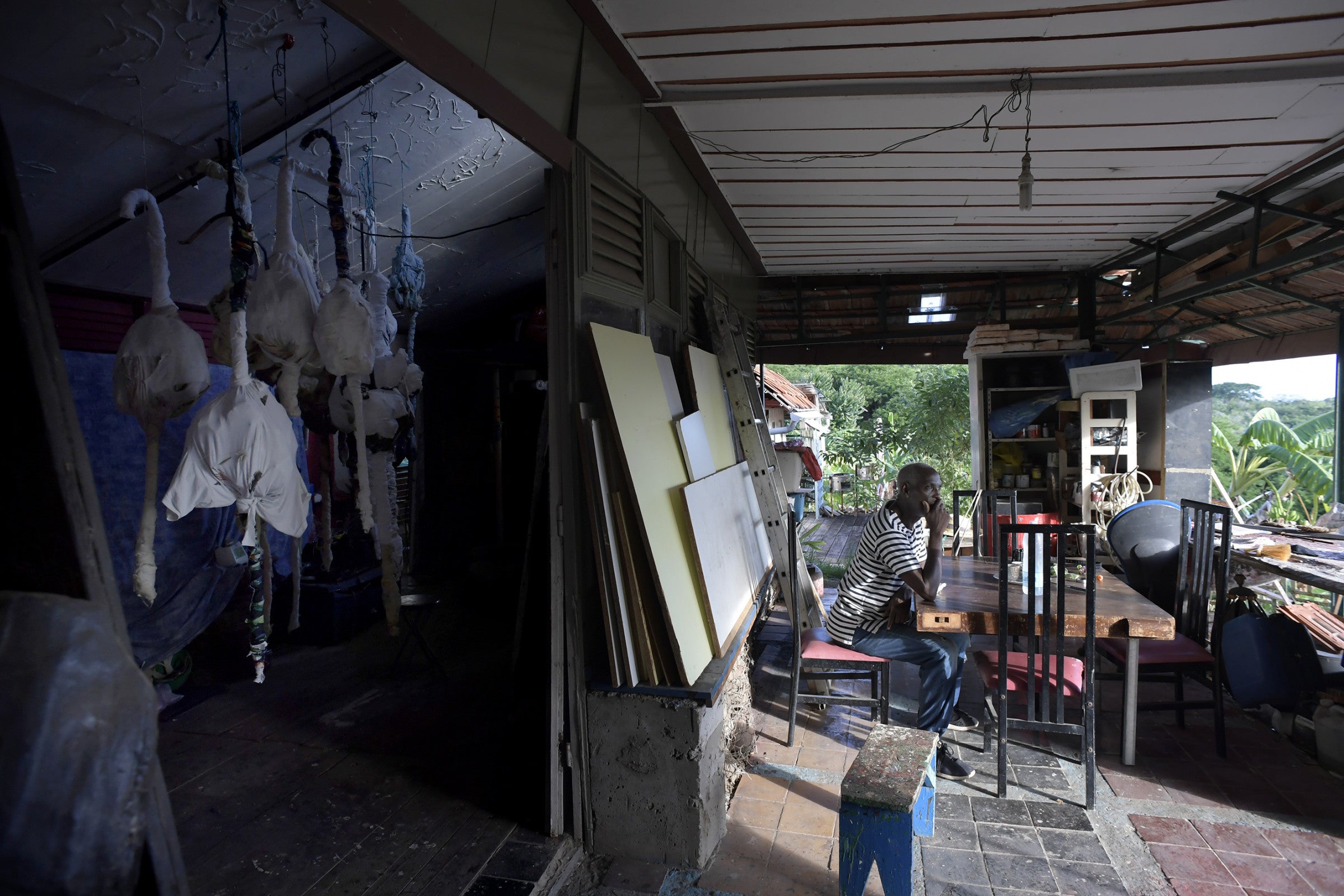
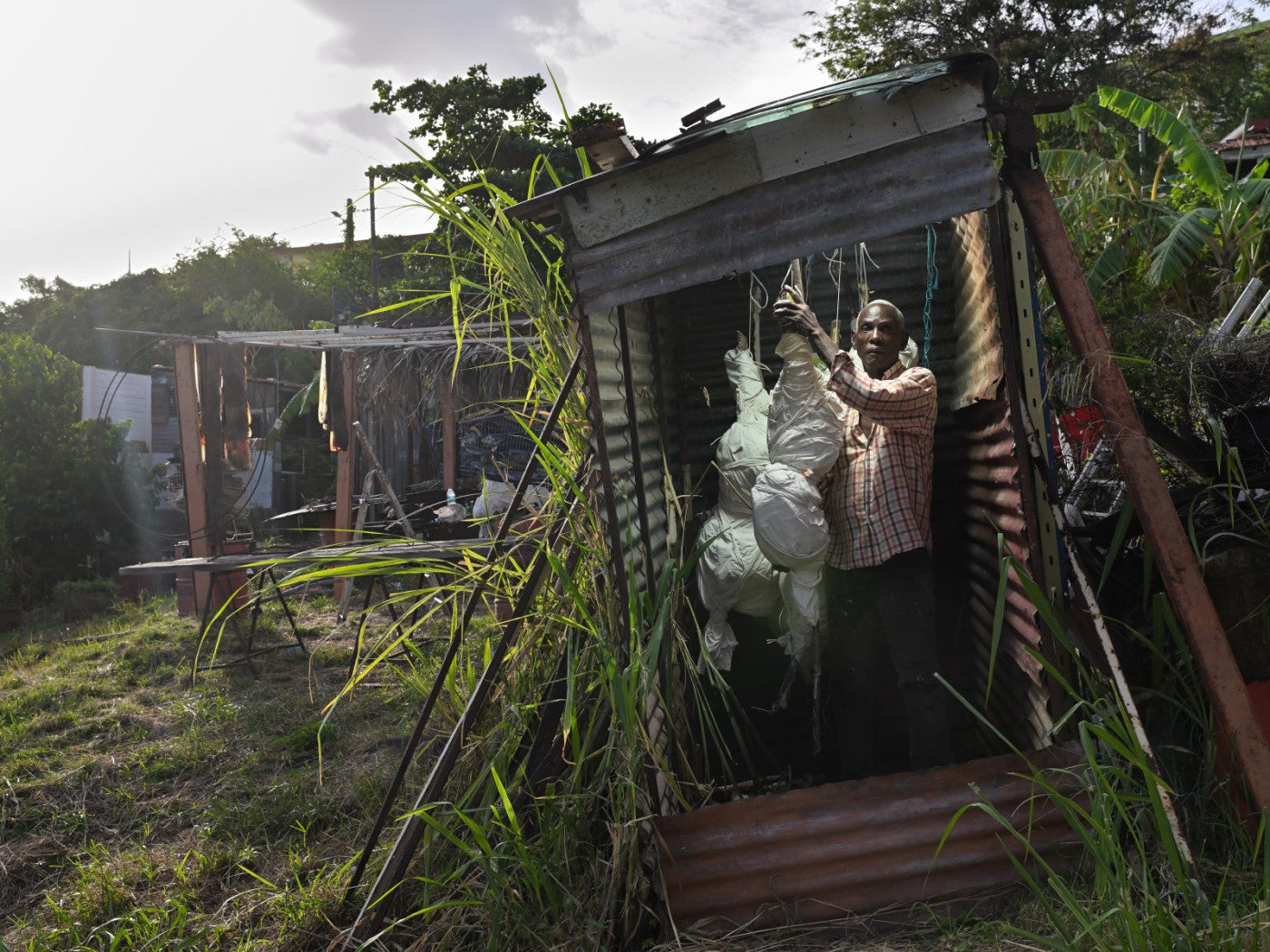
There is a work Bertin has been making since the 2010s, entitled La Jungle, cette foule qui ne sait pas faire foule (The Jungle, this throng which does not know how to throng).1 It’s simple in its conceit, but painstaking in approach. Bertin plants banana trees on his land without using the toxic pesticide, chlordecone, of notorious French colonial practice. He cultivates the trees, and just as the fruit begins to ripen, he binds the bulging stalks in special wax and canvas cloth, and fits the limb-like figures into his handmade ovens. Inside, they are dried by the sun: losing moisture, turning stiff, and curing. Once they are ready, Bertin removes and hangs them from ceilings in dense clusters. He tells me the cloth is a nod to medicine women of years past, who would swaddle injured bodies in leaves and specially soaked fabrics. When I visit Bertin’s studio, one iteration of La Jungle is roughly installed in a narrow cabin and lit by a slim overhead window pane, which dapples light over the canvas-covered fruit. The metaphors abound. They do not need to be spelled out; they persist. Bertin does not have to say what he means; he shows it to us instead.
He often works in installations, with multiple objects or vantage points. He conceptualises space in epic functions: the conceit of which sometimes reminds me of the precise feeling of first walking into a domed place of worship—a temple, a church—skylight flooding the centre of the room. Light mixes into object and space in one slippery moment where every item is assimilated. There’s something cathartic there, the cognisance of one’s own smallness perhaps; it’s not always spiritual, sometimes it’s also about history, the collapse of it, the knowledge that generations of visitors have entered feeling exactly the same way. It’s a sharing of affect, and a travelling through time. When I first see La Jungle, the mummified banana limbs—the eponymous crowd—are swaying finely in the afternoon’s pale breeze. I can’t quite remember now, but I’d like to say that there was an aroma mixed into the scene, something sweet and malty, the sweat of banana and fabric, dried in a soft steam, like incense. I share with Bertin that I sense a spiritual dimension to the work. He tells me how he frequented a temple as a child, that of the forcibly migrated Tamil diaspora in Martinique—so a Tamil temple, a coolie temple in the vernacular. Here is where all three of our histories interlock, Labeau-Caberia is of this community, and I have indenture ancestry too, my grandmother was born in South Africa, the descendant of a coolie woman.
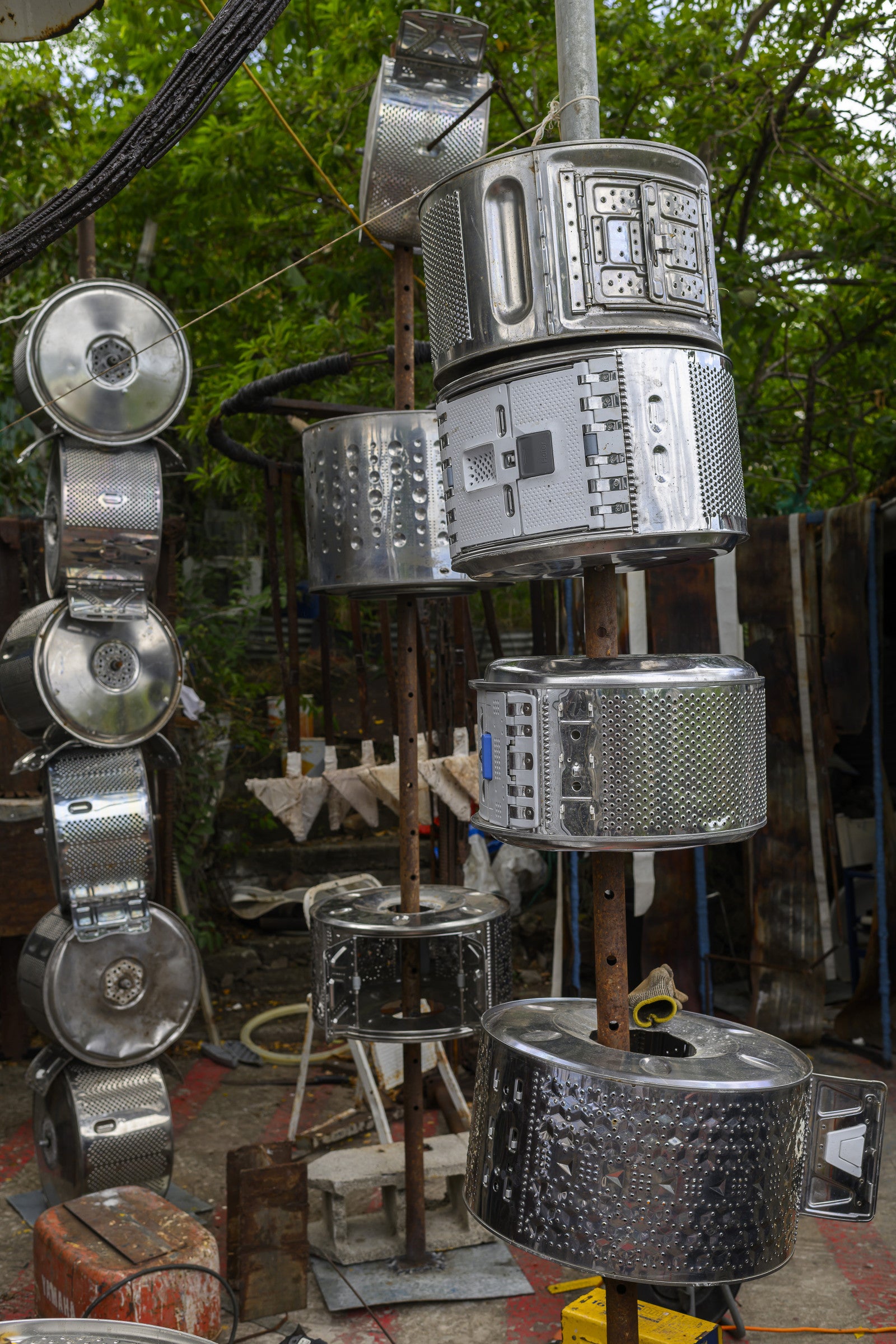
In the months we are speaking—from May to October 2025—Bertin is deep in the process of making new works for a show. One such piece is Les Lavandières (2025): a towering sculpture comprised of washing machine drums, doors, drawers, sockets, and frames. He is meditative when describing his conception of the titular laundress. Her job to him is ritual; the knowledge is in the succession of daily gestures: she enters the bourgeois household, collects the dirty clothes, walks down to the riverside, placing cloth on the stone, laughing and gossiping with her friends, other lavandières—each of them squeezing a moment in time, in midst of work, for play—only to bring the clothes back to her own house to iron and return them clean to the bourgeois household. “It’s a performance of survival,” Bertin elaborates. His own mother was a laundress. And we are back to his preoccupation: the autonomy engineered by the women in his life. In Les Lavandières, Bertin pulls apart salvaged washing machines and utilises each component to build an immersive space that viewers can enter. What has automated the ritual is here disassembled and turned purely plastic. As the drums, doors, bolts and frames unfold, each like a beat, a step—perhaps of the ritual that now ceases to exist—Bertin forces a staccato of time.
I say to Bertin, via Labeau-Caberia and her thoughtful translation, that certain postcolonial conditions (like my own, as I am from India) use the figure of the autonomous woman to construct the idea of the nation-state. This is an archetype synthesised from women who have created a space to articulate themselves separately from the colonial enterprise. And I ask, does feminine agency influence his consideration of the nation-state, too? I want to know what he thinks of a possible national project for Martinique, and I am searching for a way in. “It’s difficult to elaborate a nationalist thought when you’ve been a slave, and after that an exploited worker, still on the plantation fields, and after which you are departmentalised,” he responds, plainly, deftly summarising the Martinican timeline (in 1946, Martinique was “departmentalised,” i.e., removed from colonial-era administrative laws and placed under those of the French nation state). This takes us back to La Jungle and its crowd—the one still trying to form itself. In the Caribbean, Bertin explains, as does Labeau-Caberia, women are at the forefront of independence movements. “The struggle for autonomy is a feminine one,” he says. What manifests under strict conditions of patriarchy is what mobilises the revolution.
3.
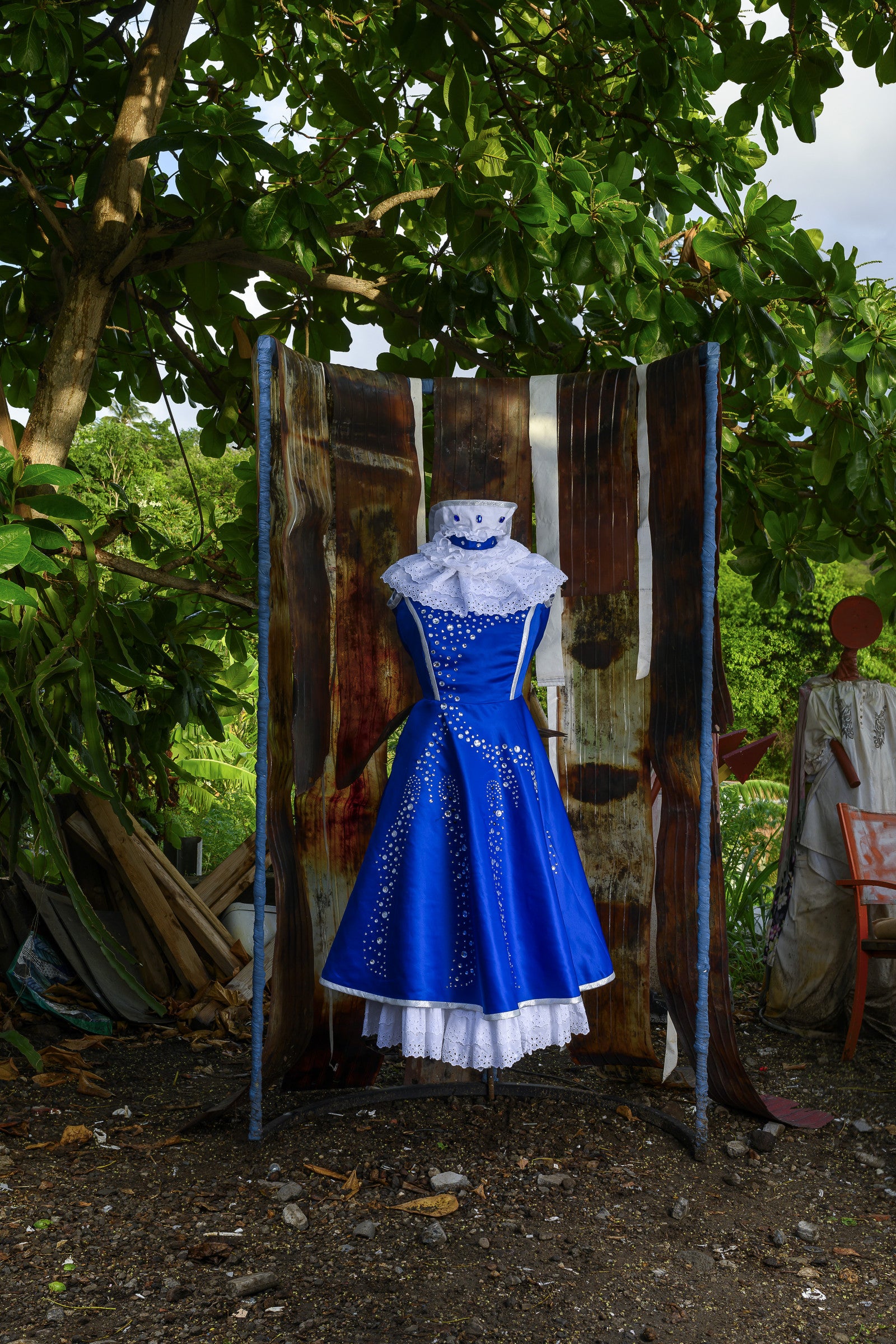
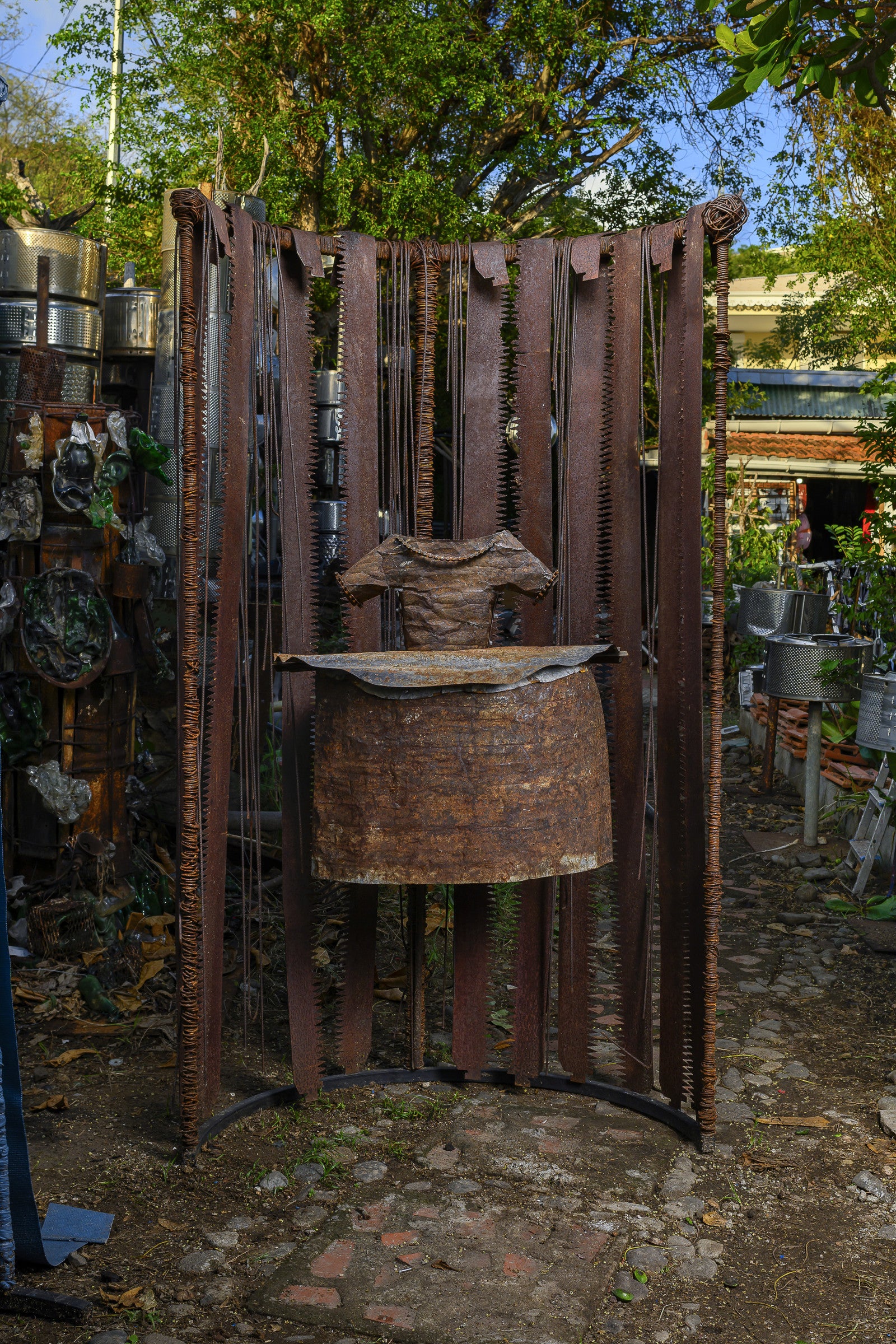
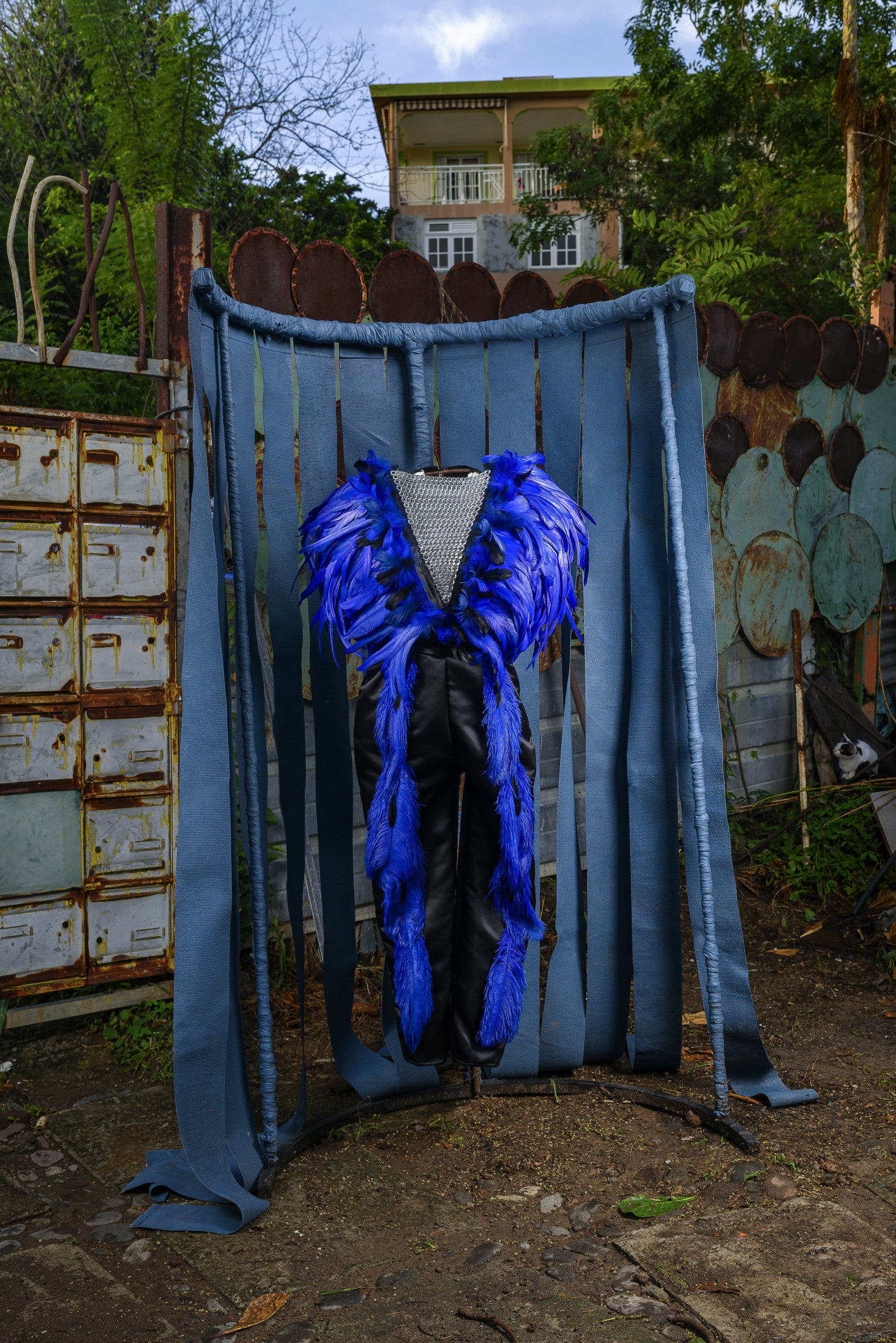
Bertin holds his phone up to the camera and swipes through images of three new sculptures, dresses, each in a different material: one in satin, one in metal, one in fabric and feathers; there is a fourth, but it’s not finished yet. Bertin has been working with a seamstress to construct these; they are part of another work-in-progress. Each is a “matador,” he says, which is the Creole appellation for emboldened, courageous women. The dress made of satin is affixed with diamanté cutlasses on its wide, poodle skirt. She is Sanité Bélair, Bertin explains, a lieutenant in the army of Toussaint Louverture, a Haitian freedom fighter. She married Louverture’s nephew when she was a teenager, and the two of them recruited soldiers from the countryside, gaining notoriety for their success and her distinct leadership. When she was publicly executed by the French in the northern tip of Haiti in 1802, she refused to wear a blindfold.
A scene from high European culture is rewritten with a new cast of characters, each a manifestation of agency split from the shadows.
The dresses are for a tableau, in which Bertin restages a painting through sculptural installation, a work entitled Juan de Pareja and his Matadors (2025). Bertin has taken up a fascination with Diego Velázquez’s Las Meninas (The Ladies-in-Waiting, 1656). It’s a classic of the Western canon, made in the Spanish Royal Court of the seventeenth century, a baby girl at its centre, the Infanta Margarita. It has one peculiar, distinguishing feature: the painter is positioned inside the frame, attending to a canvas the viewer cannot see, but his eyes are fixed on the viewer, as are those of the painting’s characters. For classical portraiture to so brazenly invite its audience to be the subject of the painting is its oddity and brilliance. The scene is populated with those that dote on the Infanta: her meninas, a dwarf, a dog. The painter’s gaze is particularly striking; as Michel Foucault writes in The Order of Things, Velázquez is “observing a place that, from moment to moment, never ceases to change its content, form, face, and identity.”2 If there ever was a painting in the canon that demanded its viewer to enter and construct its meaning, it is this one. It’s as though Velázquez asks for his attention to be diverted, distracted, or even repaired. He is less interested in court decorum and more in those who come to perceive it. And so Bertin does what was set up 300 years ago. He enters, and restages the painting’s centre: the Infanta, flanked by her attendants.
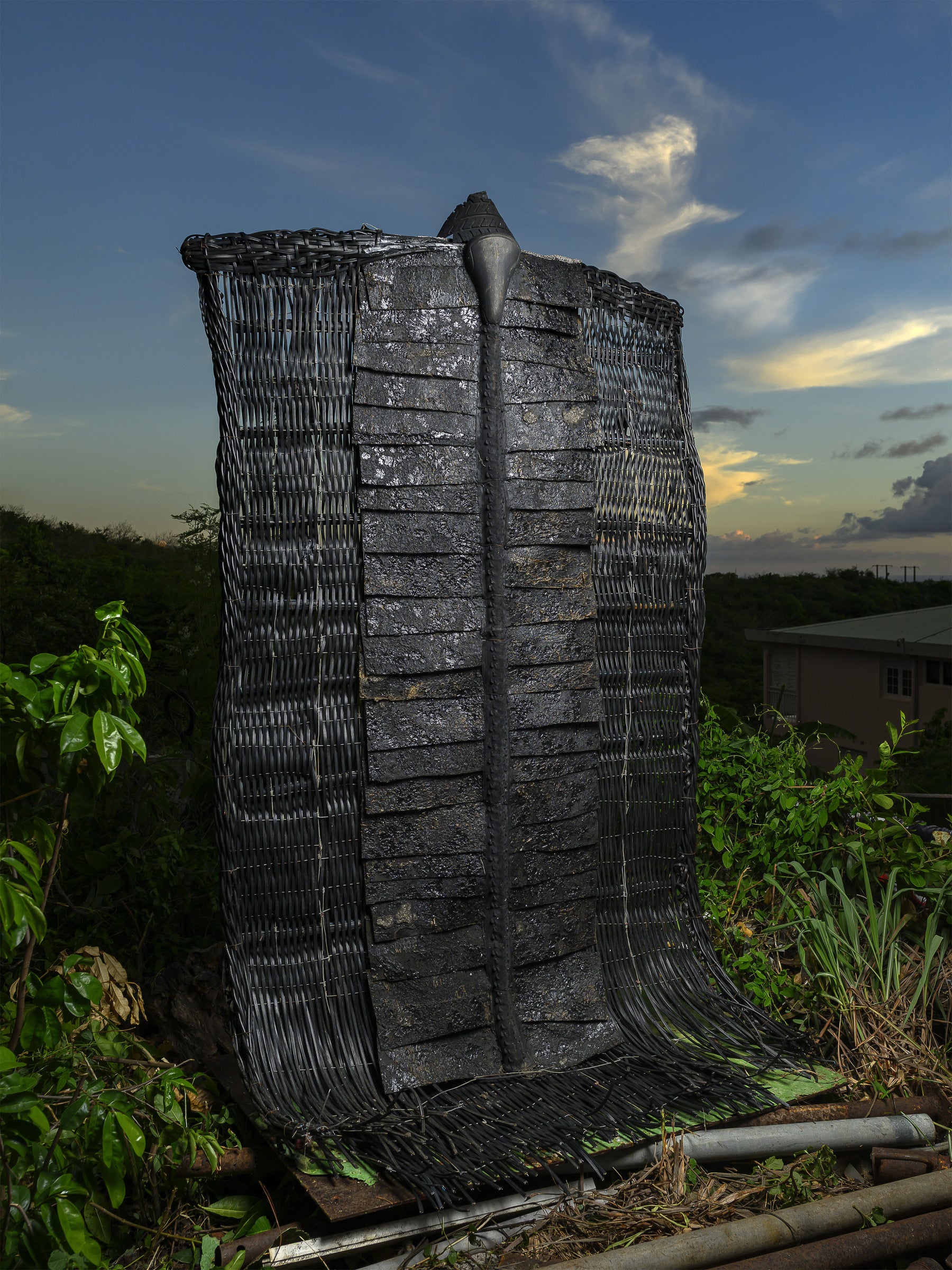
His dresses each stand upon their own podiums, bracketed by additional layers of metal, fabric, and wood. Bertin is revisiting not just Las Meninas but what it hides—not a secret or an idea, but an individual. Juan de Pareja was an enslaved man at court and was Velázquez’s assistant. He ground pigments, stretched canvases, and contributed to his paintings. Numerous myths surround him: so undaunted was he that he painted in the dead of the night, a forbidden act done stealthily, under weakening lamplight; so impressive was he that apparently when the King of Spain happened upon his secret paintings, he instantly freed him. In truth, Velásquez signed de Pareja’s manumission papers. De Pareja went on to have his own career as a painter, attentive to detail and tone, with an elegant handling of form. In Bertin’s installation of the four dresses, de Pareja is the centre of the frame, symbolically represented by the metal dress draped in metal necklaces, which is a pointed remark on the architecture of enslavement. He is the cradle of the court, the one around which the scene revolves. His meninas are the matadors: Sanité Bélair in her cutlass-emblazoned dress, and another, meant to be the Martinican model Monique-Antoine “Mounia” Orosemane, the first Black haute couture model of the French runways—who Bertin renders in a dress made from feather and silk. A scene from high European culture is rewritten with a new cast of characters, each a manifestation of agency split from the shadows.
Bertin’s use of Las Meninas, he tells me, is to collapse the histories of Europe, Africa, Latin America, and the Caribbean. Fanon wrote: “Europe is literally a creation of the Third World.”3 He wrote of the docks in each harbour that traded in slaves. He wrote that when this Europe, with its hand on its heart, declares it has come to the aid of its previous colonies, “we do not tremble with gratitude.” And indeed, this is true not only in the literal sense, of the labour and the stolen money and gold and the minerals, but also figuratively, Europe can only understand itself—conceptually—in relation to the other, to its colonies.
Inadvertently, Bertin sends me on a quest. I am off searching for de Pareja in Madrid, where I currently live. Tucked close to the opulent Velázquez rooms at the Museo del Prado is a single work by de Pareja, depicting Christ visiting Saint Matthew, at the moment of his vocation. Gold spills onto the tabletop as a group of men surround it; it is the scene from the New Testament in which Christ persuades tax collector Levi to join him as an apostle. It’s an interesting choice of topic by de Pareja: a piercing look at European attachments to property and the conditions of exchange; a spiritual confirmation of its bias. De Pareja paints each figure as though all on one plane; Christ is not necessarily more remarkable than the others, not cloaked in a vivid halo or an effusive divine glow. His clothing is rendered more elaborately, with the folds exaggerated, and his gaze stern; only faint white lines emanate from his temples as indication of his holiness. I feel a rush of excitement at the sight of this painting, as rare as it is, and I am looking for the clues of de Pareja’s analysis, the plastic manners by which he betrays his opinion of his time, this much-elaborated history in which we so rarely hear from the captives. The most remarkable aspect of the painting is at its far left, where de Pareja has drawn himself. He stares out pointedly at us, the viewers, inviting our inference.
4.
The departmentalisation of Martinique was meant to translate into rights for the island’s people, specifically those assigned to mainland French citizens: the same labour laws, the 40-hour work weeks. But plantation infrastructure persisted, and two years into this departmentalisation, a general strike ensued. In the northernmost part of the island, Basse-Pointe—where, to this day, sprawling plantation-like farms proliferate; where, also, Césaire attended elementary school—the white administrator of Habitation Leyritz was found dead, with thirty-six stab wounds. Sixteen workers, some Black, some Indian indentured, were arrested and placed in pre-trial detention for three years. In 1951, they were flown to Bordeaux, a former slave port, where a spectacular trial unfolded. The workers’ eleven defence lawyers maintained a political rhetoric in their arguments. Eventually, the sixteen were acquitted; neither of them gave anyone away.
Labour is the autonomy, strength, and material condition by which a life, community, or even a nation is constituted.
Upon their return to Martinique, Césaire gave the men housing in the capital city’s slums. In Trénelle-Citron, where Bertin grew up, on the outskirts of Fort-de-France, and without realising it until much later into his adulthood, he had been frequenting the Basse-Pointe 16’s homes and lives; they were his neighbours, and his elders too. There is an unquestionable, intractable heroism to the Basse-Pointe 16: not only in their rebellion, but in their unwavering, and in this case, silent commitment to each other, to their community, however imagined and fractured it was by the conditions of their meeting and of their labour contracts. Labour repeats through Bertin’s work, and in his preoccupations. Labour is the autonomy, strength, and material condition by which a life, community, or even a nation is constituted. The ongoing work Merci, merci, merci (Thank You, Thank You, Thank you, 2025), is a collage of used gloves collected by Bertin over twenty-odd years, at the centre of which a small video plays on loop: stuttering footage set to tonal music—percussion, and ascending beats—of Bertin’s studio, fragments of his works, his ovens, his kitchen, his garden and floors, the material, tangible elements of his work.
It is an homage, a literal thanks, to three men, he tells me: Camille Darsières4, Pierre Aliker5, and Césaire. There’s a communist intonation here, I say, nodding, thinking Bertin will acquiesce. He does not. “I am not a communist,” he says. In 1956, Césaire quit the French Communist Party, his letter of resignation bitingly detailing the party’s indifference to race, and the segregation he felt between the privileged rights of the white French worker versus those of the Black. “This is not a desire to fight alone and a disdain for all alliances,” he wrote, “It is a desire to distinguish between alliance and subordination, solidarity and resignation.” I understand Bertin’s position better. I can’t help but ask him: If not communism, then what? “I am—profoundly—Black,” Bertin says into the camera, beaming.
It’s an echo, the voice of those who came before him, like Césaire, whose book of interviews with the scholar Françoise Vergès is titled Nègre je suis, Nègre je resterai. In it, Césaire describes his time in Paris and his early days of studying Greek and Latin cultures: “Who am I? Who are we? What are we in this white world? It was a hell of a problem. Then came the ethical question. What should I do? This was followed by a metaphysical one: What can we expect?”6 The quest remains alive. Bertin explains how his time at SERMAC allowed him to gain perspective on exactly these questions, and indeed what he came to, keenly, was his own Blackness, and even more specifically, to what informed it: those eight women, those that he grew up with, those that find their way into all of his works. Interestingly, the questions that plagued Césaire during his time abroad are precisely those he later created spaces to address once he returned home—or at least begin to. Each of the three men did this; each was, at some point in their lives, a politician with elected mandates. Darsières and Aliker were also involved in establishing the Le Campus Caraïbéen des Arts, the fine arts school of the island, and L’Amep Martinique, a school for underprivileged children. They had an eye on culture, art, and the proliferation of both. Aliker famously said, “La chance de la Martinique, c’est le travail des Martiniquais.”7 (The luck of Martinique is in the labour of the Martiniquais.)
“I am—profoundly—Black,” Bertin says into the camera, beaming.
As we near the end of our conversations, I see that Bertin is formulating his own tangible synthesis toward a nationalist sentiment. Very early on, when speaking of autonomy as guided by the actions of women, Bertin and Labeau-Caberia had explained to me the practice of sou-sou—a version of which was also practised in the Americas—where enslaved women would pool their resources to share them. This evolved with time; with money, women pooled what they had and nominated one from the group to receive the funds. A people’s micro-bank, a system of sharing. Should illness or an emergency strike, that woman would be prioritised. Especially when enslaved people were not afforded the rites of dignity: burials for the dead, rituals for the living, the sou-sou would step in, and make it possible. Since we press him, Labeau-Caberia and I, on his nationalism, on his aversion to communism, and as we’re all smiling, feeling moved by and thankful to each other, and as our time is drawing to a close, Bertin says, well, since you ask, “Je suis sou-sou.”
The Jungle (1943) is a famous work by Wifredo Lam, a Cuban artist who illustrated the Cuban edition of Cahier d'un retour au pays natal. The second part of the title of this work is a quote from Cahier d'un retour au pays natal (1939) by Aimé Césaire. See Aimé Césaire, Notebook of a Return to the Native Land, trans. Clayton Eshleman and Annette Smith, (Wesleyan University Press, 2001), 4: https://kboo.fm/sites/default/files/AIME%20CESAIRE--NOTEBOOK%20OF%20A%20RETURN%20TO%20A%20NATIVE%20LAND.pdf)
Michel Foucault, The Order of Things: An Archaeology of the Human Sciences (Vintage Books, 1994).
Frantz Fanon, The Wretched of the Earth, trans. Constance Farrington (Grove Press, 1963).
Camille Darsière was President of the Regional Council of Martinique from 1988 to 1992.
Pierre Aliker was first deputy to the mayor of Fort-de-France, Aimé Césaire, from 1957 to 2001.
Aimé Césaire, Resolutely Black: Conversations with Françoise Vergès, trans. Matthew B. Smith (Polity Press, 2019).
Aliker wrote this in the editorial motto of Le Progressiste, the newspaper of the Martinique Progressive Party (PPM) which he cofounded in 1959.