Reading time25’

Flies of Fire

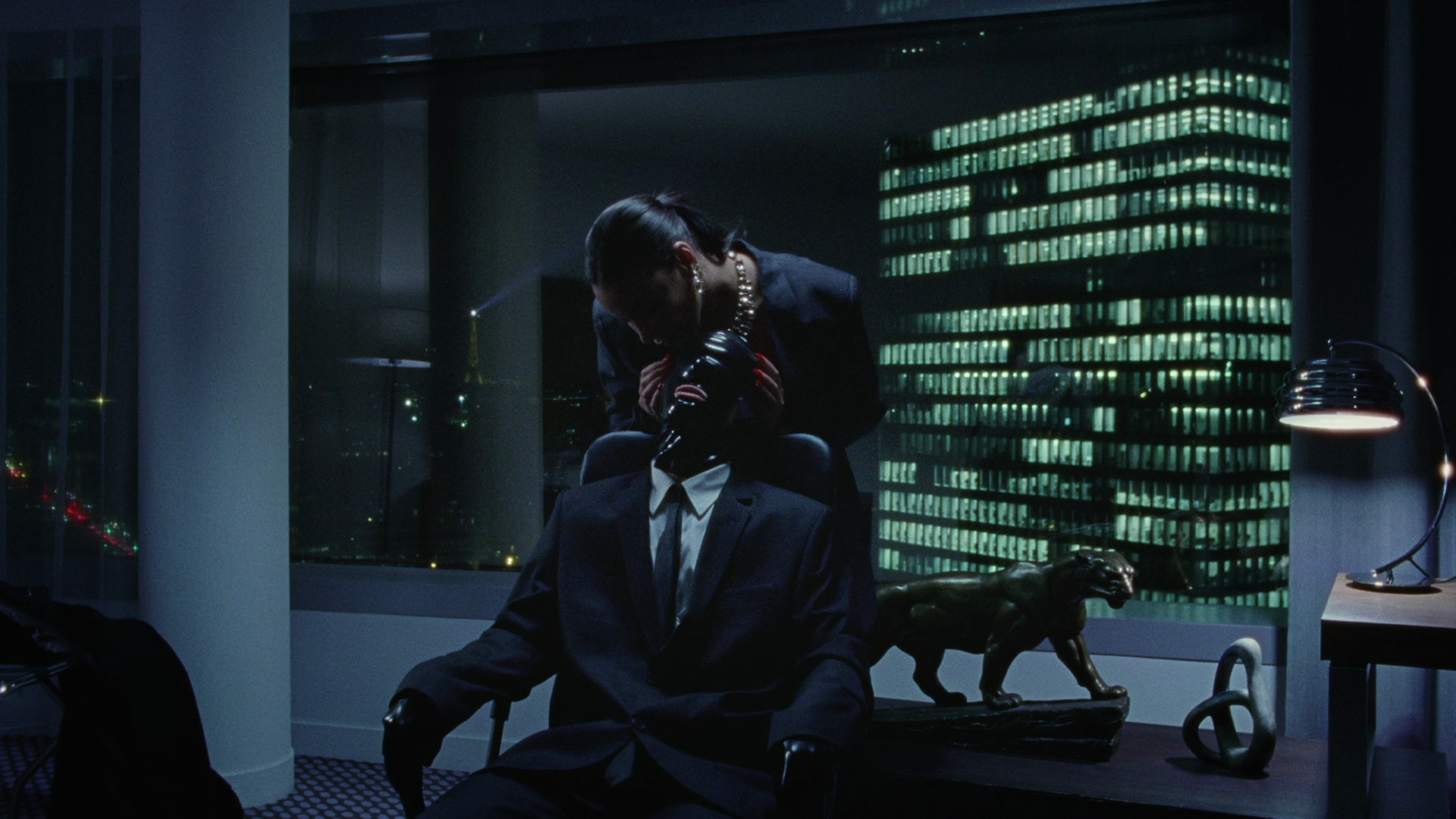
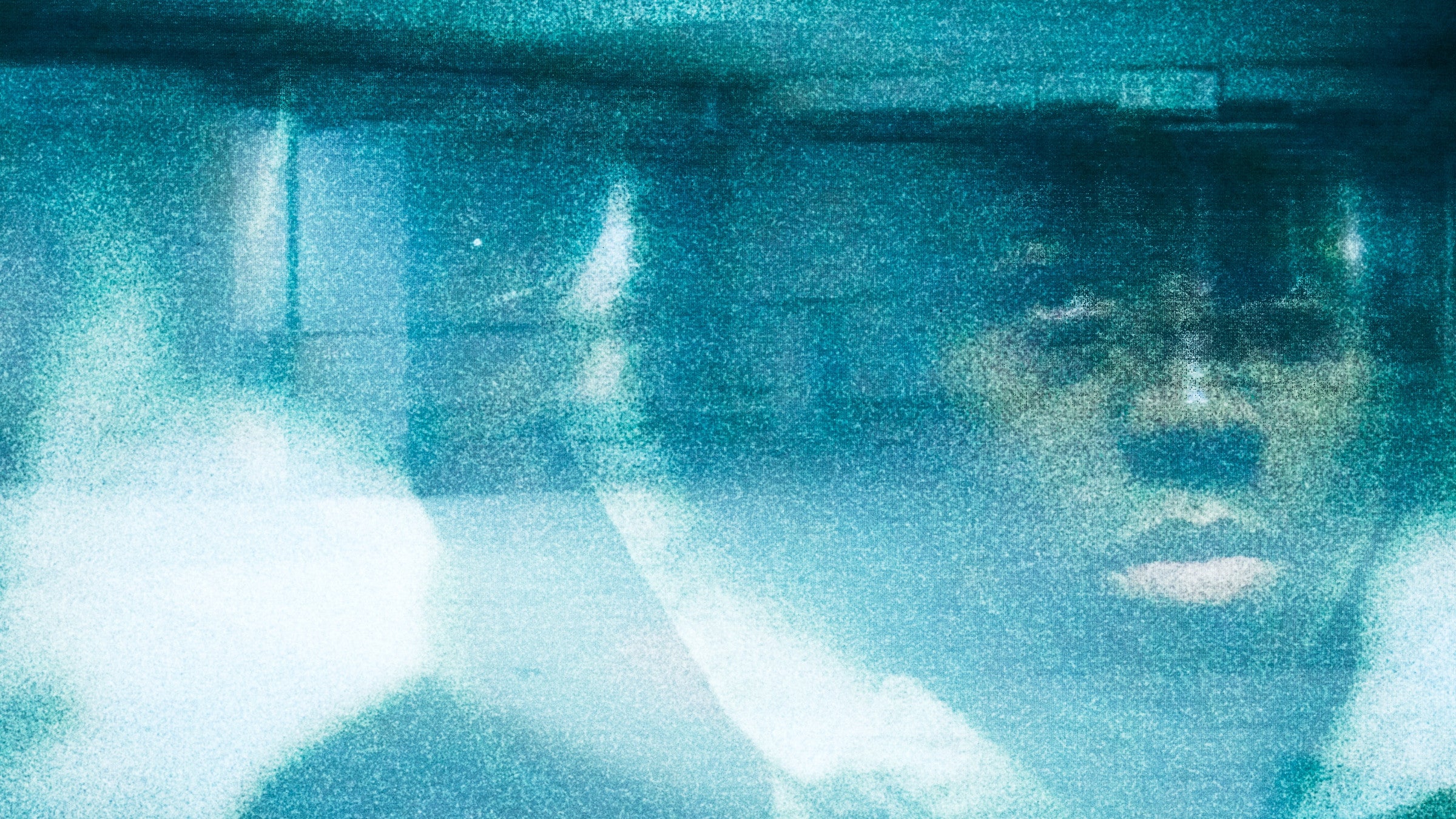
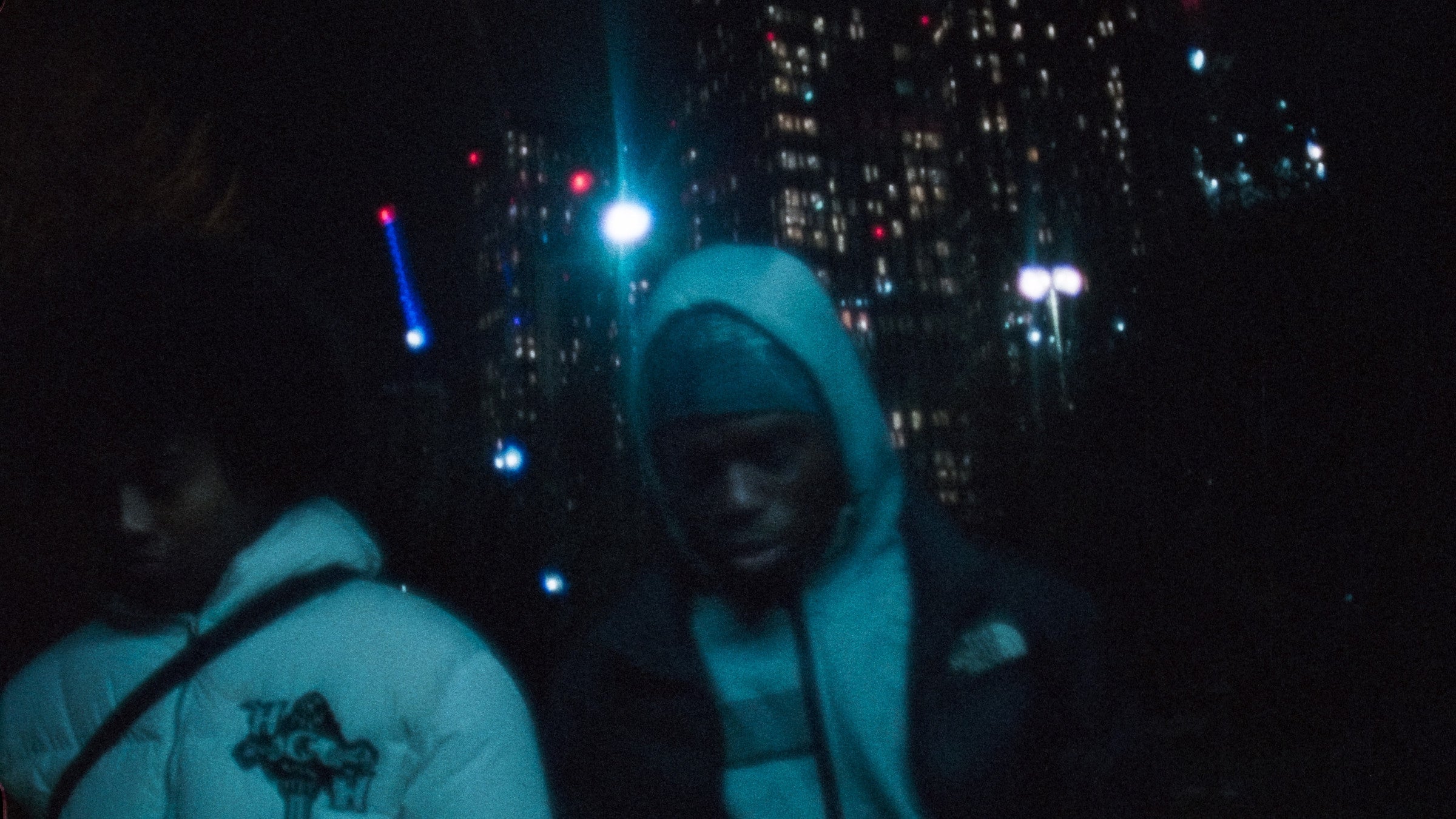
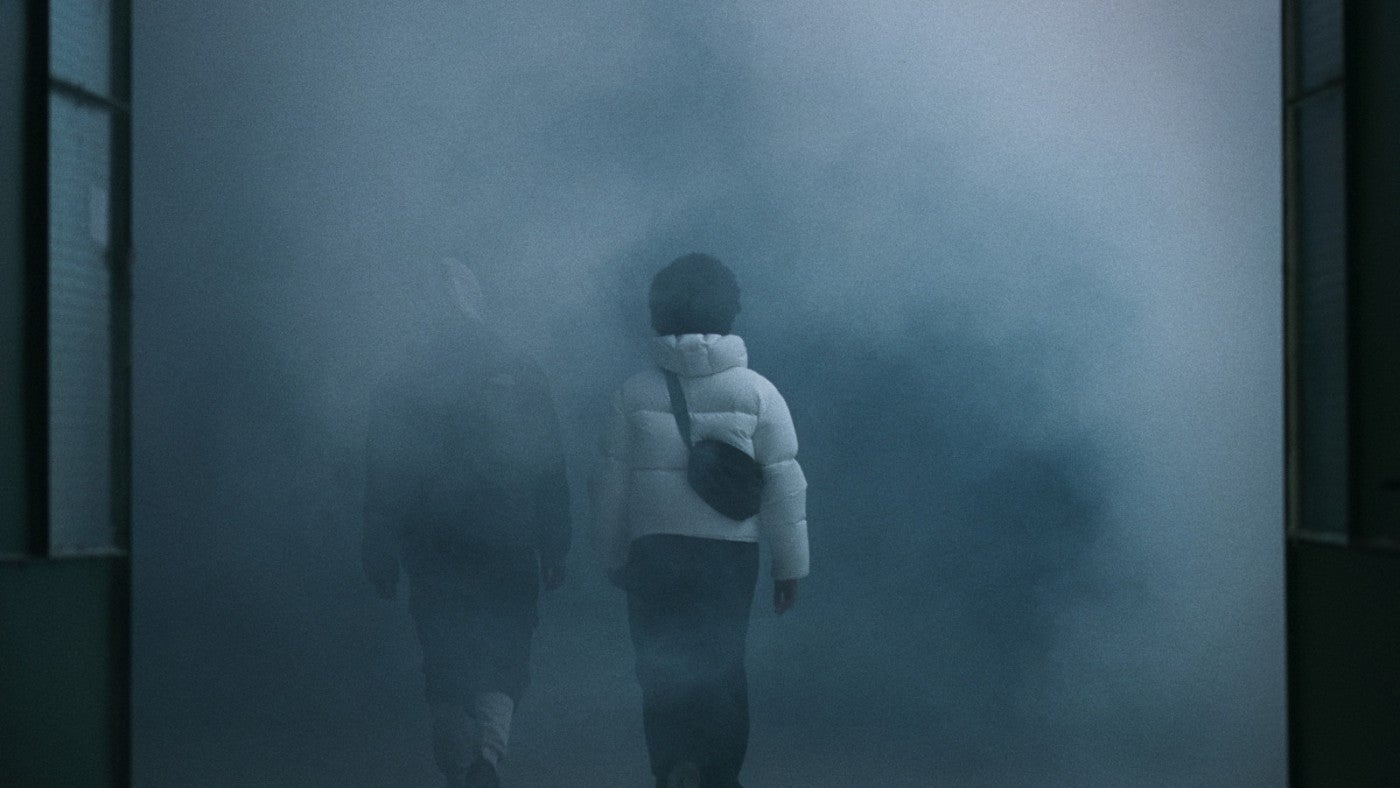
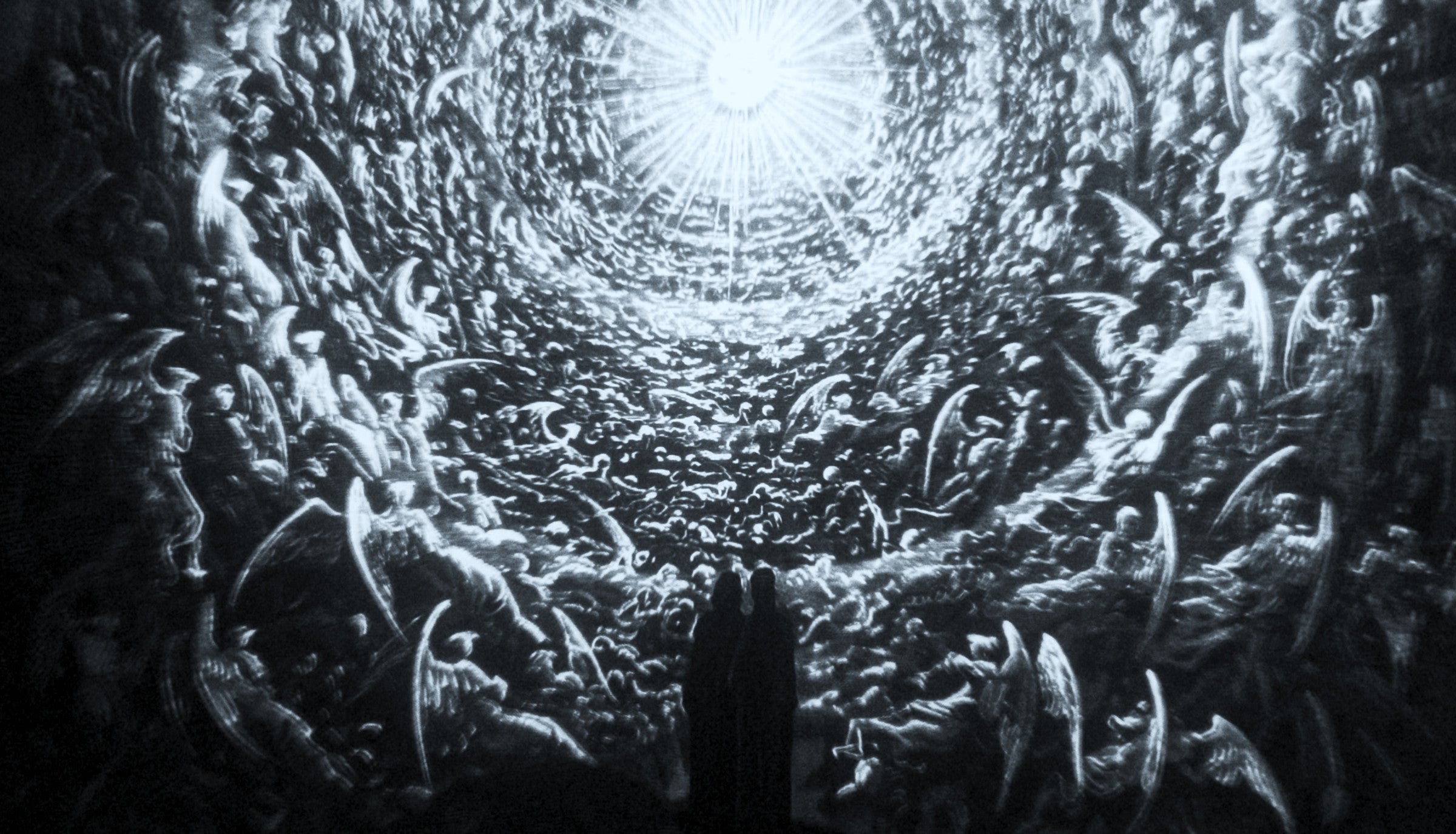
Valentin Noujaïm, <i>Opera Omnia</i>, film still, 2025, 12 min. In collaboration with Space Afrika. Courtesy of the artist.
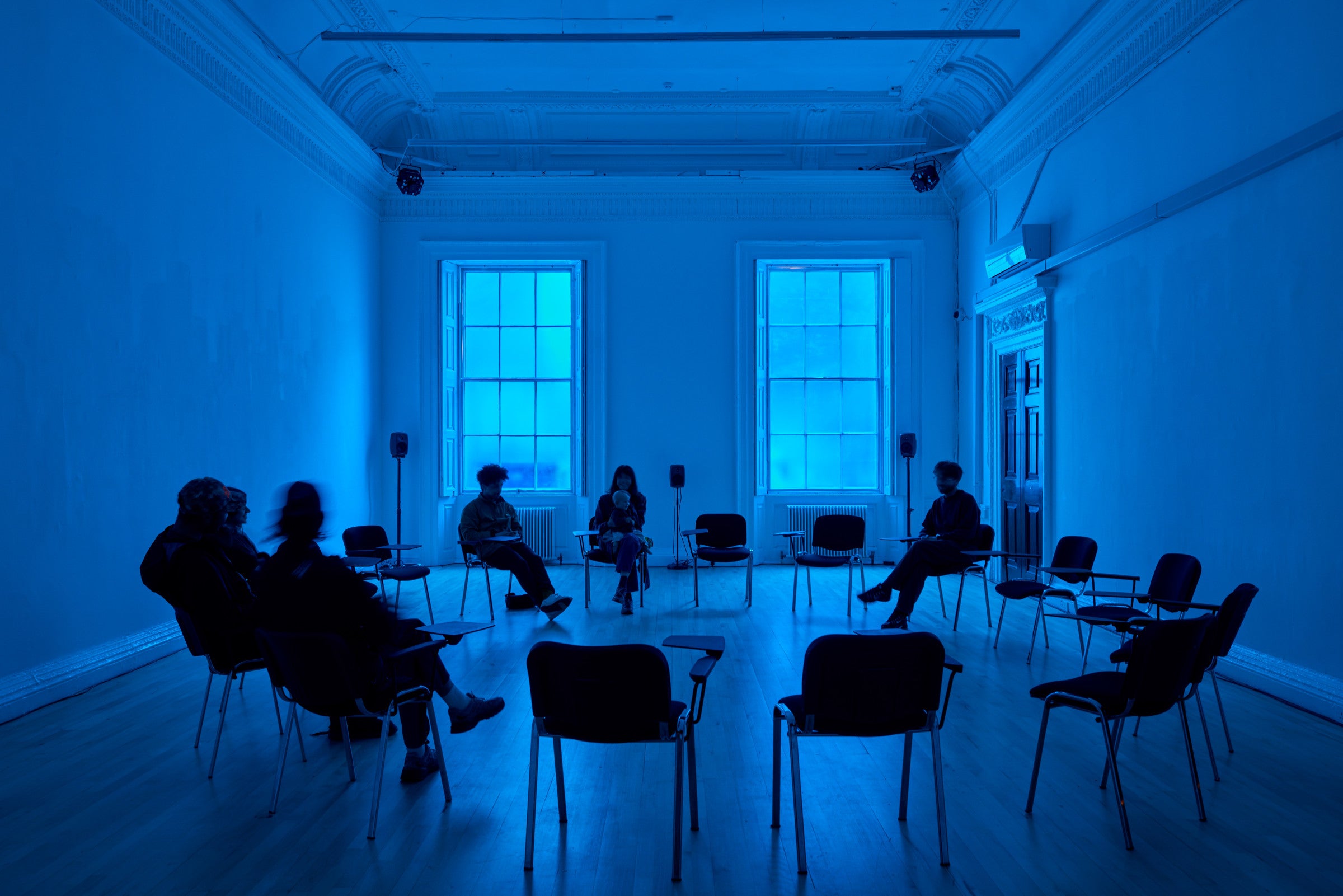
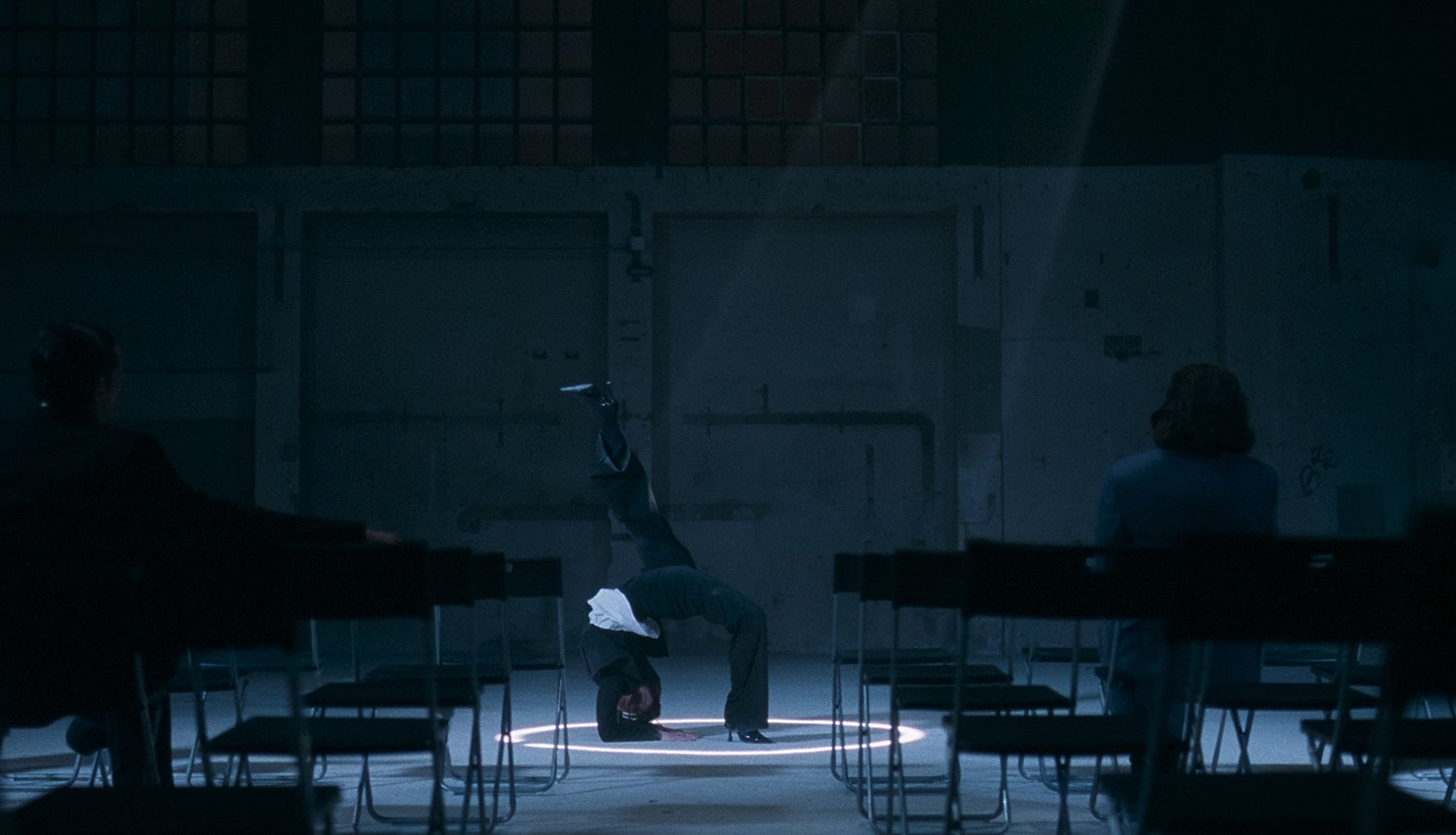
Valentin Noujaïm, Opera Omnia, film still, 2025, 12 min. In collaboration with Space Afrika. Courtesy of the artist.
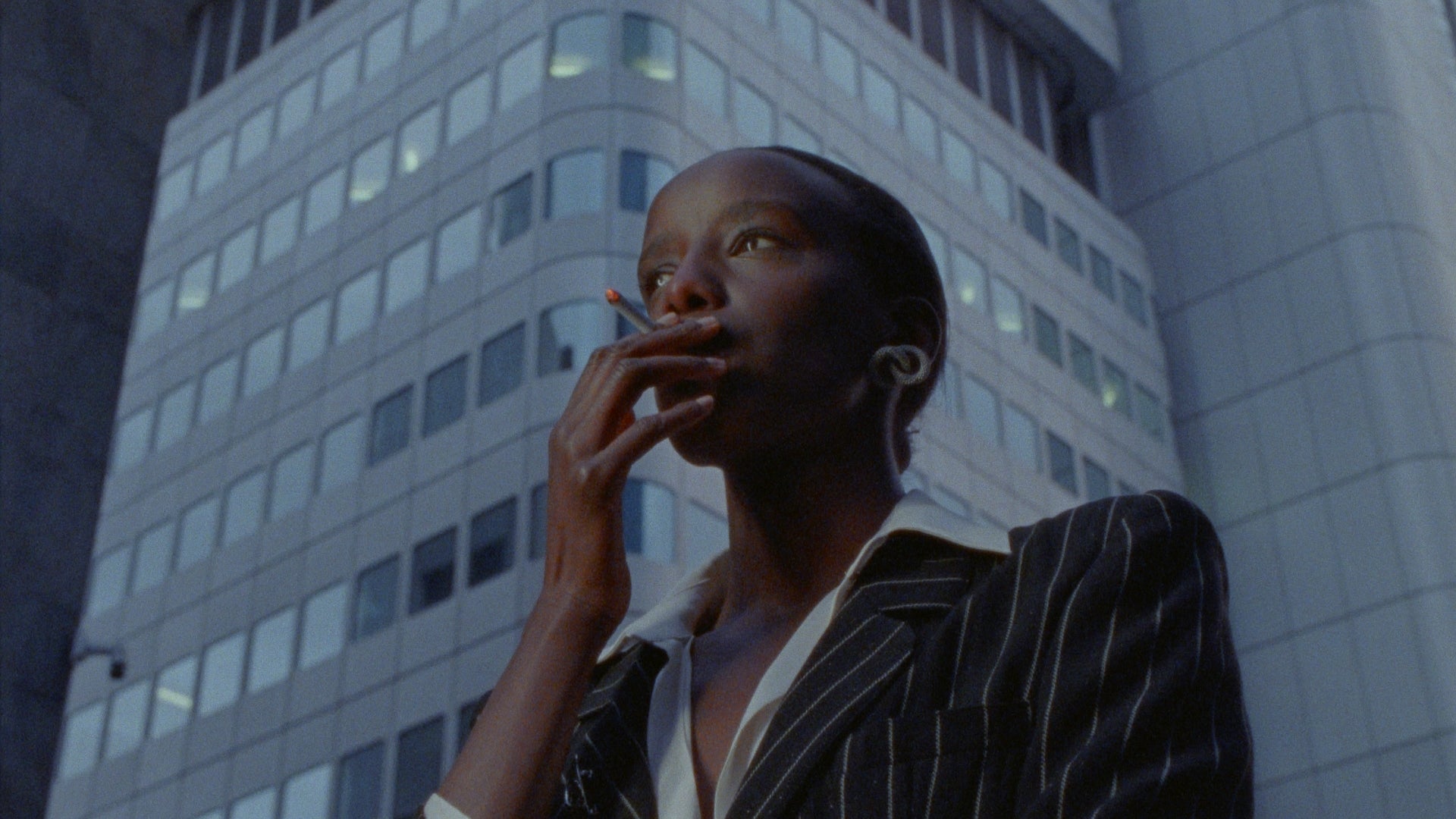
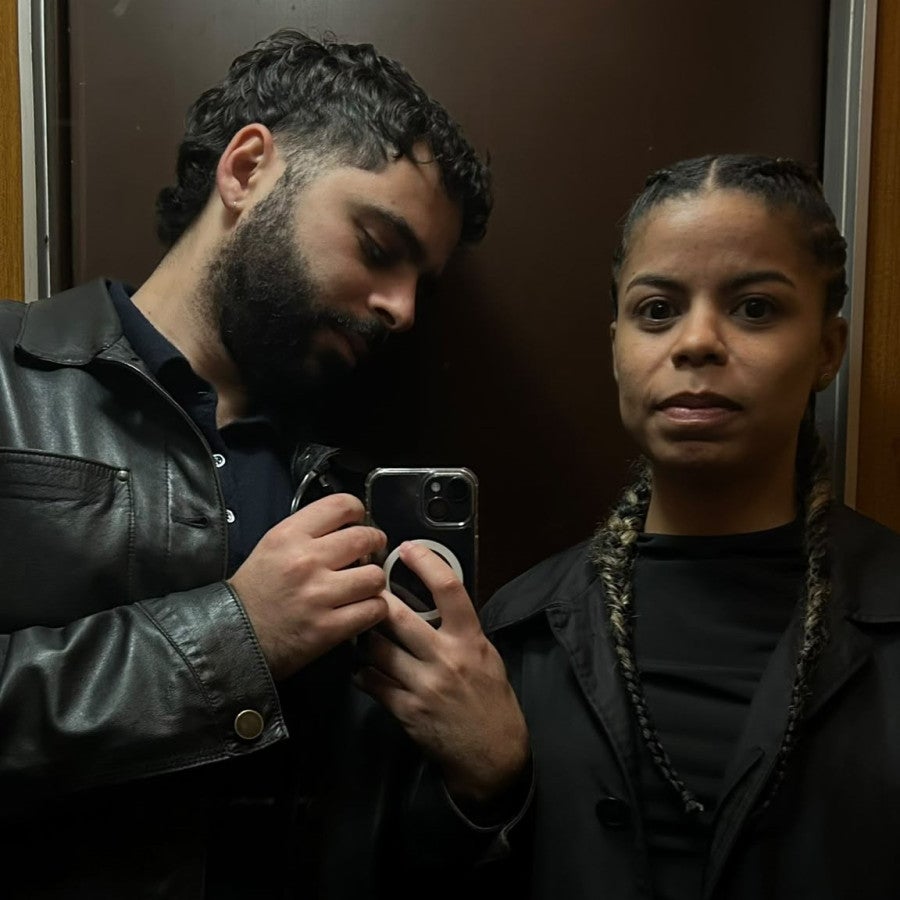
Valentin Noujaïm et Yina Jiménez Suriel, Athènes, mars 2026.

Valentin Noujaïm and Yina Jiménez Suriel, Athens, March 2026.

Interlude

Valentin Noujaïm and I began getting to know each other in January 2026. Across video calls, instant messages, walks through the National Garden of Athens, lunches at his apartment, and visits to his studio in Plateia Viktorias, certain words kept resurfacing: daimons, cities, video games, fascism, danger, apocalypse, angels, desire, reality. Some emerged as references, others as obsessions, others simply kept returning. Instinctively, I began writing them down in a notebook. I could sense the constellation before I could make out its shape. Throughout this essay, several of these words will reappear as windows into Noujaïm’s practice and universe, just as they accompanied my search for a way of approaching it.1

Listening to Klein - let it sink in (2025) 
The songs accompanying this essay were selected together with Valentin Noujaïm as an extension of the conversations that shaped it.

Before we encounter the singer, we hear her voice. Before entering the heart of the story, certain forms begin to recur: circles and rotations, circles and rotations.

The sequence takes place in Opera Omnia (2025), a 12-minute film by the artist Valentin Noujaïm. Two young men approach a building, where a large doorway opens onto a mass of fog so dense that it becomes difficult to tell where the architecture ends and something else begins. They seem to be crossing a threshold. As they gradually vanish from view, completely absorbed by the fog, a female voice singing opera emerges. The camera cuts to the following scene: a wall with a circle. 

Integrated into the wall itself, the circular mark seems to preserve the trace of an event. As the camera draws us closer and the song swells, a pulse of light flickers at the center of the screen—the center of the circle toward which we are moving.

We still don’t know where the voice is coming from, whether it belongs to the world of the film or whether it has been added to accompany the images. For several minutes, it exists solely as a sonic presence. The camera cuts to inside views of an industrial building. We see the space from the perspective of a surveillance system and, without fully understanding what we are looking at, we begin to discern a ghostly figure emerging across the wall as the opera gathers intensity.

The voice enables the image to be seen.

The scene shifts to someone watching a bank of surveillance monitors. Only then do we discover that the voice has a body. Through one of the screens, we see a woman singing within the industrial complex. The music that had until then remained an enigma turns out to originate from there, within the very world the film constructs.

In Noujaïm’s films, what we seek rarely reveals itself immediately.

By then, we begin to notice the persistence of the circular form. Looking back, it seems as though the film had been reorganizing itself around it ever since the voice first appeared. The circle is everywhere: in the pulse of light, the camera’s curved trajectories, the singer’s gestures, the singing body at the center of a round table, the light revolving around her, and the spectators gathered in a circle. Even the sequence itself seems structured as an orbital movement, returning again and again to itself.

The form continues to recur until the young men reappear at the end of the film. By then, we will have learned to pay attention to what made their return possible. The repetition is too persistent to be accidental. The voice precedes the body. Music precedes presence. Frequency precedes recognition. 

In Noujaïm’s films, what we seek rarely reveals itself immediately.

How does a ghost become visible? What conditions does a disappearance require in order to appear?

In several texts—including his own professional biography—the French-Lebanese artist describes disappearance as one of the threads running through his practice. As I spent more time with his work, this question began to unfold in different directions. Rather than an isolated concern, disappearance seemed to operate as part of a broader inquiry into relations—between appearance and disappearance, regimes of visibility, and modes of belonging in the world. Spanning moving image, sculpture, and installation, Noujaïm’s practice explores these relations within the perceptual intervals of contemporary life.

Shortly after our days together in Athens, where the artist has been based since 2025, Noujaïm sent me an essay he had mentioned during my visit. While working on my own text, I returned several times to “All That Remains,” the essay writer Perwana Nazif recently dedicated to his practice.2 It became a companion. In its pages, I encountered ghosts, ruins, memories, and forms of survival. My own curiosity lay somewhere adjacent—not exactly in what remains, but in the conditions that allow what has disappeared to continue shaping the present.

Disappearance itself is inaccessible. What reaches us are traces and residues of what has gone: a recorded voice, a family archive, a song, a star. These forms function as vehicles not only because they preserve something, but because they allow it to re-enter into relation with the present. Throughout Noujaïm’s work, these traces repeatedly return as voices detached from their bodies, cities suspended between memory, demons, masks, and swarms of fireflies.

How does a voice come to find a body? How does a ghost become visible? What conditions does a disappearance require in order to appear? What traces allow it to remain perceptible across time? 

In the pages that follow, I linger on the darkness, the rhythms, the infrastructures, and the forms that make the fireflies’ flickering visible within the film work of Valentin Noujaïm. 

DESIRE
Latin “desiderare”

Disappearance is already inscribed within one of the very mediums employed by Noujaïm. Cinema is, after all, a machine of appearances: a technology that produces movement through a succession of images continuously disappearing to make way for the next. What we perceive as continuity is nothing more than a series of absences organized at a particular speed. Like music, cinema depends on rhythm—a cadence of disappearances capable of producing the experience of presence.

The first time I sat with Noujaïm’s work, I was struck by the gravitational pull that music seemed to exert within it. Our conversations almost immediately began to reveal why. Music was not simply one reference among many. It formed part of an early education in listening: for years, the artist studied singing and was a member of a choir.

That same mode of listening seems to shape the way his works come into being. As we spoke about different films, Noujaïm told me that some of them begin with a playlist or an album. Among them is his recent trilogy La Défense (2023–2025), which follows different characters through the Parisian business district, approaching the same urban landscape through distinct stories, temporalities, and sensibilities. The third film of the trilogy Demons to Diamonds (2025) emerged alongside a sequence of thirty-two songs intended to be heard in a specific order. To Exist Under Permanent Suspicion (2024) was also accompanied by a playlist, though one designed to be navigated freely. Pacific Club (2023) grew out of a different relationship to listening: throughout the making of the film, the artist returned again and again to Promises, the 2021 album by Floating Points, Pharoah Sanders, and the London Symphony Orchestra, and Somewhere Decent to Live, the 2018 album by Space Afrika.

Before existing as an image, the film exists as a frequency (...)

Through music, the script begins to take shape, followed by the characters, certain visual atmospheres, and eventually the storyboard. The initial playlist often circulates among the people involved in the making of the work as an attempt to share the desire that first set it in motion. Before existing as an image, the film exists as a frequency and this frequency shapes the work throughout its making. Collaboration with musicians occupies a crucial place within Noujaïm’s creative process, from the earliest stages of writing to editing and post-production. Rather than entering the work once it is complete, musicians become interlocutors in an ongoing conversation through which each film gradually finds its rhythm. In the work described earlier, Opera Omnia, which follows the two young Black men wandering through the abandoned industrial landscapes of Manchester, we are accompanied by the music of Space Afrika and the voice of the opera singer Axelle Fanyo. Dialogues with artists such as Space Afrika and Crystallmess, and currently with Billy Bultheel, with whom Noujaïm is developing a chamber opera, form part of this evolving constellation—one that continues to expand alongside his practice. 

As I returned to my notes sometime in April, I found myself thinking that music shares a particular condition with something that returns, literally and figuratively, throughout Noujaïm’s films: the ghostly. Both exist only in the act of fading. In Pacific Club, Azedine recounts the story of the first nightclub for young Arabs from the Parisian suburbs, once located in La Défense. The film never attempts to establish whether the club survives as memory, fiction, or both. Instead, it allows the Pacific Club to haunt the present. At one point, a solitary dancer lies motionless at the entrance to an underground parking garage. Almost imperceptibly, his body begins to move, slowly lifting itself from the ground until it stands upright. He drifts through the street and later across a bridge overlooking the city before vanishing once again. Just as a note begins to dissolve at the very moment it is heard, music seems to offer Noujaïm a model for thinking about the forms of (dis)appearance his films continue to pursue. To listen is to accompany that passage.

DAIMON

Greek “daimōn”

At one point during our conversations, Noujaïm mentioned that he wishes he spoke Greek in order to audition for a Byzantine choir that still exists in Athens. Beyond the curiosity sparked by the image of him studying a language in order to join a tradition of singing, that conversation drew my attention to another recurring aspect of his practice: the references to different forms of mysticism throughout his films. Yet what interested me was not the beliefs they invoke or the worlds of meaning they offer. Instead, I began to see the mystical less as a system of belief than as a way of establishing relations with what remains outside the immediate field of the visible. What I still did not understand was how the worlds where those relations become possible were constructed.

During our video calls and instant-message exchanges, Noujaïm and I discovered a shared fascination with artists who work through sound composition and drawing—not only in contemporary art, but across history. When we later sat down together in his studio, he told me about a film he is currently developing around the figure of Saint John, and in the days that followed, he shared photographs related to that project: first of musical scores he had found in a church in Rhodes and then of an extraordinary eighteenth-century Byzantine musical manuscript he was consulting as part of his research at the Gennadius Library in Athens.

As we continued thinking through this text together, it slowly became clear that those seemingly ordinary moments of getting to know one another had been revealing something all along: the mystical was inseparable from a particular way of telling stories. It was then that fiction emerged for me as the counterpart of the mystical: a technology capable of bringing different times, bodies, memories, and forms of existence into proximity without resolving the tensions between them. Across moving image, sculpture, and installation, Noujaïm constructs worlds in which such encounters become possible.

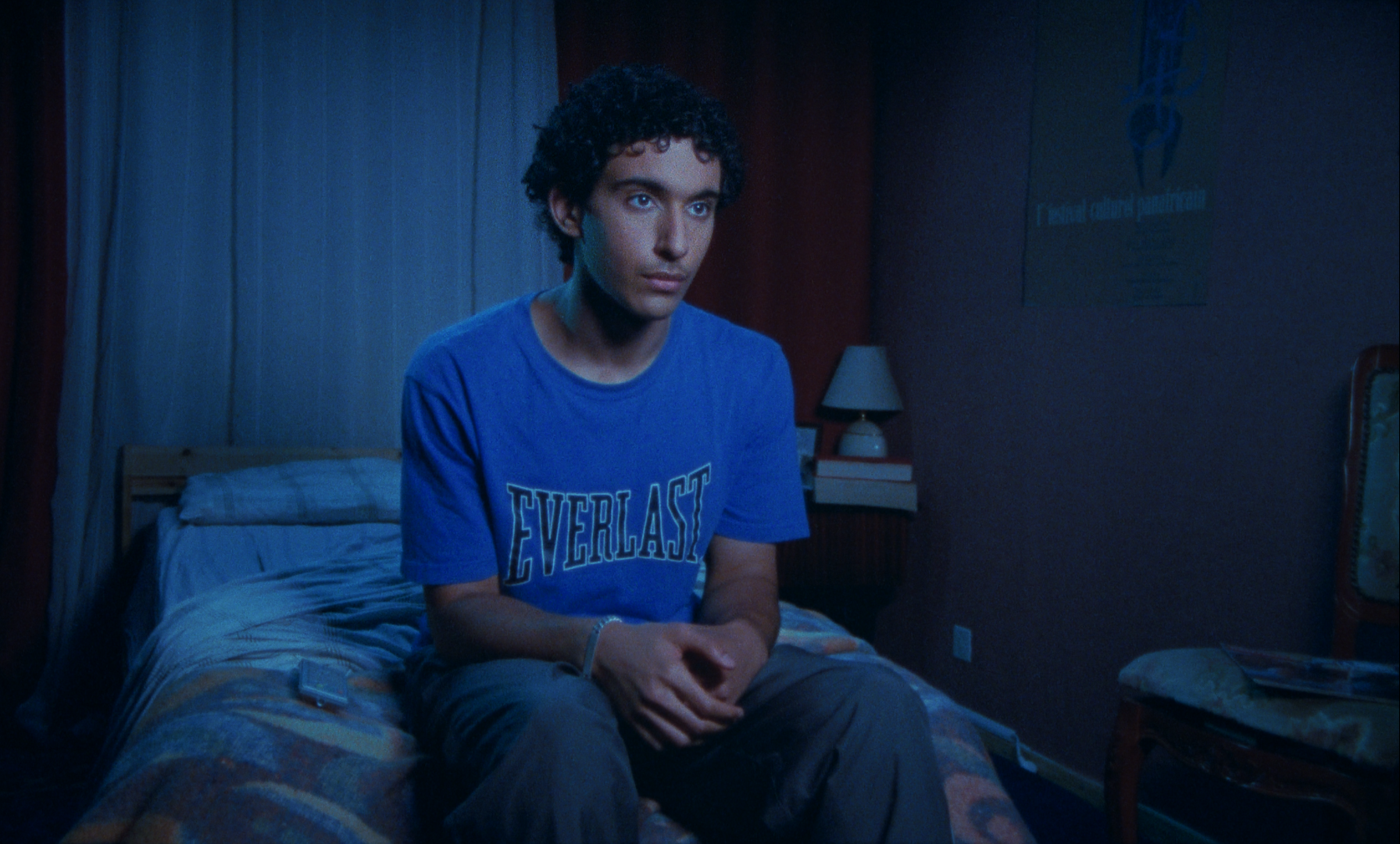
There are moments when this operation becomes especially clear. In Oceania (2024), Najib, the film’s teenage protagonist, spends a night in the apartment of a neighbor who has recently passed away. After finding a letter and a photograph that confirm what had until then circulated only as a rumor—that the man had loved another man—he falls asleep. Before the dream, a hand gently tucks him in. Later, within the dream, that same hand reappears, placing roses upon the young bodies of the neighbor and his partner, now finally reunited. The film never explains the relation between these two gestures, nor does it attempt to resolve it. It simply allows different times, bodies, and states of existence to come into contact.

In the film’s final scenes, it is that very photograph of the couple that Najib buries near the bench where the neighbor had spent much of his final days. As night falls, fireflies begin to emerge from that spot.

FASCISM

Latin “fascis”

The singer in Opera Omnia. The voice that warns of catastrophe in Demons to Diamonds. Azedine’s voice in Pacific Club. The voice that answers from the cosmos in Blue Star (2020). Malo, the grandmother who guides us through Before She Forgets Heliopolis (2018). In Noujaïm’s films, voices appear before bodies.

A voice can traverse walls, times, generations, and geographies.

There is something deeply political in this. A voice can traverse walls, times, generations, and geographies. It can persist even when its source has disappeared. The voice neither restores nor cancels loss. It can survive architecture, monuments, and institutions. Among all the forms that recur throughout Noujaïm’s work, the voice occupies a singular place because it serves as one of the primary vehicles through which disappearance is made perceptible.

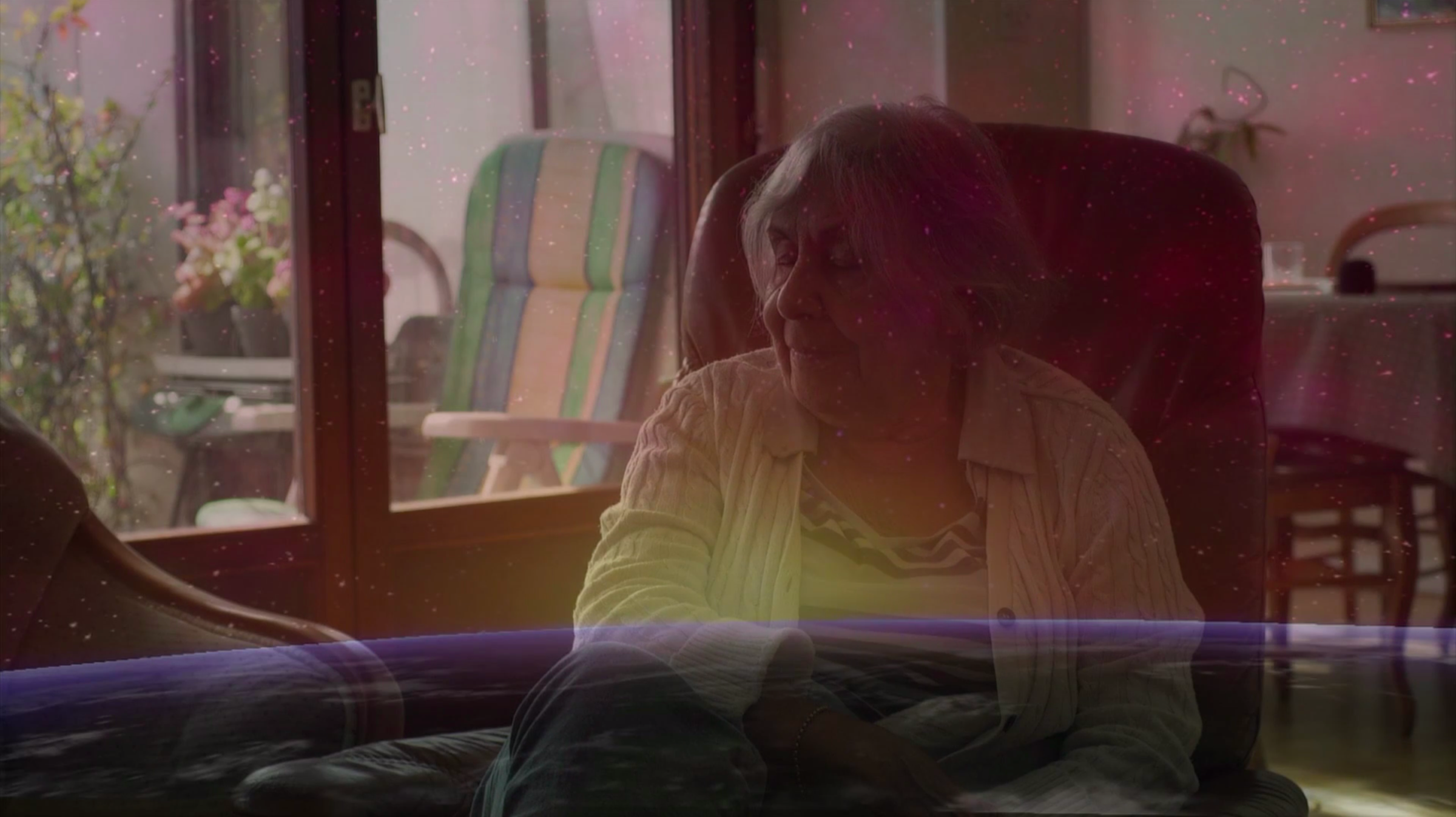
Before She Forgets Heliopolis articulates this when the artist’s grandmother expresses surprise at her grandson’s desire to learn a language that she herself had been conditioned to abandon. Far from being an abstract event, disappearance appears in the film as the result of historical processes that displace languages, erase memories, and alter forms of relation to the world. The hollow constitution of the colonial subject.

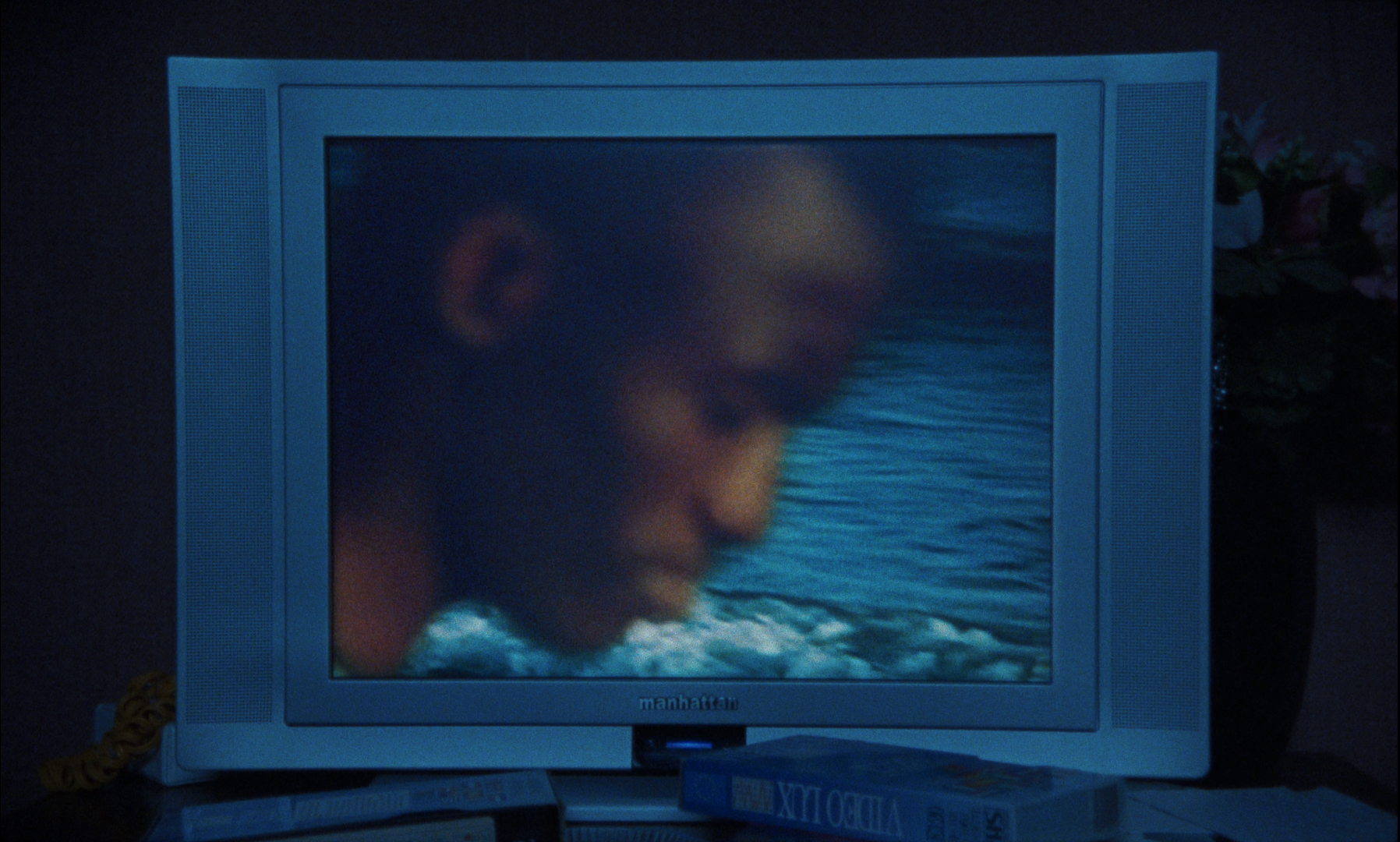
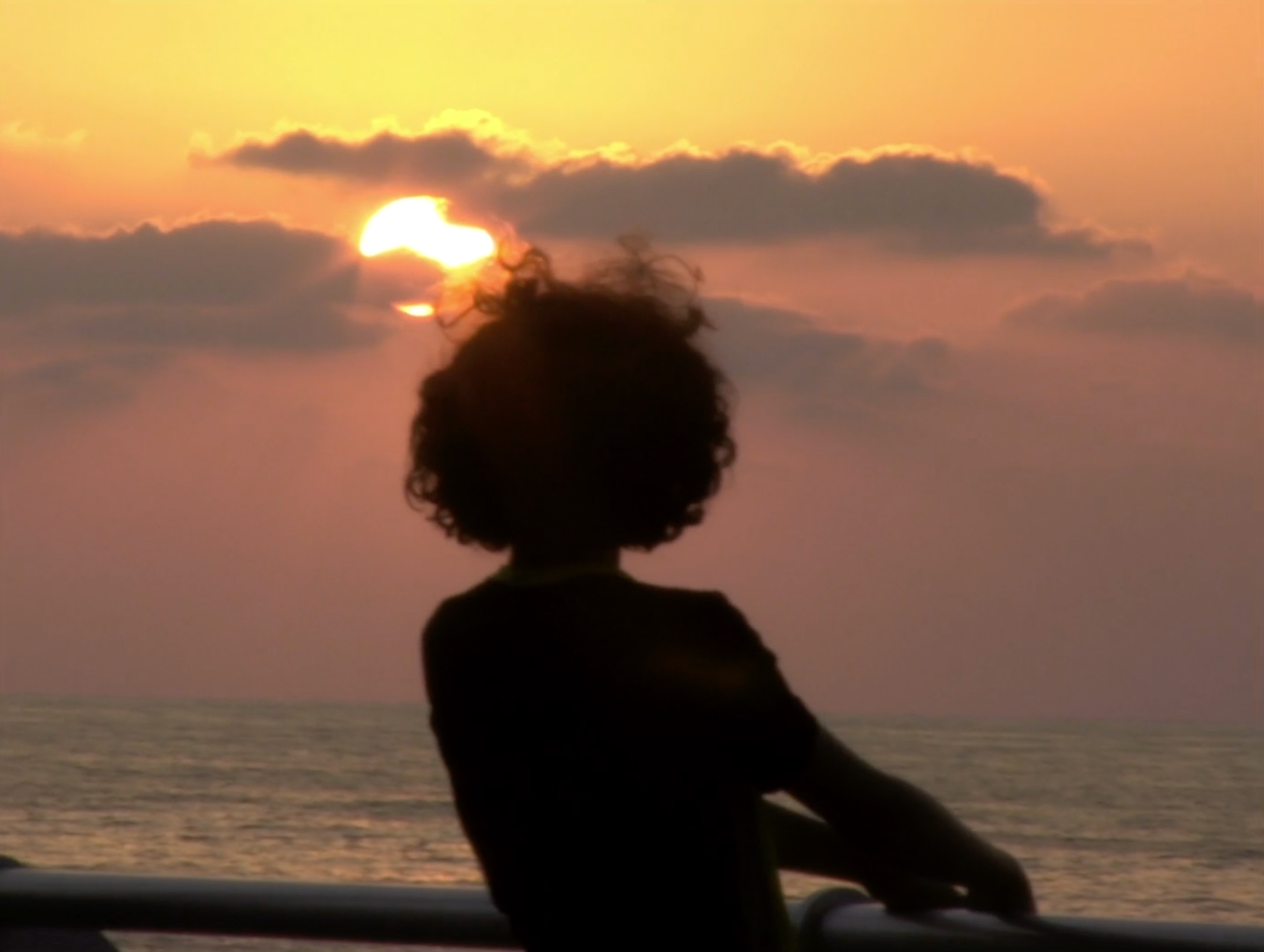
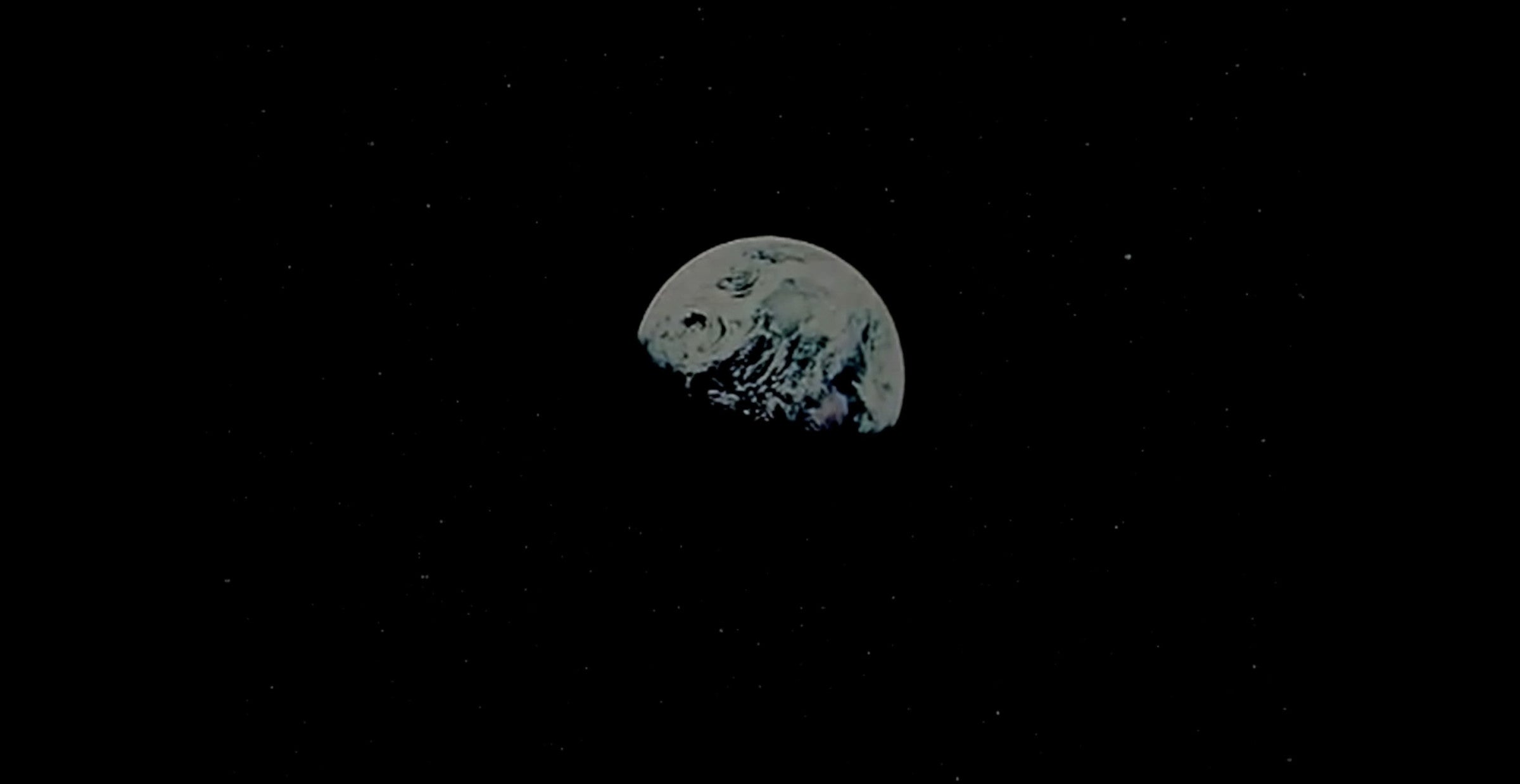
And yet, Noujaïm seems to suggest, traces remain even there: accents, silences, gestures, fragmentary stories—and with them, the possibility of something else. In Blue Star, the film follows a mixed-race couple and their son as they move across landscapes in search of a place where they might belong. After being treated as a stranger simply for speaking Arabic, the man can no longer endure it. He looks up at the sky and shouts. The earth begins to shake. Then, from somewhere in the cosmos, a voice answers: “Tell all the brown men kneeling, we are waiting for you on the Blue Star.” The response no longer addresses a single body but calls a collective into being. It imagines another configuration of the world, one in which those denied a place might recognize themselves as belonging to a shared horizon. The man eventually follows that call. Through an antenna collectively built to answer the signal of the Blue Star, he disappears on his journey toward the blue cities. Years later, while visiting the seafront where his father had once stood, his son answers with another shout, and the father returns only as a voice, momentarily reappearing through a wave. 

Listening to Massive Attack - Angel (1998)
The songs accompanying this essay were selected together with Valentin Noujaïm as an extension of the conversations that shaped it.

APOCALYPSE

Greek “apokalypsis”

There are two other biographical details that interest me in relation to Noujaïm’s practice: before studying film, he trained in political science, and is an avid player of video games. These interests share certain sensibilities, at least for those of us born in the final decades of the twentieth century. Both cultivate a sensitivity to the systems that organize collective life: a sustained attention to the visible and invisible rules that shape how we inhabit the world, determining which presences are granted importance and which are consigned to more fragile forms of existence.

A video game begins with a set of rules that defines its physics, gravity, conditions of movement, and an economy of appearances. Only afterward do the characters arrive, and only then does the narrative emerge.

Many of Noujaïm’s films are organized according to a similar logic. Before ghosts, cities, or desires appear, there is a system. A set of relations that organizes what can happen within the world of the work. What changes throughout his practice is the scale at which those systems operate. They no longer remain confined to the moving image. Little by little, they begin to organize space itself.

Something always remains beyond the field of vision.

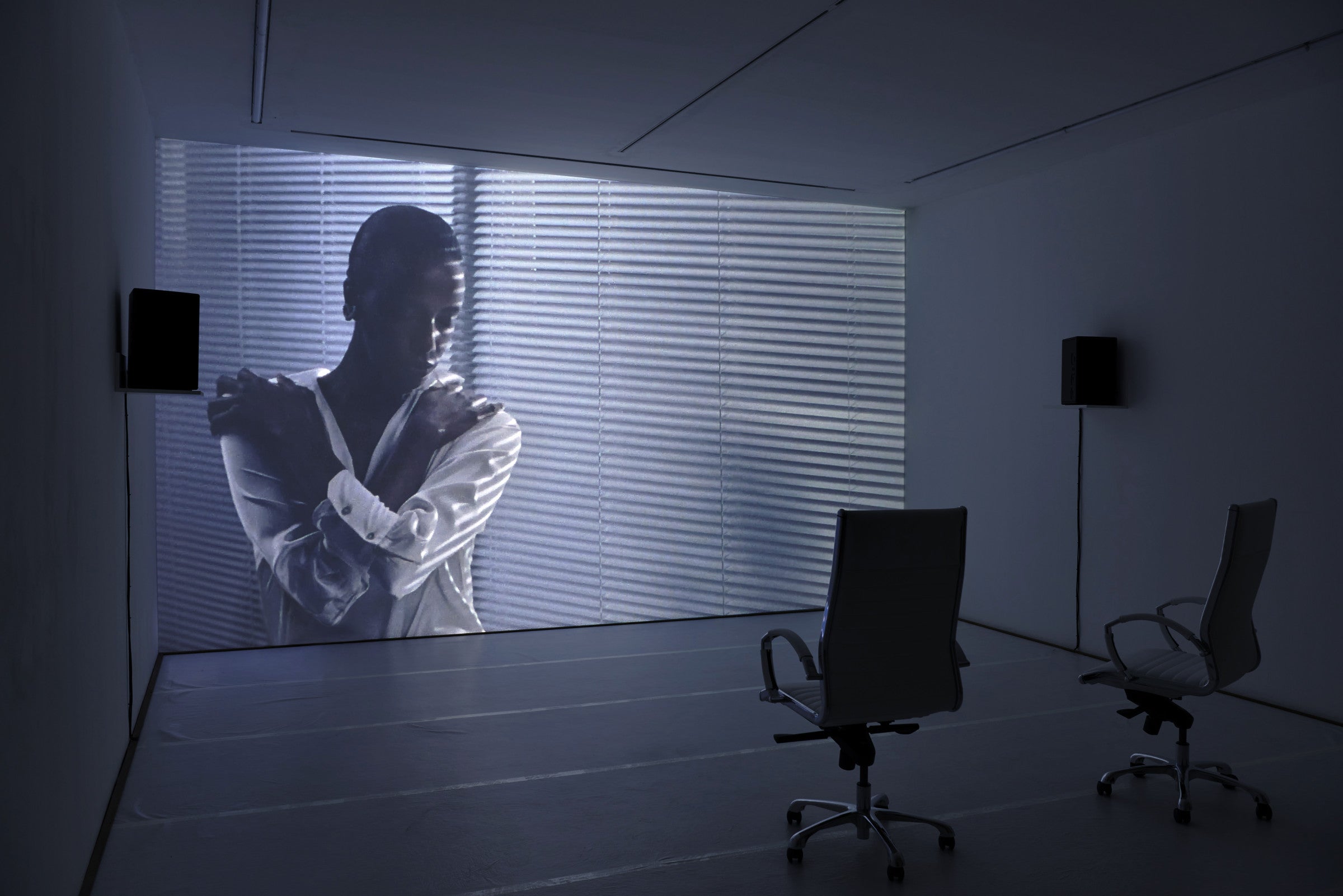
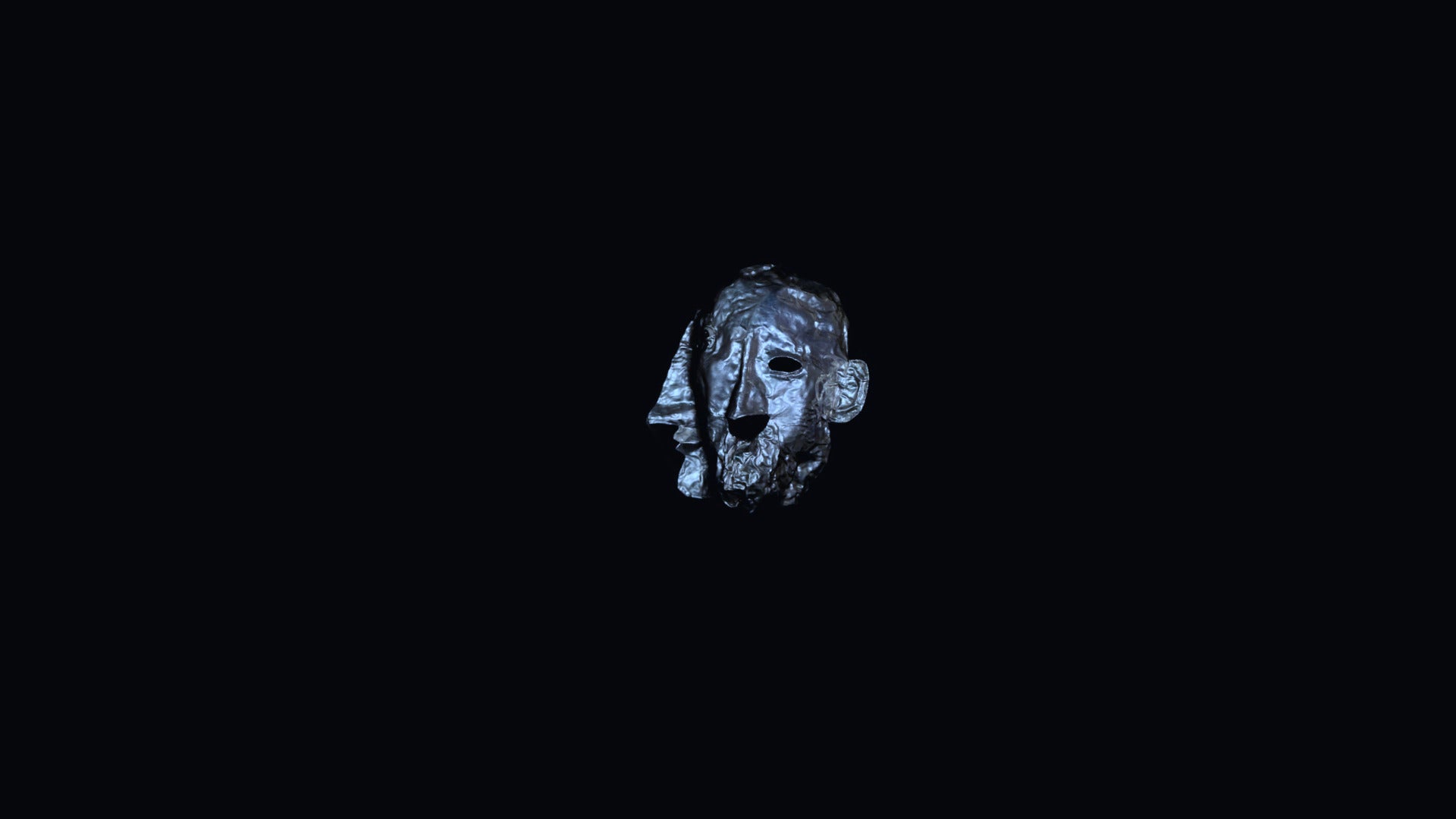
The Three Faces of Elagabalus (2024) marks a subtle but significant shift within Noujaïm’s body of work. Conceived as his first multichannel video installation and developed in dialogue with artist Ali Cherri, the work expands the narrative beyond the frame of the moving image. Fascinated by the little-known Roman emperor subjected to damnatio memoriae,3 Noujaïm creates neither a historical reconstruction nor a portrait. Instead, he builds an environment in which Elagabalus’s fragmented afterlife unfolds simultaneously across moving image, sculpture, and architecture.

Three masks inhabit the ruins of the Temple of Diana in the film, each narrating partial and often contradictory versions of the emperor’s story. Extending beyond the screen, they are also displayed within the exhibition space, where they continue to face the viewer in silence, as if Elagabalus could no longer return through a single image, a single voice, or a single medium. Fragmentation becomes not only the subject of the work but also the condition of its experience. No single position allows the installation to be grasped in its entirety. Something always remains beyond the field of vision

The work approaches historical erasure by following the forms a presence assumes after a system has rendered it absent—in this case, the figure of Elagabalus after damnatio memoriae. Rumors, contradictions, ruins, masks, and interrupted narratives become less evidence of historical failure than the material through which history continues to circulate.

The exhibition space becomes another layer through which those organizing structures can be experienced. Noujaïm’s installations situate us within them. We can observe the conditions that shape visibility from a distance while also encountering them through movement, partial perception, and the impossibility of occupying every position at once.

MONSTER

Latin “monstrum”

We were sitting on a bench in the National Garden of Athens, looking at small bursts of color scattered across the greenery, when the idea of flirting with danger first emerged. Not as a search for adrenaline or a romantic fascination with violence, but as a disposition toward that which has the potential to destabilize and transform. A movement toward the threshold where established categories lose their hold, where time itself ceases to guarantee continuity and where another configuration of the world can begin to take shape.

Linear time is one of the most stable structures through which human life is organized. It arranges memory and anticipation, inheritance and expectation. To alter our experience of time is already flirting with danger. There is a particular sensation that runs through Noujaïm’s films. Time rarely advances as a sequence of beginnings and endings. Voices continue long after the bodies that emitted them have disappeared. A forgotten language unexpectedly returns. A life begins to unfold only after death has opened the door to its archive. Years later, a shout finds its answer. His films alter our sense of where time begins, where it ends, and who gets to inhabit it.

Perhaps this is what we were trying to name that afternoon in Athens. To flirt with danger is not simply to approach uncertainty. It is to approach a different experience of time. One in which disappearance does not necessarily conclude, memory does not simply look backwards, and anticipation is no longer confined to what lies ahead. If time itself can be inhabited differently, perhaps so too can the worlds we imagine within it.

CITY

Latin “civitas”

Throughout these pages, I have tried to follow an apparently simple question: what conditions does a disappearance require in order to appear?

Noujaïm also spoke to me of his interest in revolution. That would open an entirely different essay, but after months spent moving through his practice, I will risk a brief synthesis: revolution emerges here as the possibility of reorganizing the relations that determine what can be seen, heard, remembered, or imagined. The collective construction of a world in which other presences might become possible.

Fireflies do not create the night, nor do they create darkness. Yet their flickering flight reveals that both were already there.

One example is daimon. Derived from the ancient Greek δαίμων, it originally referred to a lesser deity or, more broadly, “the experience of divine power.” See Donald Wiebe, “Religion and Philosophy in Ancient Greece” in The Irony of Theology and the Nature of Religious Thought (Montreal & Kingston: McGill-Queen’s University Press,1991).

 In Valentin Noujaïm: Interzone, eds. Mohamed Almusibli and Perwana Nazif (Milano: Mousse Publishing, 2025), 52–58.

Latin phrase that can be translated as “condemnation of memory,” refering to the deliberate political erasure of a person posthumously, by removing them from official records, and public remembrance.

Read more essays