To Remake and Renew the World, Step by Step
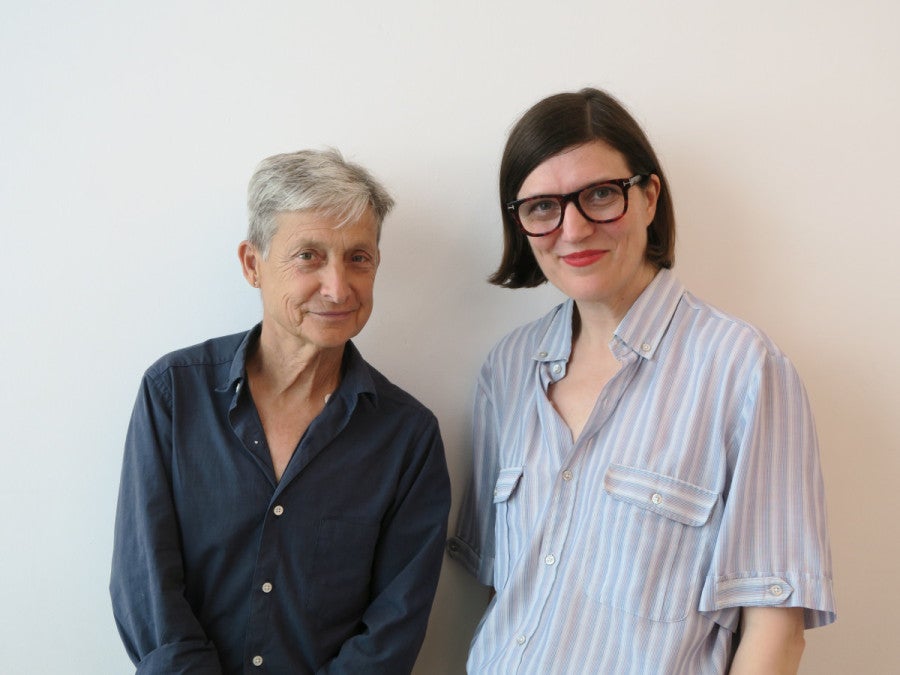
Gisèle Vienne’s dance practice is as courageous as it is experimental. A Franco-Austrian artist, choreographer and director, Vienne brings her extensive background in philosophy, music, and puppetry to bear on forms of dance that not only transform the space of performance, but the social space of life itself. Her interdisciplinarity fills the space and is condensed into those movements that transfigure the time and space as they unfold in jagged and poignant steps. A limb moves in a jagged way, disrupting the continuity that we expect of dance on the stage and the everyday movements of the body in spaces both on and off the proscenium. In fact, the bodily movements in this form of dance cut into space, as if they are instruments tearing apart the common assumptions that cover over the violence of social life. The movements are to some extent sculptural, carving space into rogue units of time that no clock or calendar can document. Of course, experimental dance forms have a history, and some of them have political implications, but that history cannot serve as a reassuring context or tradition for Vienne’s dance practice. Even those histories lose their continuity with the eruption of these novel dance practices. For the high modern forms of experimentation, including those of Pina Bausch and Twyla Tharp, free the body to its movement, giving it space to expand the very notion of bodily freedom inside and outside of the theatre. But when in Vienne’s work, the limb is suddenly dissociated in the course of its movement, moving independently and repetitively as if separated from the torso, the formal self-sufficiency of the dance form is undermined from within and becomes a new form. The domain of trauma has disturbed all claims of artistic self-referentiality and autonomy. And when this happens, as it does in Vienne’s dance movements, dance becomes a way of demonstrating and communicating how the body comes apart in a social world punctuated by episodic and patterned violence.
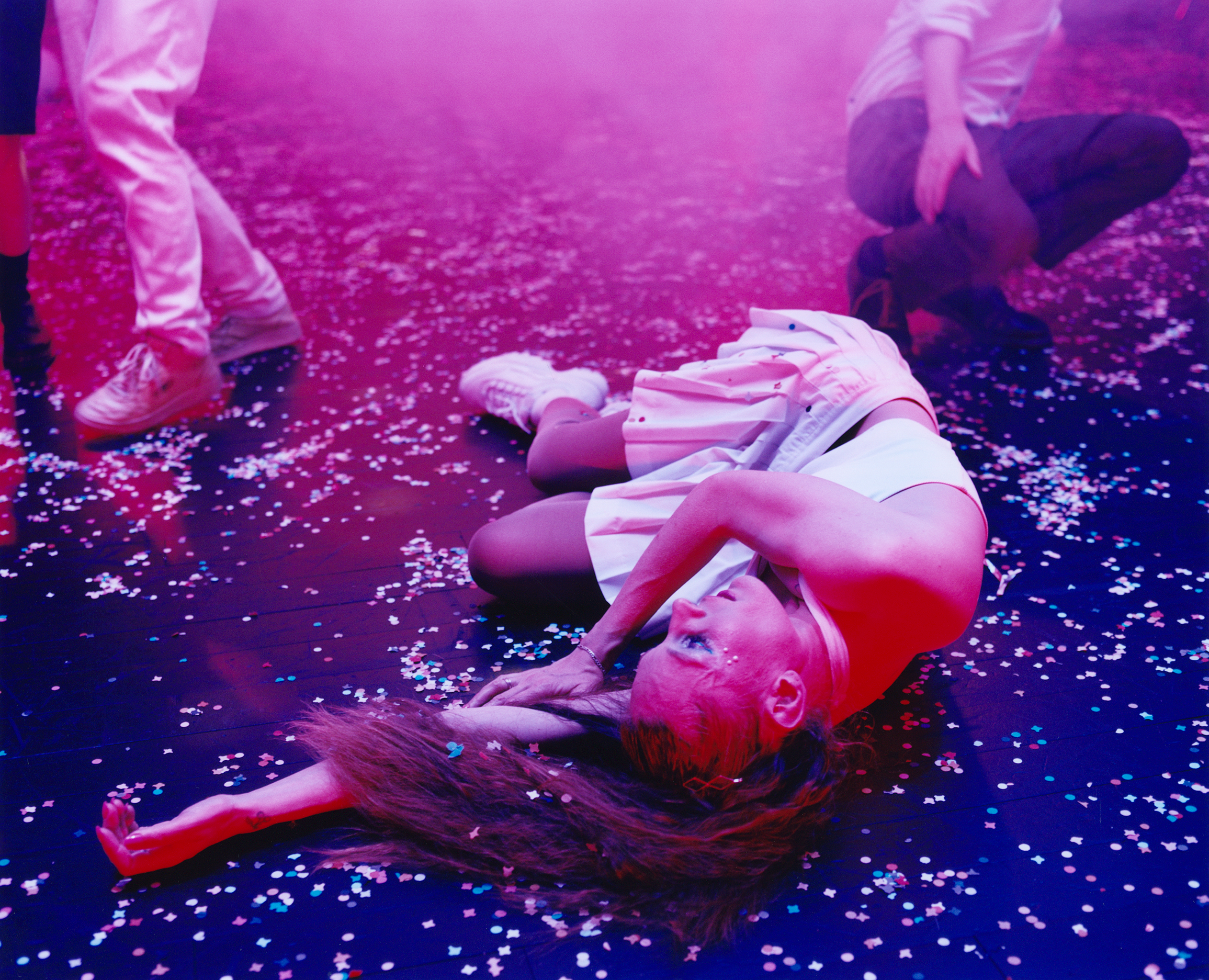
There is no comfortable position for the audience in which the space of art is firmly separated from the violence of this world.
The staccato movements in which limbs appear to take leave of the torso, flailing and unarrested, challenge the kinesthetic unity of the body, its proprioceptive flow. In the place of that unity, the body becomes a field of movements, willed and unwilled, reactive, defiant, and exhausted. These dance movements make graphic what it means to move when the one has come apart, targeted or violated by intimate and political forms of subjugation and dehumanization. There is no comfortable position for the audience in which the space of art is firmly separated from the violence of this world. The powers that enforce that very separation practice forms of denial, imagining that the body that appears is separable from the body on stage that has undergone all that it has in life. The body is precisely the vector of social powers, persistent desires, and the traces of loss and mourning. The body carries its own trauma onto the stage where it encounters the trauma of others in the form of an electric attention. That shared condition is difficult and painful, but also the occasion of a new kind of collaboration, a way of making something happen and shifting the very terms of what counts as truth within society.
Histories live in the Body
Those multiple histories of trauma are materially manifest in a body, but also in a scene where light and shadow and prop are part of the movement of dance. We know this without exactly being told. We are moved beyond strictly narrative procedures to forms of embodiment that manifest what those histories have done, but also what they continue to do—generating both the acknowledgement of trauma and the possibility of collaborative art-making itself. It is, of course, women’s bodies, and girls’, that manifest the history of trauma most emphatically, but that violation is also a form of connectedness with other forms of trauma—class destitution, toxification by war, induced hunger in Gaza, landscapes of destruction. There is speech that accompanies the movements in L’Étang (2020), for instance, but the audience does not look to the language to clarify or explain the dance. Both language and dance—which is its own kind of language—produce a sequence of dissociated fragmentation and the lucid recreation of incestuous violation. We do and do not know what is happening, and that is part of the traumatic effect. For those of us in the audience, our limbs do not know where to rest, or if they can. Were we supposed to be comfortable in our seats? Alerted, we are compelled to watch. And when it is time to leave, we cannot precisely flee all that we have been asked to feel.
Gisèle Vienne, L’Étang, 2020. Featuring Adèle Haenel and Julie Shanahan. Featuring as well Henrietta Wallberg (2022-2023). © DACM
For all the anxiety that accompanied my encounter with this unprecedented performance, I felt it to be no less than revolutionary (...)
My first thought after seeing L’Étang was that no one makes a dance about incest, and yet here it is. What was I assuming? That there is too much shame in presenting incestuous violation and rape on stage? Was I partially gripped by the sensation that it was not a “proper” subject matter for dance? I was afraid for the dancers since they had broken a taboo, not the taboo against incest, but the taboo against speaking about it and, surely, making art about it. But I was also relieved, excited, and grateful: a choreographer had broken through the barrier of shame to expose the scene in which the rapist’s rage, entitlement, and dehumanization are embodied and exposed, the body at once manifesting the traumatic memory and delivering the indictment. For all the anxiety that accompanied my encounter with this unprecedented performance, I felt it to be no less than revolutionary—and I was grateful, not just for myself, but for the class of women, including young women, and all those whose “punishment” for existing is rape.
My own senses were engaged and altered. And the dance was restructuring me as I watched. Sexual violence is an act, a repeated set of acts, a set of acts that belong to a social structure whose dominance is formed and sustained by repetition until it arguably becomes structural to social reality as we know it. But sexual violence also resides in an atmosphere, a way of sensing danger on the part of the vulnerable, a way of navigating space, entering into posture and gait, the very way one “holds oneself.” Feeling alerted, endangered, implicated, and exhilarated, as if on the brink of revolution, one comes to recognize that the senses are formed and deformed through political realities. Those realities enter the air we breathe, the steps we take, the distance we take from others, the way we can touch or be touched, prompting the question of what remains willed and unwilled in the domain of sexuality. It was surely not a Stalinist re-education to which I was subjected, but a subtle, wise, and effective intervention that allowed my own way of seeing the world to become a public matter of ethical and political concern. I felt liberated from a cage I did not know I was in. Was it the cage of theater that is supposed to protect us from such pain and outrage? Was it the cage of shame that we feel not just about ourselves, but for anyone who dares to make sexual violation public? Is it the cage of being barred from language and movement by traumatic effects that take shape as the norms that tell us what dance can and cannot be?
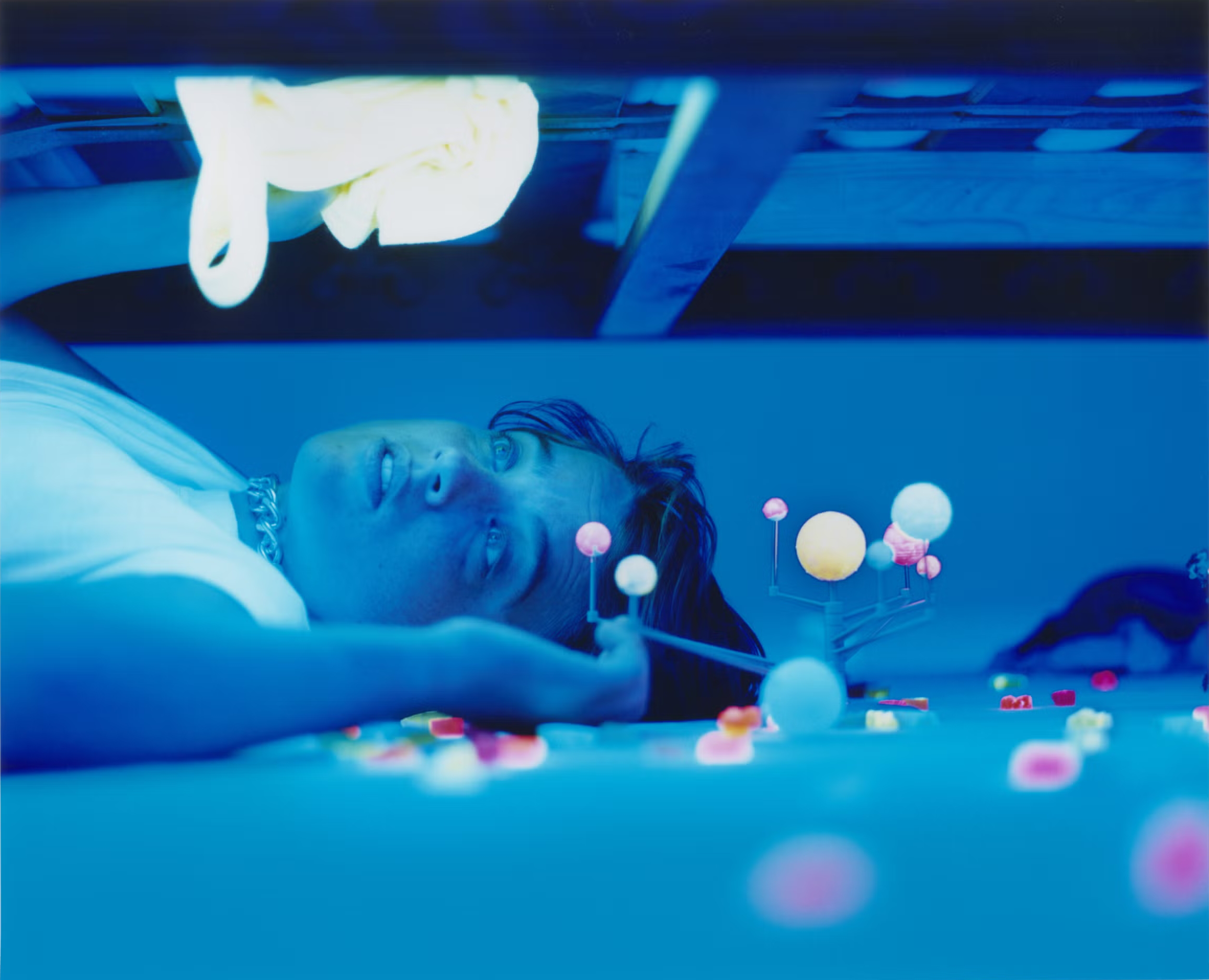
Why, we might ask, are victims so often imprisoned in shame when persecutors are kept out of jail?
I felt released, but into what world was I liberated? That cage was not mine alone, and that insight facilitated the liberation into collective recognition. One feels a sense of interconnectedness not only with the performance, but with a vast potential audience. It was not that something was “realistically” represented that I suddenly “saw,” but that a truth broke through the carceral apparatus of denial. Why, we might ask, are victims so often imprisoned in shame when persecutors are kept out of jail? No one pedantically argued for interconnectedness as an ethical virtue, and only fragments of a story were told or, rather, shown. What happened on stage relied on images, light, and sound, but also required movements, a formal experimentation with bodies broken into parts that foreground the breakage itself.
At a theoretical level, the interconnectedness of art practices with the spheres of economy, society, and domestic life still requires a fuller demonstration, since in the neoliberal world of “sectors,” the cultural sphere remains separated from the political. But even within the lingering modernist conceit that art is for art’s sake, the denial of interconnectedness is fundamental. Nothing detracts from this dance as dance as it insists upon such interconnections. The zones of war, violence, exploitation and subjugation can be communicated without simple or grandiose forms of realism. Aesthetics is thus indispensable for knowing what a social structure is. For we cannot approach the question of how social structures are registered, lived, and sensed, at the level of bodily movement, without bodily movement that manifests and communicates this very experience. Although a philosophical question—how do we come to know a set of violent social structures—it implicates political psychology as well: how do we come to acknowledge a historically sedimented and reiterated form of violence? To know, to pursue truth, requires working through the denial of both violence and shame, and this task belongs to the phenomenological psychology of embodied social life. At the same time, it is also a specifically choreographical question that enters into, and tears apart, the apolitical aspirations of some experimental artistic practices.
Staccato Movements
Choreography is bound up with the visual scene of light and color. One moves in the light, but the light is refracted through the movement, or the movement gets partially lost in darkness. Movement takes place along a spectrum of color, but color also changes by virtue of what—or who—moves through it. Significantly, the body never moves continuously through a social world of established habits. There are phenomenologies of the social world which rely on typification, understood as the patterned ways that people move through daily life, the structured and predictable gestures of ordinariness. One enters a store and expects to move a certain way: or a school, a home, a bathroom. But what if typification is precisely the road map of socially instituted violence and its denial? The child is slapped in public, but there is nothing wrong with that ostensibly because so many people do the very same thing. Does that make the slap ordinary and, hence, justifiable? The clear answer is no.
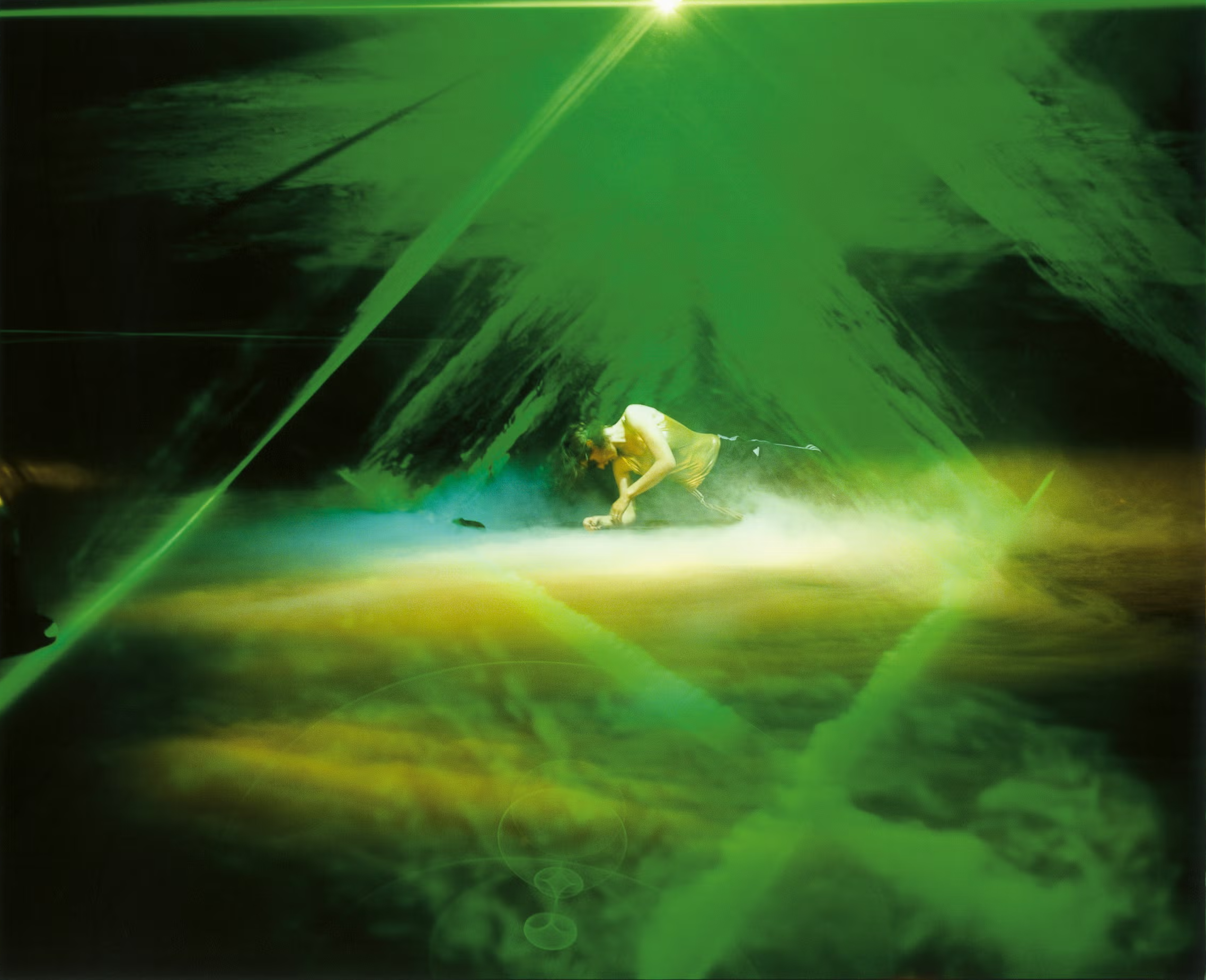
(...) no social structure persists—patriarchy, racism—without its repetition. And every instance of its repetition is the occasion for a small, but potent, rupture.
None of these everyday passages or movements can be taken for granted. Every doorway assumes something about the human who passes through its infrastructural opening, either facilitating or debilitating the ease with which the body makes such passages. The habits are understood as sedimented over time, reiterated in a way that takes for granted the freedom of passage, and its ease. But when the body is under surveillance or fears the repetition of violence, that passage is immersed in a set of anxious expectations, including the dismal certainties of dread. In Gisèle Vienne’s dance work, the pre-conscious expectations of smooth movements through space are interrupted, and those expectations are exposed as broken habits: a woman’s walk through the streets at night, or her return to her home where violence waits, a person’s passage through the border, or confrontation with sudden arrest or abduction, a child’s effort to go to bed peacefully interrupted by an incestuous assault. The realities are stark, and no one watching can relax into the continuity of the scene. The continuity is cut, again and again, not predictably, but often enough that the reiterated and cumulative dimension of violent social structures start to make themselves felt for those watching, implicated in what they see.
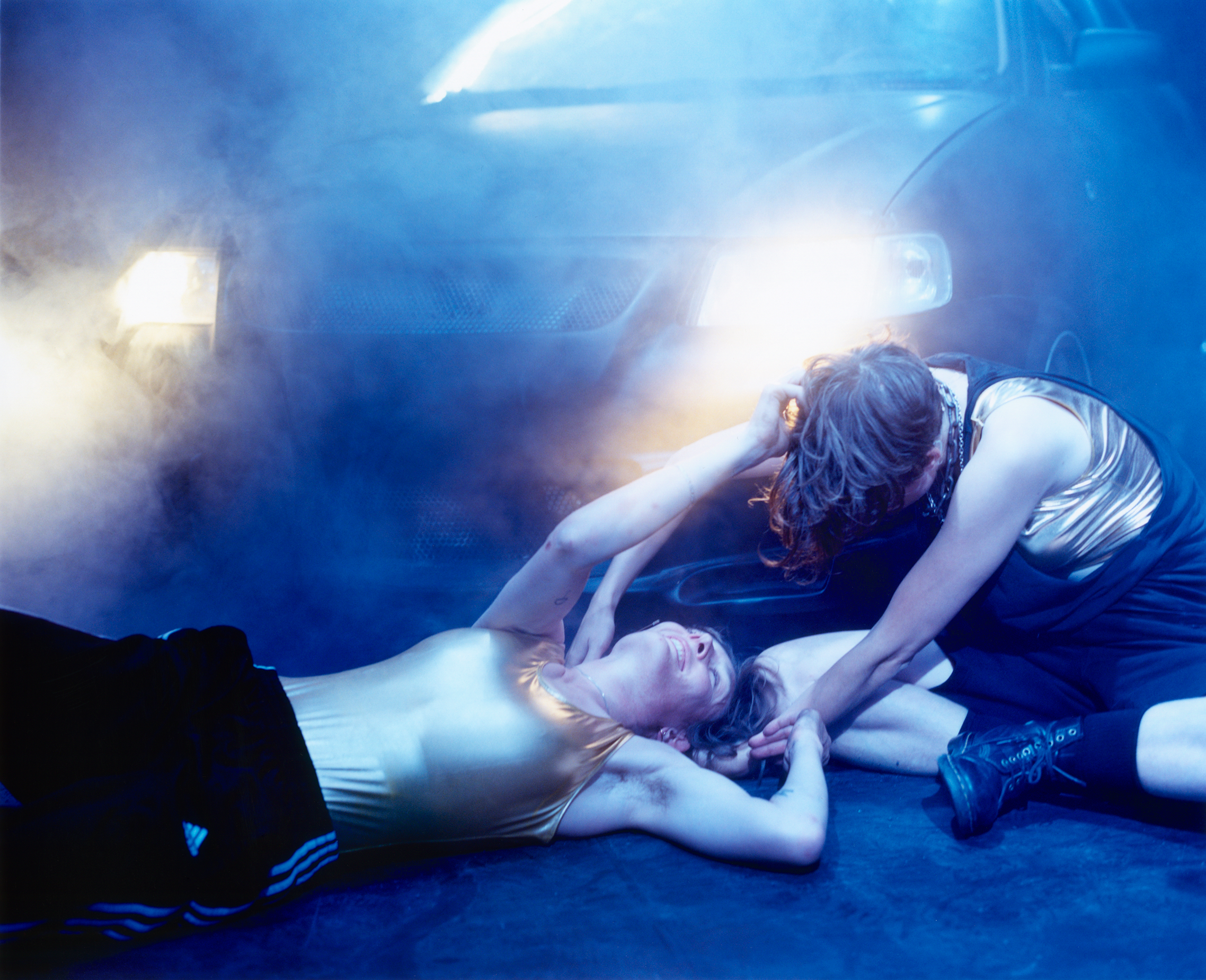
In social theory, one refers to the “structures” of society, but every structure has to be re-instated to remain a structure, to become a structure that is regularly re-established through time. After a while, social theorists come to talk about a structure as if it were an entity, congealed and enduring like a natural substance immune to erosion. But no social structure persists—patriarchy, racism—without its repetition. And every instance of its repetition is the occasion for a small, but potent, rupture. That rupture takes form within Vienne’s dance movements as moments of intensity that asks the dancer and the audience to endure the sense of riveting discomfort and high alert. There is no way to maintain the forms of insensitivity to social suffering that allows that suffering to repeat in its nearly mechanical destructiveness.
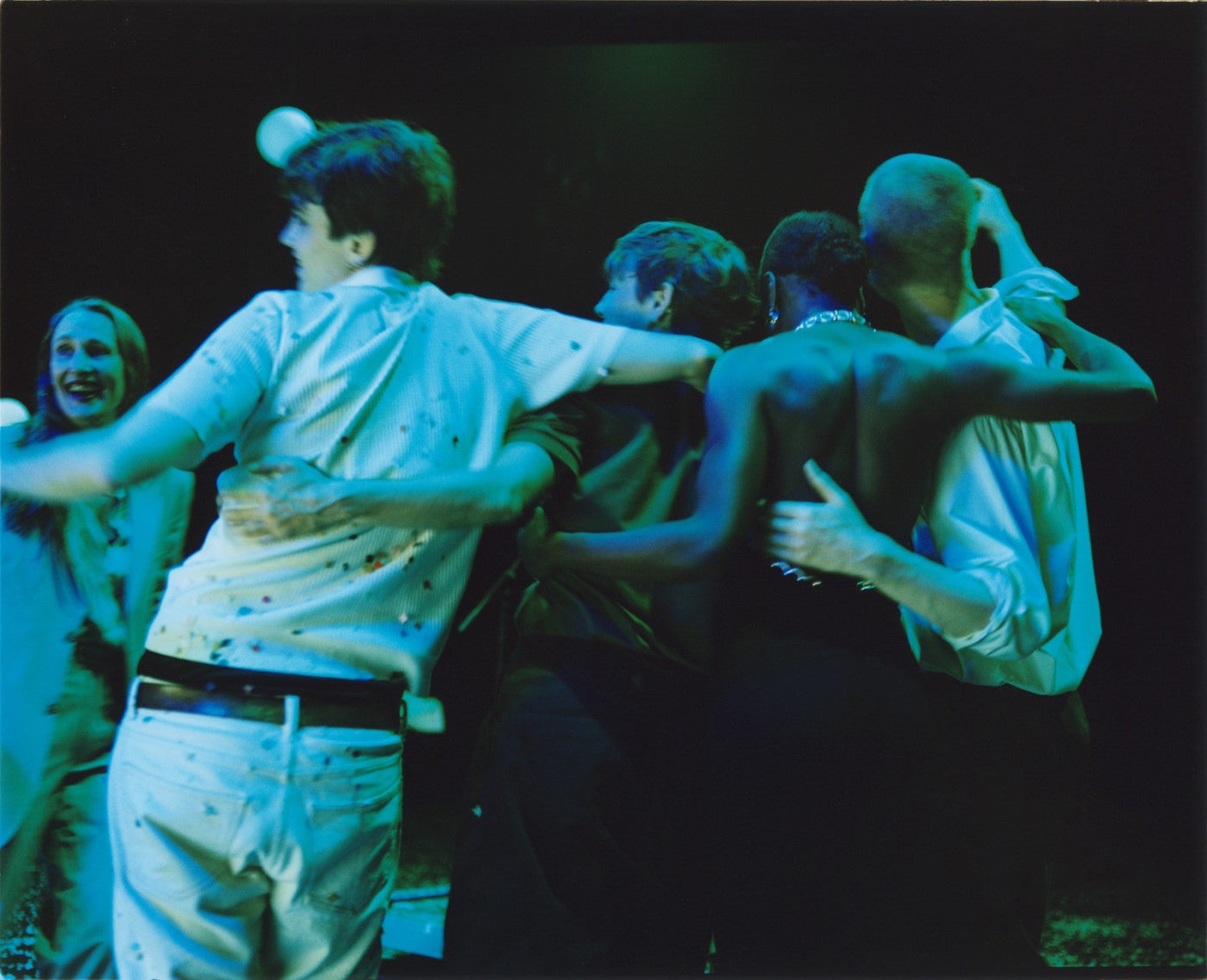
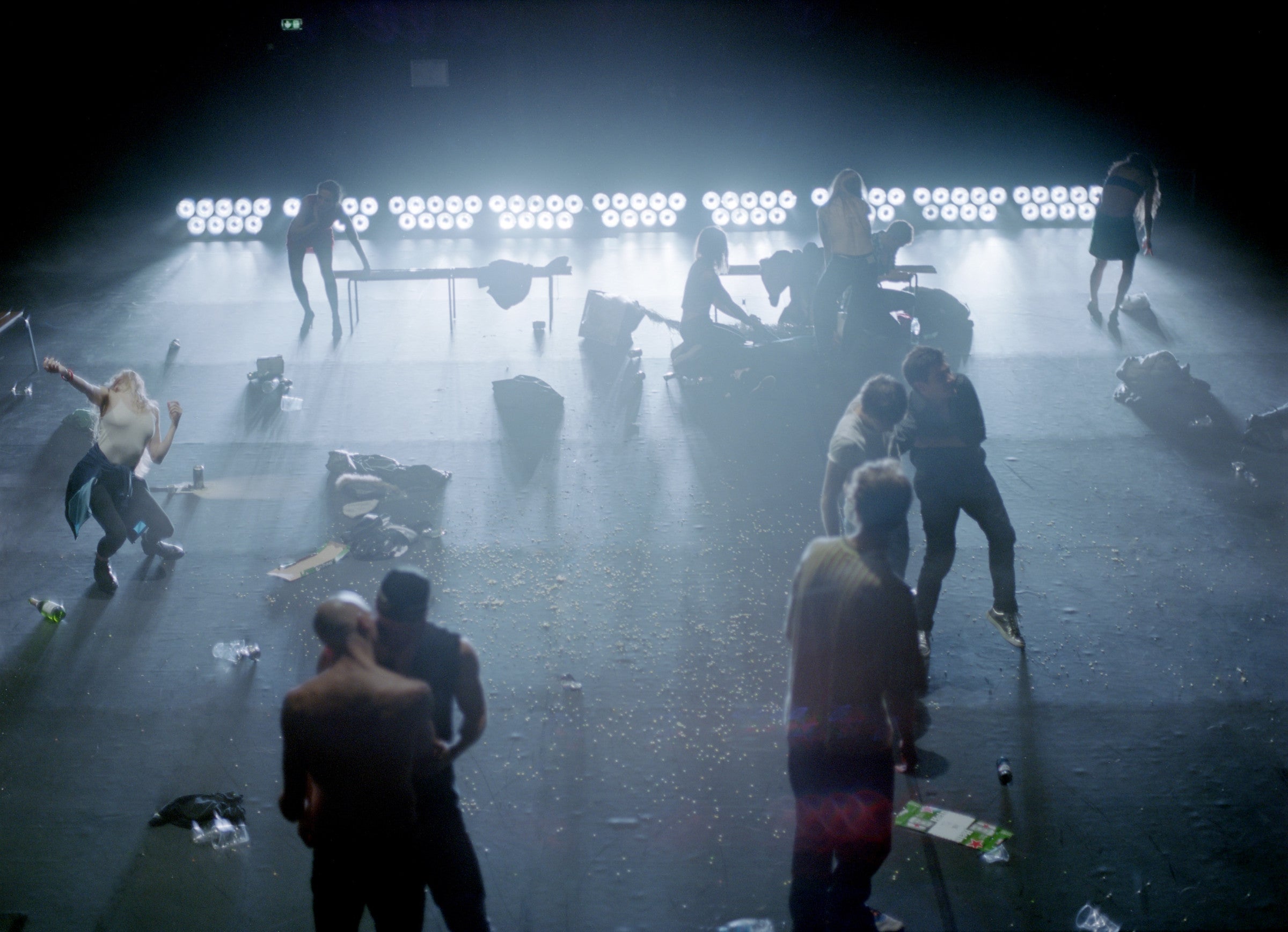
Gisèle Vienne, EXTRA LIFE, 2023. Featuring Katia Petrowick, Theo Livesey and Adèle Haenel. © DACM.
One may think of trauma as the effect of a singular event and, of course, it is always singular in the course of a specific life. That must be acknowledged. But the trauma of sexual violation and battery is repeated throughout historical and social life, especially the rape of women, domestic battery, incest. These events are at once repetitions. They have been happening for some time; they happen now; they will happen again. This repetition is sometimes nearly scripted, and the continuity can sometimes feel as if it were inevitable, unbreakable. One trauma links to another through historical recall, through networks of support, through feminist archives. That repetition, nearly mechanical, can nevertheless become the basis for solidarity and connectedness. Where repetition forms a pattern, it becomes clear that violent subordination must be repeated to reproduce patriarchal power. It is not a continuous or inevitable form of power, but one that installs itself in the violated bodies of women and children, queer and trans people. And each installation exposes the need of that power to assert itself again (to remain that power, to remain in power), its anxiety, and its lack of inevitability. The power to resist is a form of power in some ways generated by the form it opposes, arising in the breaks of its repetition. Gisèle Vienne’s performance gives us the breaks in those repetitions. Rupture is dissociation but mobilized as an insistent critical method.
Against the isolating power of trauma—barely speakable, mired in shame—a movement practice brings it out into the open, delineates its gestures and its ruptures, disarticulating the body into parts that still move on their own, a dance of the dis-jointed. These movements will not be shamed by violence or the public acts of dissociation, looking away, nor by the “high” expectations of art to give us something smooth, and only slightly disturbing, to consume. A movement practice links dancers as it delinks the limbs from the torso, disarticulated by the repetition of the singular trauma which, in its singularity made public, potentially shares the violation and the outrage that leads to refusal and resistance.
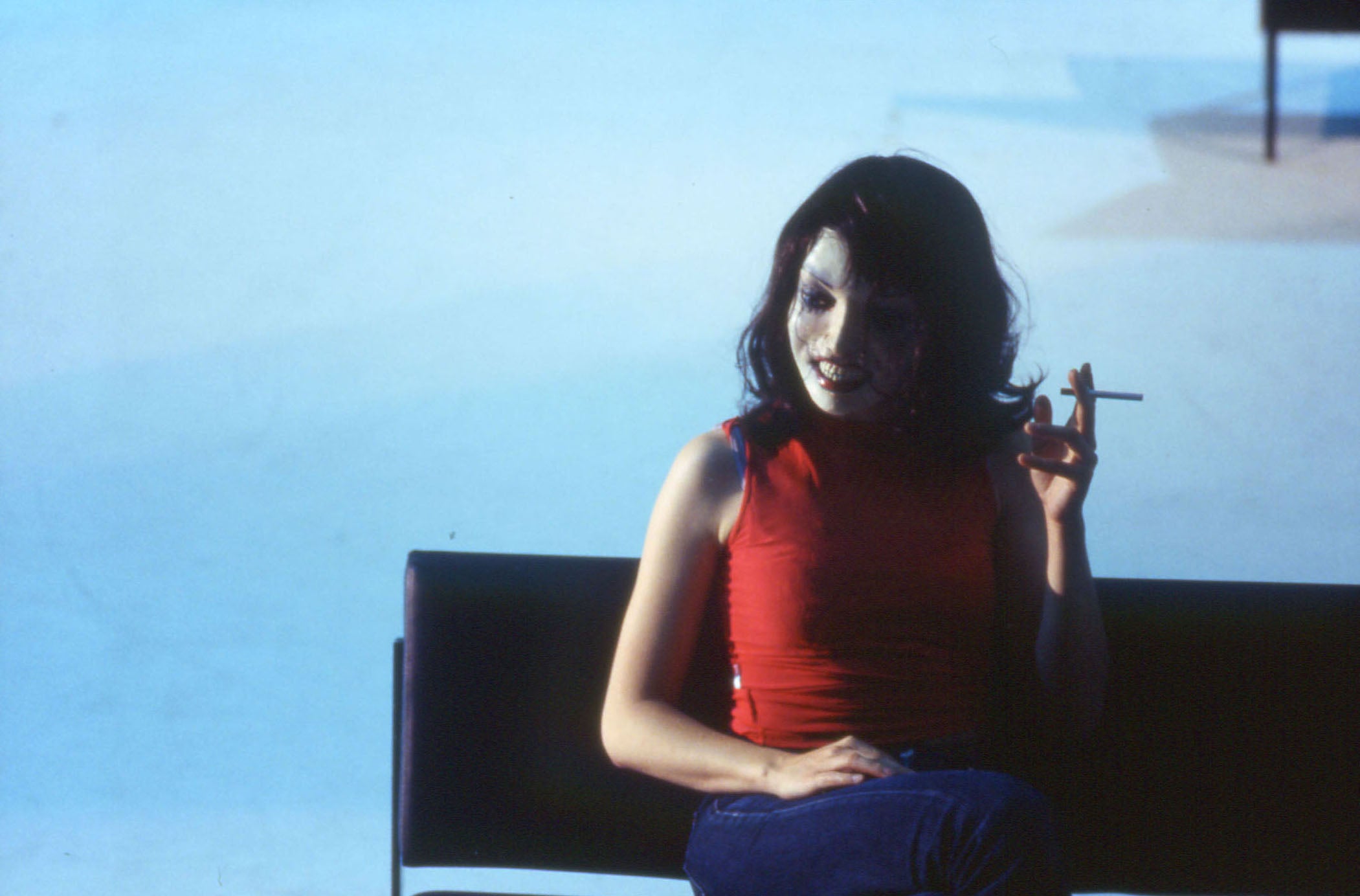
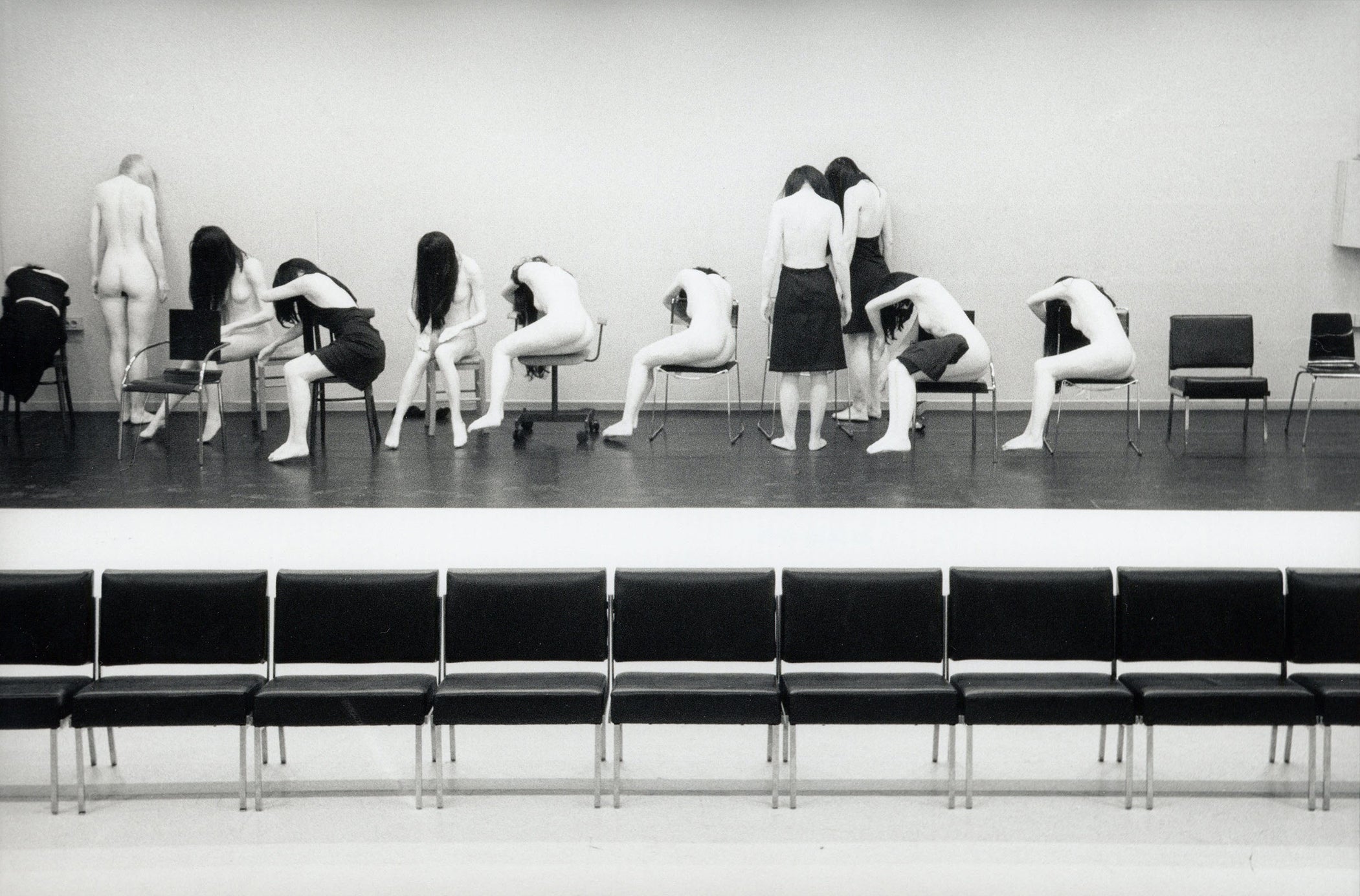
How deeply are we shut down, looking away, insensate to the world around us, both its horror and its potential for joy?
Perhaps few of us have a clear idea of how numb we have become to the horrific violence that happens daily. But when its component moments are broken down and brought forth, the senses come alive in spite of a drifting or panicked inclination to flee the scene. It is the scene that holds us in place. And as we, in the audience, find ourselves able to feel again, sensing patriarchy’s ambient horror or its shameless forms of self-entitled violence, we find ourselves unable to return to our usual place in the complicit camaraderie of collective dissociation. The scene is traumatic, aesthetic, and political. For those who assumed that they would be spectators to the scene, they are asked to perceive a violence at once singular and everyday. But for that, they must learn how to perceive. The German term “wahrnehmung” means perception, but it contains within it the practice of “taking truth.” In English, to take the truth means to bear what someone else is saying, to abide by a truth that is difficult to take, if not unbearable to acknowledge.
The point is to shock, yes, but not for its own sake. It is meant, rather, to wake the senses from social somnambulance. How deeply are we shut down, looking away, insensate to the world around us, both its horror and its potential for joy? The performance asks us to know the horror of violation and oppression, and to create the space for play and for joy in the wake of trauma; to work, step by step, to diffuse the ambience of violence we breathe. For Vienne, the work cannot finish with its ending; it must continue, for its ultimate task is to produce a new dispositif, a shift in the epistemic choreography of people and things, to expand what might be called collaborative joy in ways that link the exercise of agency with the ideal of a radical social equality free of violence.
Object Life
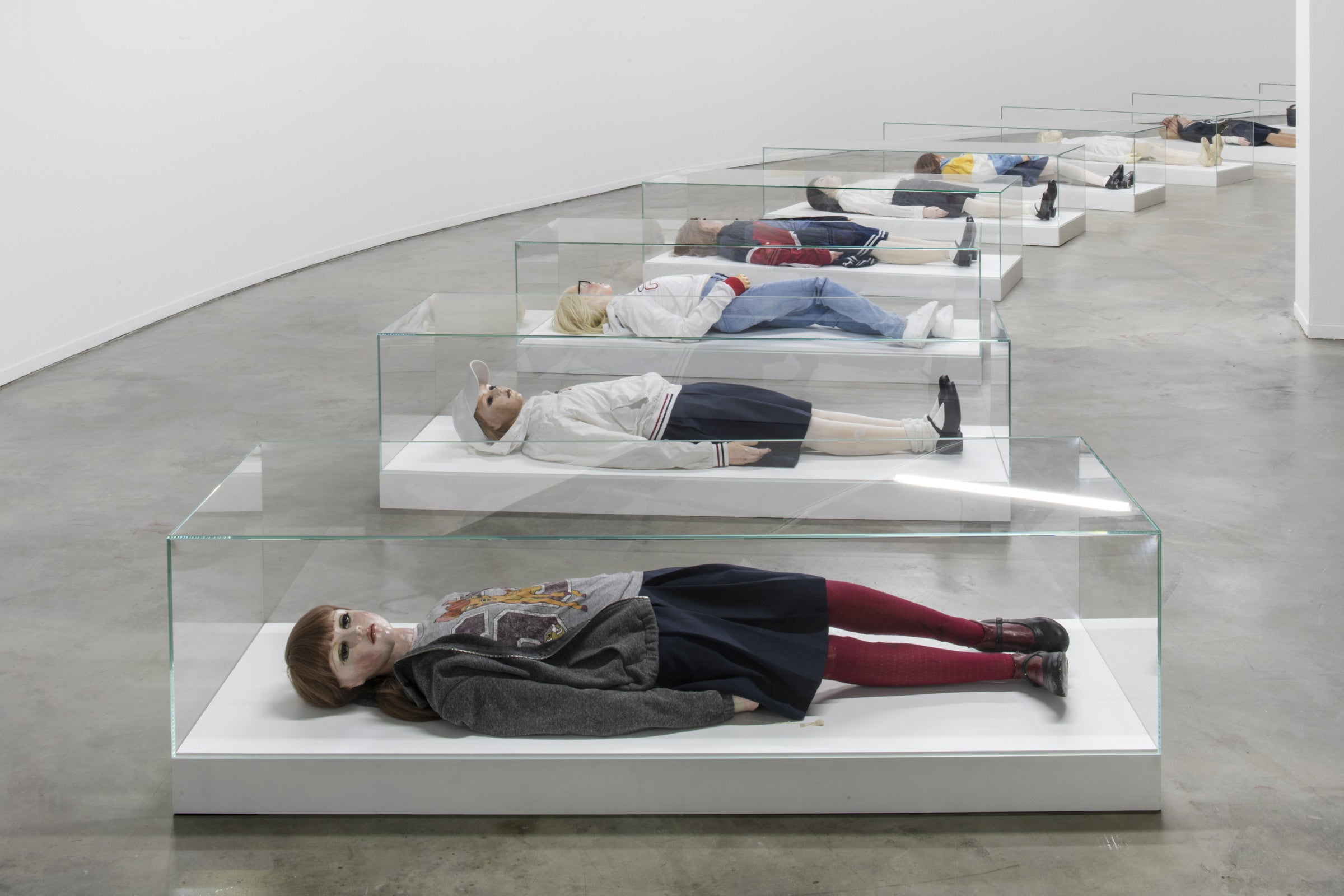
Vienne creates life-size human dolls, simulacra of children, teenagers and women for the most part, and sometimes puppets, in several works: Dolls in glass boxes (2003–21), I Apologize (2004–2017) and “63 PORTRAITS 2003–2024” (2003–24), some of which were exhibited in Berlin as This Causes Consciousness to Fracture – A Puppet Play (Haus am Waldsee, 2024). Sometimes present on stage as well in L’Étang or I Apologize, the puppets often lie lifeless, or bent over, or splayed. They can be approached as toys or mannequins whose “thereness” is explained by no story. How did they get there? Were they once human? Are they object-analogies? Is this the fate of women and children who are humans but treated as objects of manipulation? The puppets challenge the audience to consider what is human and what is an object, and what happens when humans are treated as objects to be moved and repositioned at will? We know the feminist moral imperative: do not treat women as objects. It is a Kantian imperative as well, never to treat another as a means, but only as an end. But these imperatives have no way to describe the cumulative effect of this kind of objectification, or its ultimate aim. If objectification is a process whose aim is a full transfiguration of a child or woman into an object, perhaps the puppet foreshadows the success of that process. And yet, each puppet is haunted by a human form and life, a fully exhausted human form, limp, without the capacity to act on its own. The puppet does, however, act in a complex way: it acts on us as the trace of human destruction, an embodiment haunted by the loss of its living form, but it is also a work of craft, an object made for the purpose of performance or display, reflecting an act of human making and even the potential for play. As a toy, it can be dismembered and patched together and still endure in some shape. The agency of the artist imbues the puppet with human meaning, instills a new human agency into the form that documents its vanishing. On the one hand, the puppets are lifeless objects, vacated and petrified human forms; on the other hand, they are made things, perverse works of art, staged and choreographed to manifest horror and to insist upon the refiguring and transfiguring dimensions of the work of art.
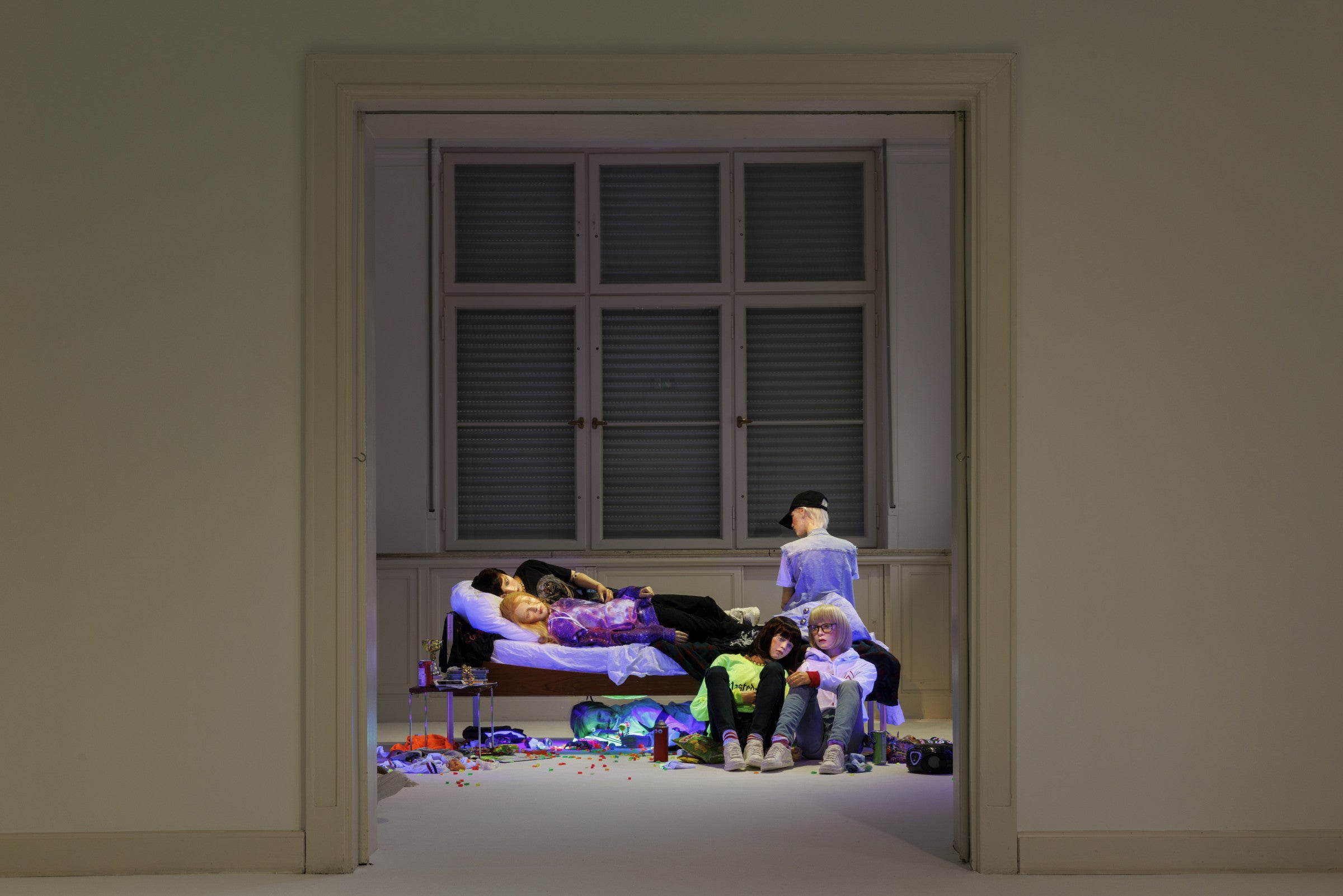
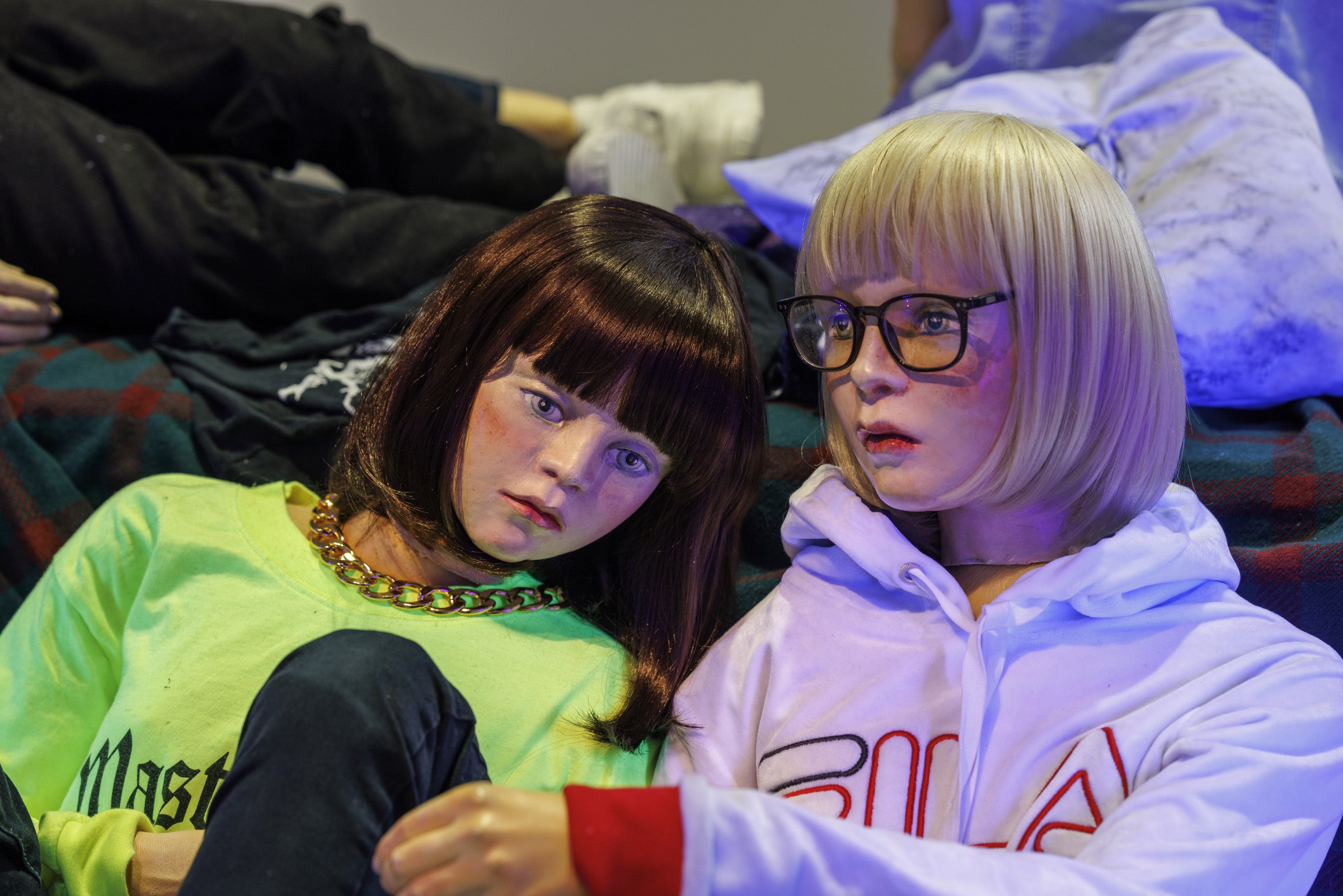
The literary critic, Barbara Johnson, was clear that we should not devalue the object world within the human world in her book, Persons and Things (2008). Aware of the Kantian dictum never to treat humans as objects to be manipulated, but only as autonomous and dignified subjects of free will, Johnson takes seriously the ethical and political imperative to oppose exploitation and degradation. She makes a distinction, however, between being used in the service of establishing a relation of social inequality between the user and the used and being used by another in the way that the psychologist, Donald Winnicott, has described. The latter, Johnson insists, involves “willingly playing the role of a thing” for another person, even for the purposes of assisting that other to become a subject in her own right. Children, Winnicott writes, have “transitional objects” that are neither inhuman objects nor human others. They serve an important function for the child. It is a relation to something that is “not-me” but which carries my desires and frustrations. The object can be thrown, discarded, and recovered all for the purpose of expressing forms of anger and frustration in the context of play. Above, Johnson referred to “willingly playing the role of the thing” which comes to describe the therapist’s disposition in the psychoanalytic scene. The therapist is like the doll or toy that opened up the space between human and thing as a scene of play. Although the young child invests the object with a meaning, engaging in an early form of craftsmanship and scenography, the object is also there, an obdurate thing, waiting to be mobilized by the wishes and anxieties of the child.
Winnicott understands “play” to be integral to the psychoanalytic scene, requiring the therapist to become a transitional object for the client, which means enduring and surviving the verbal attacks and acts of aggression that reflect back the psychic struggle with loss and rejection. Johnson understands that “play” is a central dimension to psychoanalysis and to aesthetic experience more broadly. But she also makes clear in a separate chapter on “Real Dolls” that the doll can become the object of idealization as well as aggression and rage. It is there to embody an ideal of femininity or girlhood but also as the occasion for the attack on that very ideal. The misogynistic attack on women and girls can readily be understood through the handling of the doll, as we see in Vienne’s work above. A dancer with a doll’s face moves across the stage. Or a man carries dolls and throws them in a box which ends up being a closed casket: the full deadening of the human form of a girl. Women carry one another like “stage dummies” not only representing their objectification, but their willing capacity to become a doll or dummy for the purposes of demonstrating just how readily the distinction between human and dummy can collapse.
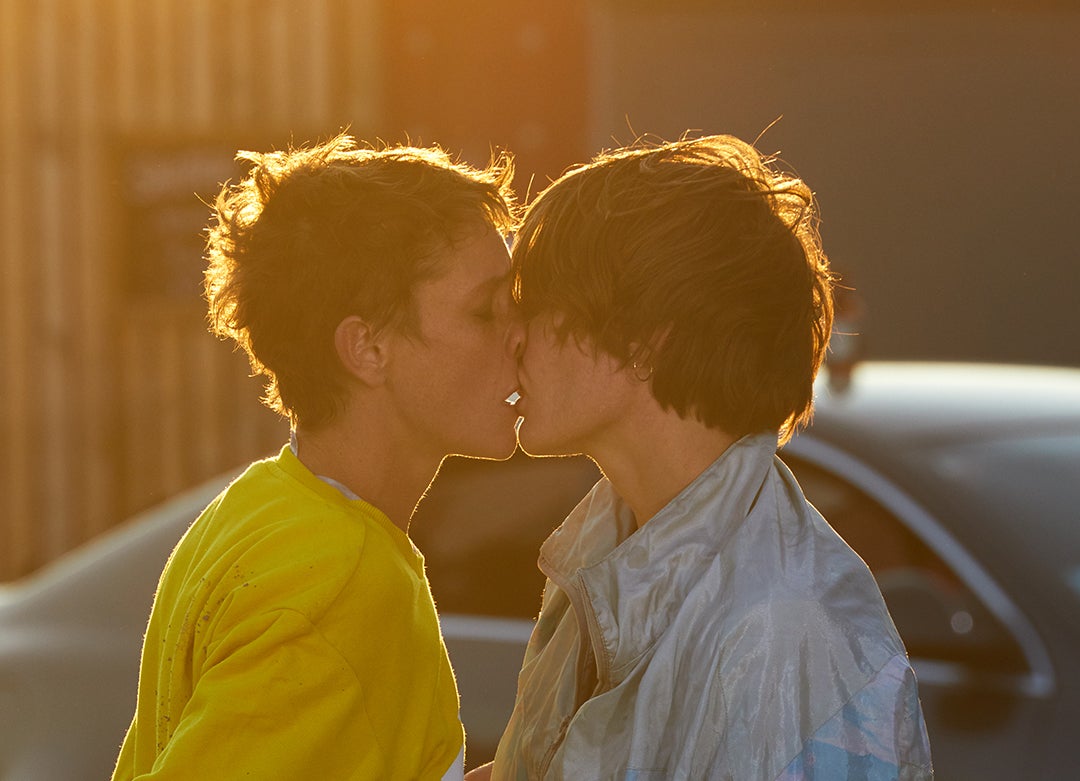
(...) creating a world that connects aesthetics and politics through the serious play of collaborative courage.
Toni Morrison writes about dolls in The Bluest Eye (1970), the fact that so many of the gifts given to Black children during the period of segregation in the US were white. Indeed, people were taken to court when they started to produce Black dolls as well as white ones (Brown v. Board of Education, 1954). Morrison writes about the “Aryan” character of the dolls received as toys: “good” hair, small noses, blue eyes. In The Bluest Eye, the young Black girl who receives such a doll cannot play with it; cannot enter into the imaginary it offered. She has only one desire: to dismember and destroy the doll. The doll communicates an ideal of (white) perfection that no Black girl can ever achieve. But in dismantling the doll, the ideal is rejected, and another form of beauty stands a chance of emerging into the world.
In the world of performance offered by Gisèle Vienne, amputation, the physical dissociation of the movement or limbs, the impenetrable silence and vanquishing of speech, all put into play the muteness of women’s and children’s lives, especially the ongoing history of their violation. There is no possibility to suture the body back into a flowing and unified center of movement and speech. The autonomous subject in the Kantian vein is no longer possible. But what Kant called “will” or what others call “freedom” is refigured in Vienne’s work as the collaborative movement of bodies in electric atmospheres, fractured by their traumatic injuries and which, in turn, fracture time and space until we come face to face with the pervasive way that such violations structure social life. The amputated limb amputates our sense of the everyday, and that is both an act of agency and a way of creating a world that connects aesthetics and politics through the serious play of collaborative courage.
The body no longer holds together. Its movements are separated from one another as its gestures seem to work in autonomous directions. And yet, this loosening of the joints becomes the occasion for a re-articulation of the world, a new kind of making, experimental and cooperative, that mobilizes all the injured parts as animate objects that persist, resist, and remake the world. The disjointed movements, les mouvements saccadés, are ways of linking the past to the present and one body to another. It is the emblem and the work of re-articulation, a connection between things and people that has not always been known. But as Gramsci was right to tell us, every articulation must be reproduced, and in Vienne’s work the repetition of the movement is the making and renewal of such connections, building and displaying a new perception of the world, a renewal of the world itself.
Gisèle Vienne’s archives relating to all her plays are available at the media library of the Centre national de la danse.
Read more essays
Valentin Noujaïm according to Yina Jiménez Suriel
August 2026